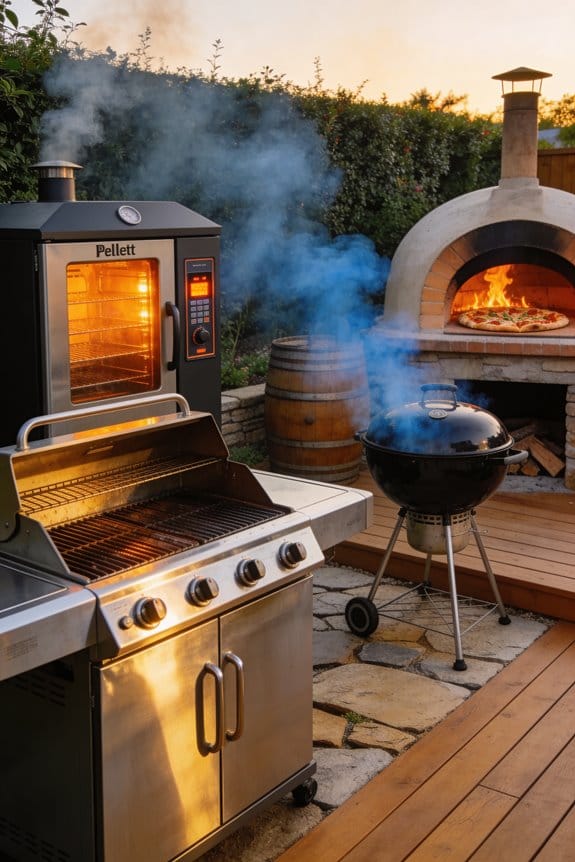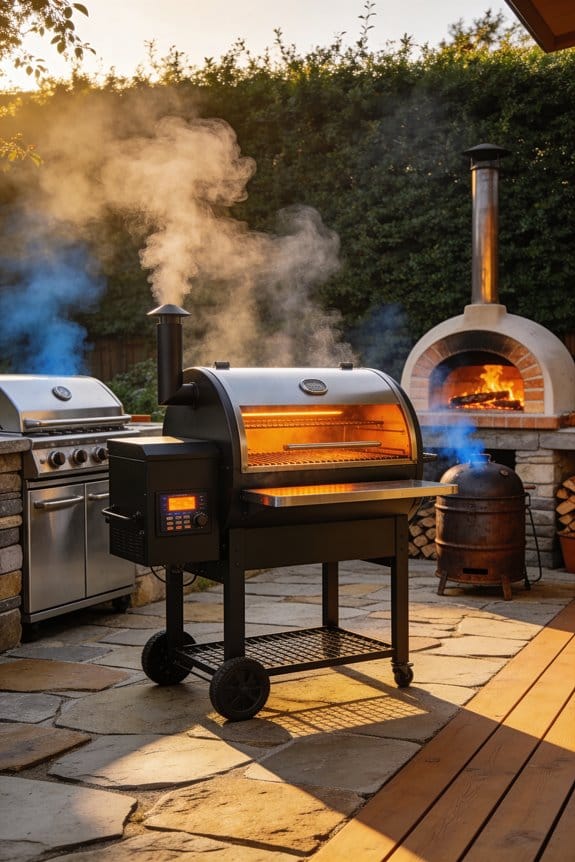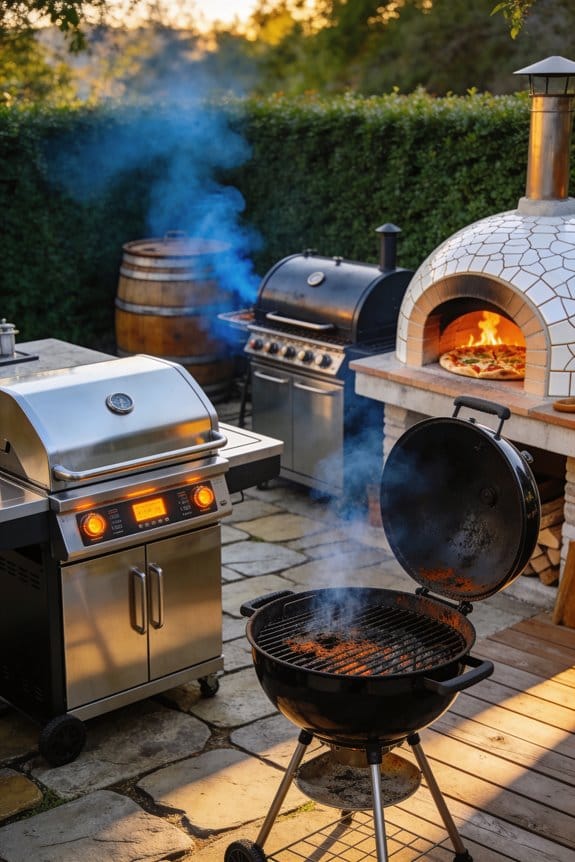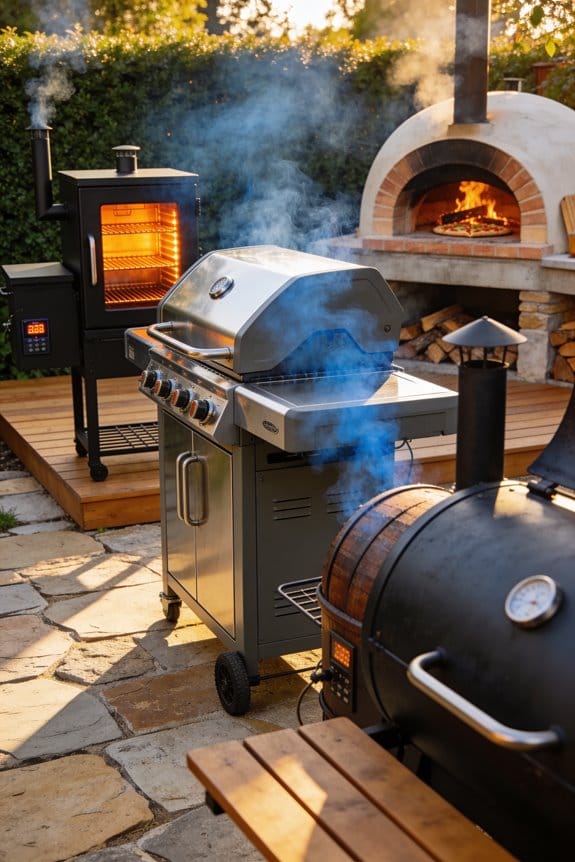


Wood size determines both burn speed and smoke flavor intensity. Chips ignite quickly, delivering fast smoke bursts ideal for twenty-minute cooks on gas grills, but they lack depth. Chunks burn slower over one to three hours, developing layered, nuanced flavors perfect for charcoal smokers and tougher cuts. Logs sustain heat for extended sessions, creating sophisticated, concentrated smoke on offset smokers. Match your equipment type and cook duration to the right wood form, and you’ll discover how dramatically each affects your final results.
Key Takeaways
- Fast-burning chips create quick smoke bursts with minimal flavor depth, ideal for short cooks under twenty minutes.
- Slower-burning chunks develop layered, nuanced smoke flavor through extended smoldering, perfect for one-to-three-hour sessions.
- Logs deliver sustained, sophisticated smoke over several hours, concentrating aromatic compounds gradually for complex flavor.
- Extended burn time directly influences flavor complexity; longer smoldering produces deeper, more nuanced smoke penetration.
- Chunks create superior bark infusion and deeper smoke flavor for tough cuts compared to quick-burning chips.
What Smoker Type and Cook Time Tell You About Wood Choice
When you’re choosing smoking wood, the type of smoker you own and how long you’re planning to cook should guide your decision more than anything else. Your smoker compatibility matters markedly because different wood sizes work better with specific equipment. Electric smokers and gas grills with smoker boxes handle chips well, while charcoal and kamado smokers perform better with chunks. Cooking duration is equally important in this equation. If your cooking session lasts under twenty minutes, chips deliver the quick smoke you need. For sessions exceeding one hour, chunks provide sustained burn and deeper flavor without constant replenishment. Logs suit offset smokers requiring extended heat and smoke for traditional BBQ. Understanding these relationships helps you select the right wood form for your specific setup and cooking timeline.
Wood Chips: Perfect for Quick Cooks and Hot-Burning Setups

Wood chips consistently work best for smoking sessions that last twenty minutes or less, making them the go-to choice if you’re grilling quickly on a hot surface. Their small size creates increased surface area, which causes them to ignite rapidly and burn through in minimal time. This fast infusion of smoke works perfectly for gas grills equipped with smoker boxes or charcoal setups where you want a quick flavor addition without prolonged heat management. The intense aroma produced by chips provides that immediate smoky character many grillers seek during brief cooking sessions. However, because chips turn to ash quickly, they can’t sustain flavor depth. If you’re searing steaks or smoking vegetables briefly, chips deliver the light, quick smoke you need efficiently.
Recommended Products

JEALOUS DEVIL CHARCOAL: This 35-pound bag of Jealous Devil 100 Percent Natural Hardwood Charcoal burns hotter so you can cook faster while instilling your mouth watering ribs, veggies, and steaks with a subtle, earthy flavor

PREMIUM QUALITY BARREL - Built with 304 Stainless Steel: Crafted from high-grade food-safe 304 stainless steel designed to reduce smoke generated by 85%, this vertical smoker barrel delivers unmatched durability, corrosion resistance, and superior heat retention. Elegant wood accents add a premium touch.

【Unmatched Cutting Power & Speed】Powered by a high-performance 6W laser diode, this engraver machine effortlessly cuts through 6mm basswood and 4.5mm acrylic with surgical precision. Achieve lightning-fast engraving at 5000mm/s – 10x faster than conventional laser engraving machines – ideal for batch processing jewelry, personalized dog tags, and metal business cards.
Wood Chunks: Deep Flavor for Low and Slow Sessions

If you’re planning a smoking session that’ll run for hours rather than minutes, chunks become your best option because they burn slower and produce the sustained smoke that transforms tougher cuts like brisket and pork butt into tender, flavorful meals. I find that chunks typically sustain their burn for one to three hours, requiring only two or three pieces per cook. This extended smoldering creates deeper, more robust smoke flavor compared to chips. The combination of heartwood and sapwood in each chunk contributes to superior bark infusion, developing that desirable smoke ring on your meat’s surface. Because chunks burn steadily without quick burnout, they’re ideal for kamado or charcoal smokers where consistent heat matters. You’ll notice the flavor develops gradually rather than appearing as a quick burst.
Recommended Products

Digital charcoal grill and smoker with 1050 square inches of cooking space

Product 1: The Longhorn Reverse Flow Offset Smoker provides the best for you outdoor cooking needs. With optional smokestack locations you choose between reverse flow smoking and traditional offset smoking

AUTHENTIC BBQ, SWITCHABLE REVERSE FLOW PERFORMANCE: Cook low-and-slow with indirect heat using charcoal and hardwood splits or chunks, with optional smokestack locations to switch between reverse flow and traditional offset smoking
Logs: Extended Burn Time for Traditional Offset Smoking

As you move up in wood size and burn duration, logs represent the largest smoking wood option available, and they’re specifically designed for traditional offset smokers that require sustained heat and smoke over many hours. Unlike chunks that burn for one to three hours, logs outlast them considerably, making them ideal for extended cooking sessions. They provide sustained smoke that delivers traditional flavor without requiring constant wood additions. A single log can burn for several hours, sustaining the heat and smoke output your offset smoker needs. This extended burn time means you’ll spend less time managing your fire and more time achieving that deep, authentic barbecue taste. Logs are your best choice for serious pitmasters seeking prolonged, consistent results.
Recommended Products

AUTHENTIC BBQ, REVERSE FLOW CONTROL: Smoke low-and-slow with indirect heat using charcoal and hardwood splits/chunks (sold separately), with removable baffles and adjustable smokestack positions to switch between reverse flow and traditional offset smoking.
AUTHENTIC BBQ, CLASSIC OFFSET DESIGN: Cook low-and-slow with indirect heat using hardwood splits and chunks for rich, wood-fired BBQ flavor - exactly what you'd expect with traditional offset smokers grills.

REALISTIC LOOK: Hand‑painted split oak detail and sculpted bark create a true‑wood fire when paired with a Real Fyre vented burner (sold separately).
How Burn Speed Creates Flavor Depth

The speed at which smoking wood burns fundamentally determines how much flavor it contributes to your meat, and understanding this relationship helps you choose the right wood size for your cooking goals. When wood burns slowly, as chunks and logs do, it creates layered complexity in smoke flavor. Fast-burning chips produce quick smoke bursts that lack depth, while slower-burning options allow aromatic concentration to build gradually. This extended smoldering develops richer, more nuanced tastes because the wood releases compounds over extended periods rather than all at once. Chunks sustain this balance for one to three hours, providing consistent flavor without overwhelming your meat. Logs maintain this effect even longer, making them ideal when you need sustained, sophisticated smoke that develops throughout your cooking session.
Match Your Smoker Type to the Right Wood
Your smoker type determines which wood size will perform best, so matching them correctly guarantees you’ll get the flavor results you’re after. Electric smokers work best with chips because their compact design limits space for larger pieces. Charcoal grills benefit from chunks, which provide sustained smoke without requiring constant vent control adjustments. Offset smokers demand logs since they’re built for extended cooking sessions where prolonged wood addition matches your duration. Kamado-style cookers handle chunks efficiently, offering good smoke production with minimal smoker maintenance needs. Gas grills with smoker boxes accept chips easily, delivering quick flavor without complications. Understanding your equipment’s capacity and heat management system helps you choose the right wood size, ensuring ideal smoke penetration and consistent flavor development throughout your cook.
Quick Reference: Which Wood to Buy for Your Setup
Picking out the right wood size for your smoker setup boils down to understanding three key factors: how long you plan to cook, what type of smoker you own, and how much smoke flavor you want.
I’d recommend chips for gas grills with smoker boxes or electric smokers requiring quick results. Chunks work best with charcoal and kamado smokers when you’re cooking for over an hour. Logs suit offset smokers designed for traditional, extended barbecuing sessions.
Consider your grill compatibility before purchasing. Electric smokers demand chips due to their design, while charcoal setups handle chunks efficiently. For wood storage, chips require less space than chunks or logs, making them practical for limited areas. Match your wood size to your specific equipment for peak smoke production and flavor.
Frequently Asked Questions
Can I Mix Different Wood Types Together in a Single Smoking Session?
Yes, I’d recommend mixing different wood types for blend compatibility and flavor layering. You can combine chunks with chips or logs to create complex smoke profiles. I’d suggest starting with one primary wood and adding complementary varieties for depth.
How Do I Store Wood Chips, Chunks, and Logs to Maintain Freshness and Quality?
I’d store my wood in airtight bins away from moisture and direct sunlight. You’ll want climate control in your storage area—keeping temperatures consistent prevents warping and mold growth that’ll compromise your smoking wood’s quality.
Which Wood Type Produces the Least Amount of Bitter or Acrid Smoke Flavor?
I’d recommend wood chips for the least bitter smoke. They’re ideal for mild woods and fruit woods that deliver quick, gentle flavor without the acrid taste that develops from prolonged smoldering in larger formats.
Are There Wood Species That Work Better With Specific Wood Forms or Sizes?
I’d picture delicate fruit woods like apple dancing in chips for quick grilling, while heartier hardwood blends shine in chunks. Green wood and resinous pines work best in logs for extended burns, avoiding acrid flavors.
How Do I Know When to Add More Wood During a Long Smoking Cook?
I monitor temperature consistency and watch for visual smoke thinning. When I don’t smell active smoke or my probe insertion reveals cooling, I’ll add chunks. This keeps your cook’s flavor steady throughout.