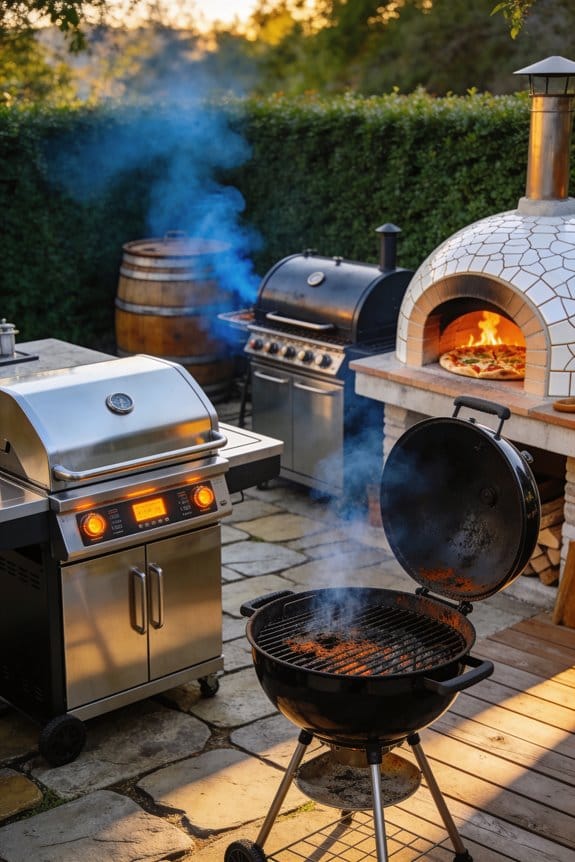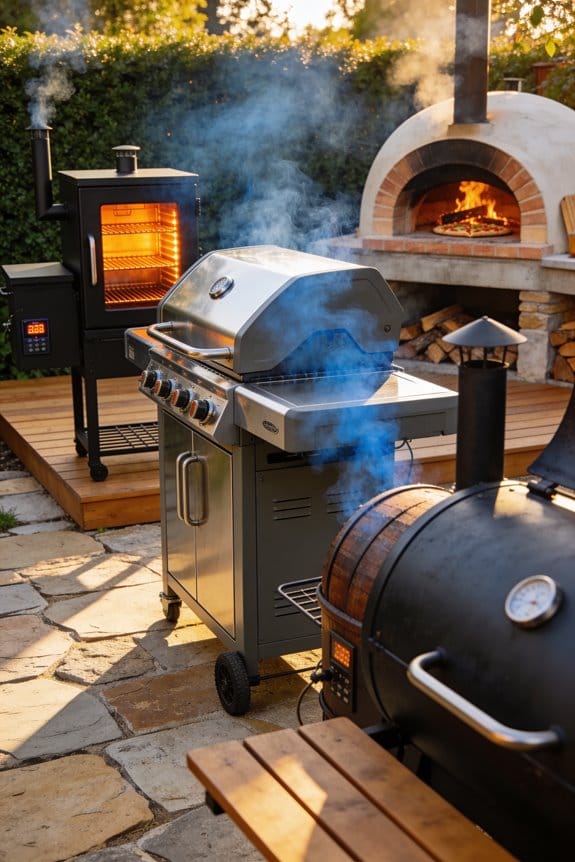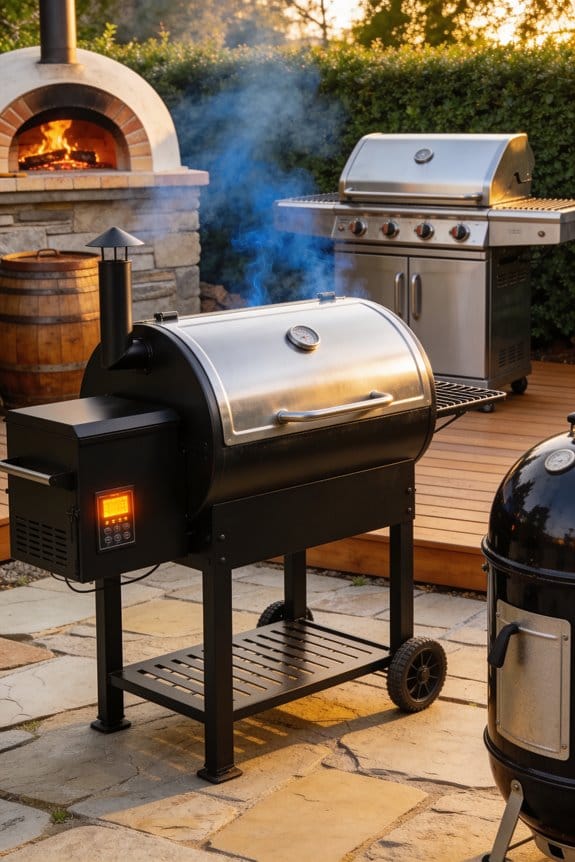
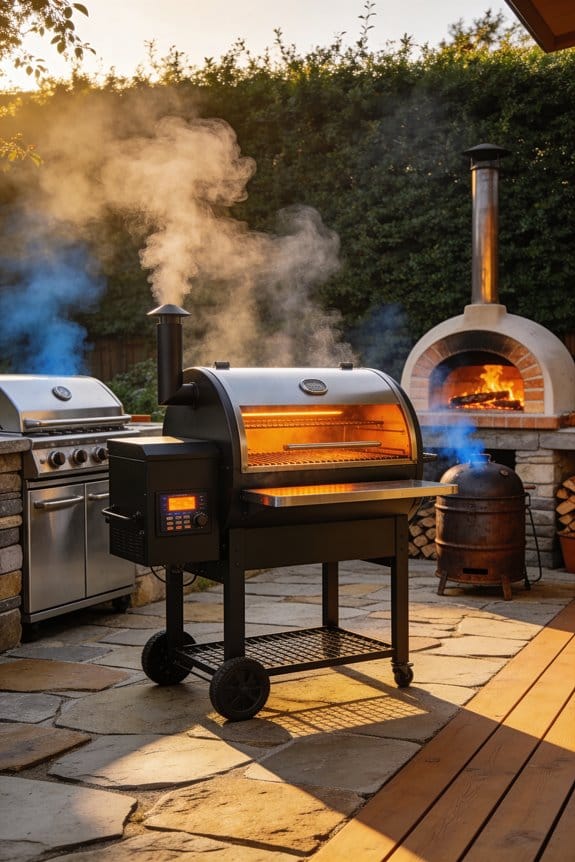

Your first pellet grill cook will surprise you because startup floods your grill with thick smoke for 3.5–4 minutes before ignition, which takes 10–20 minutes total while the heating rod reaches temperature. Temperature control feels different too—you’ll manage heat through convection rather than direct flame, so probe placement matters. You’ll also need to check your pellet hopper hourly and clean the burn pot before cooking, since ash buildup blocks ignition. Understanding each step beforehand transforms these surprises into expected parts of the process.
Key Takeaways
- Thick smoke and unpleasant odors during startup alarm neighbors; expect 10–15 minutes before dissipating.
- First ignition takes 10–20 minutes as the heating rod reaches temperature to ignite pellets safely.
- Temperature management requires preheating fully and cooking by temperature, not time like gas grills.
- Pellet hopper requires checking hourly during cooks; pellets can bridge and stop fuel feeding.
- Clean the burn pot before cooking, as ash buildup prevents pellet contact with ignition rod.
Why Your Grill Floods With Smoke Before Ignition (And When to Worry)
When you first fire up your pellet grill, you’ll notice thick clouds of smoke pouring out before the igniter actually creates a flame, and this is completely normal. During the startup cycle, your grill feeds pellets for 3.5 to 4 minutes before ignition occurs. This creates substantial smoke that can alarm neighbors, but it’s part of the process.
To manage this effectively, make sure proper ventilation guidance by operating outdoors or in well-ventilated areas during initial startup. The unpleasant smell dissipates within 10 to 15 minutes. If pellet bridging occurs—where pellets cling to hopper sides—the fuel won’t reach the fire properly, and you’ll need to restart. Set your grill to smoke mode with the lid open initially, then close it once you see a roaring fire with reduced smoke output.
Expect a 10-20 Minute Wait for First Ignition: Here’s What’s Happening
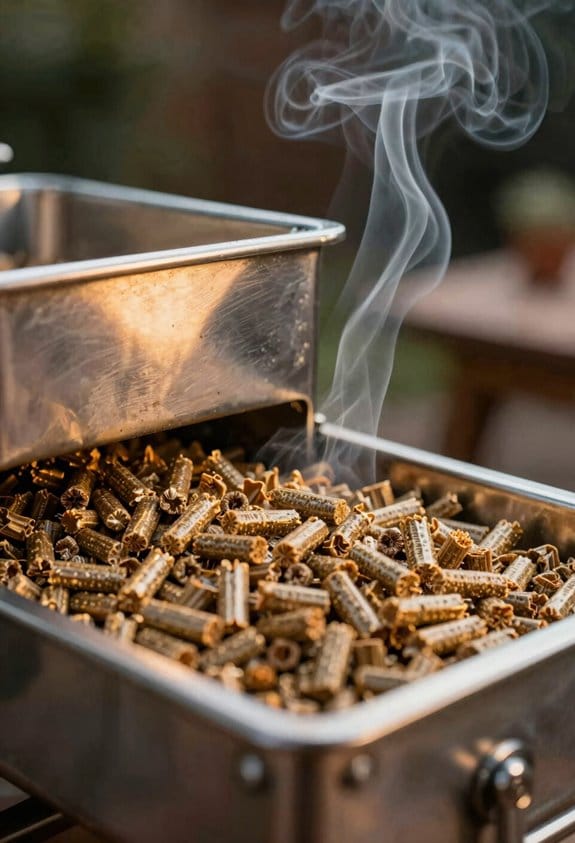
If you’ve just turned on your pellet grill for the first time, you might be wondering why nothing’s happening after you hit the ignition button—and that’s because the grill is actually working exactly as it should. During startup, your grill feeds pellets into the fire pot for 3.5 to 4 minutes before the igniter activates. This 10 minute patience period tests new users, but it’s essential for proper igniter diagnostics. The heating rod must reach temperature to ignite the pellets safely. If ignition hasn’t occurred after 20 minutes, unplug the grill and restart the cycle. Don’t assume failure immediately; the system requires time to function correctly and establish a reliable flame.
How Temperature Control Works Differently on Pellet Grills
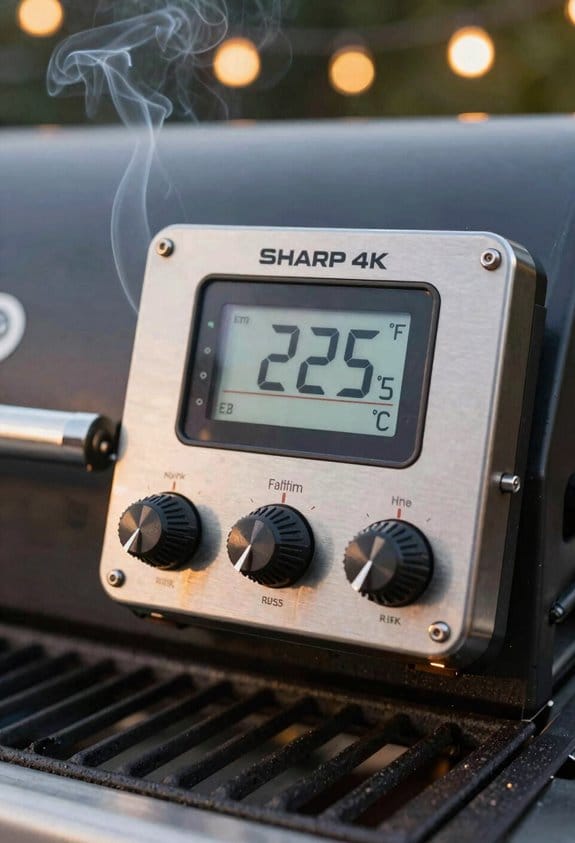
Once your pellet grill finally ignites and settles into a steady flame, you’ll discover that temperature management works quite differently than it does on a traditional gas or charcoal grill. Rather than cooking by time, you’ll cook by temperature using an instant-read thermometer. This ambient convection system distributes heat evenly throughout the cooking chamber, unlike direct flame grills. Probe placement matters markedly—position your thermometer away from direct heat sources for accurate readings. Preheat your grill fully to your target temperature before adding food. For low and slow smoking, aim for 225-250°F, while high-temperature searing requires preheating to 500°F, which takes about 40 minutes. This patient approach guarantees consistent results and proper breakdown of meat fibers.
Check Your Pellet Hopper Every Hour: Here’s Why and How Much to Use
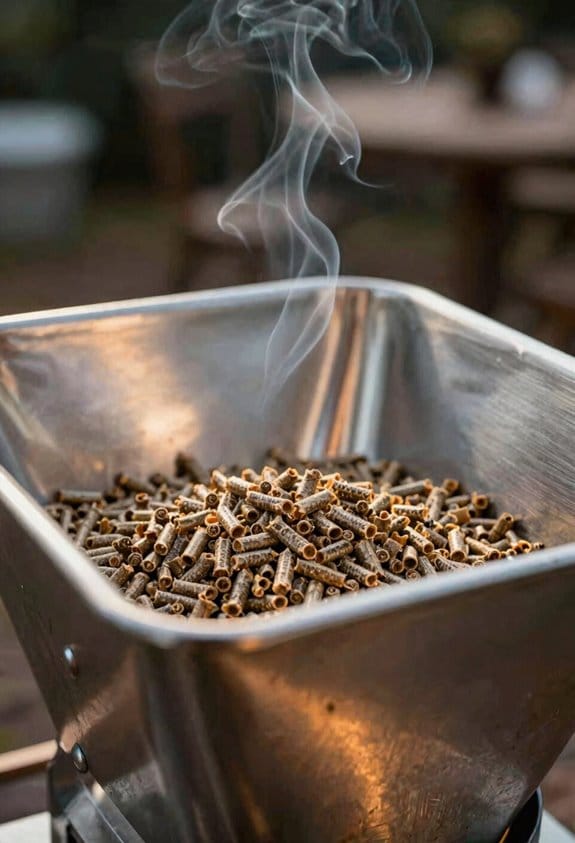
During your first pellet grill cook, you’ll need to check your hopper regularly—roughly every hour—to prevent the fire from dying unexpectedly. Pellets can funnel, meaning they cling to the hopper’s sides rather than feeding into the auger, which stops fuel from reaching your fire. This requires restarting the entire ignition cycle.
Consumption rates vary by cooking method. Low and slow smoking uses about 2 pounds per hour, while hot grilling demands 4 pounds hourly. Before cooking, inspect your pellet storage for moisture, since damp pellets won’t feed properly. Store pellets in a dry location and use fresh bags for peak performance. Regular hopper checks prevent unexpected fires and guarantee consistent results throughout your cook.
Clean the Burn Pot Before Each Cook: It’s Not Optional
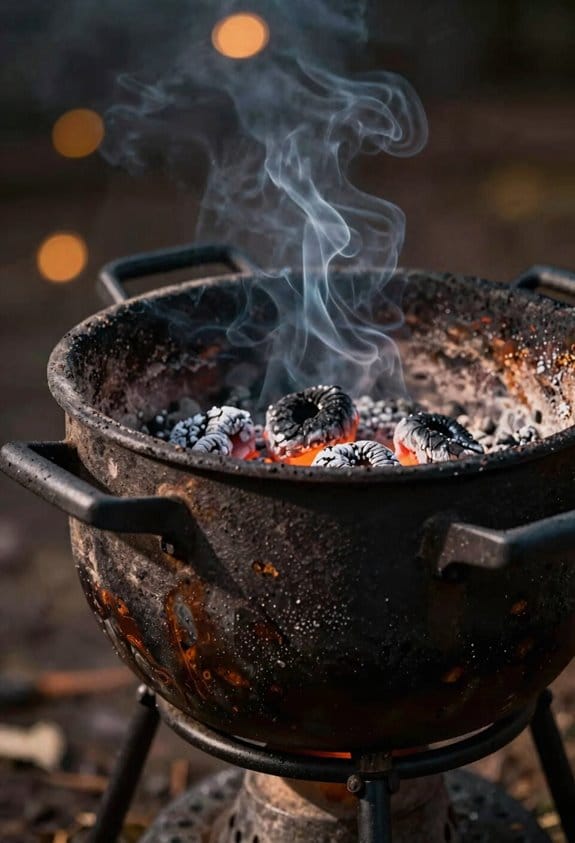
Every time you cook on your pellet grill, you’ll need to clean the burn pot before you start, because ash buildup prevents pellets from contacting the hot ignition rod and blocks the entire ignition process. I check mine before each cook, and this simple step makes all the difference between a successful startup and frustrating ignition failures.
Ash accumulates in the burn pot during cooking, creating a barrier between fresh pellets and the heating element. Without direct contact, the igniter can’t light the fuel, leaving you with a dead grill. I spend just five minutes clearing out the ash and drip pan using the grill’s cleaning tools.
This maintenance habit guarantees your grill ignites reliably every time you cook.
Start With Pork Butt, Not Brisket: Here’s Why It’s the Forgiving First Cook
Selecting pork butt as your first pellet grill cook sets you up for success because this cut forgives mistakes that would ruin more temperamental meats like brisket. Pork butt contains substantial fat and connective tissue that break down during low and slow smoking, creating tender, juicy results even with imperfect temperature management. I recommend smoking at 225-250°F, allowing the meat’s natural marbling to protect against drying out. Try dry brining your pork butt beforehand by applying salt and seasonings several hours before cooking; this enhances flavor development throughout the meat. The thick bark development that forms on the exterior indicates proper smoke penetration and creates a flavorful crust. This forgiving nature makes pork butt ideal for learning your grill’s quirks before tackling challenging cuts like brisket.
Frequently Asked Questions
What Should I Do if My Pellets Funnel and Stick to the Hopper Sides During Cooking?
I’d break up the pellet bridging by gently tapping the hopper sides or using a wooden stick to dislodge stuck pellets. I’d also check for hopper moisture, which causes funneling, and make sure I’m storing pellets in a dry location to prevent future issues.
How Long Does the Initial Burn-In Seasoning Process Take Before My First Cook?
You’ll need about an hour for your initial seasoning and burn time. I’d recommend running it on high for at least 45 minutes using sufficient pellets. This grill stabilization and paint cure process guarantees peak performance.
Can I Use My Pellet Grill for Baking Desserts Like Caramel Apple Cheesecake?
Yes, I can bake desserts like caramel apple cheesecake in my pellet grill. I’ll maintain a steady dessert temperature using the grill’s convection function, ensuring even crust texture and perfectly baked results every time.
What’s the Best Temperature and Technique for Smoking Chicken Wings on Pellet Grills?
I’ll tell you this: start smoking at low temps around 225°F with direct smoke, then sear at 500°F. You’ll achieve tender, smoky wings with gorgeous color and sweetness that’ll surely satisfy.
Should I Run a Shutdown Cycle Before Storing My Grill for Extended Periods?
Yes, I’d recommend running a shutdown cycle before winter storage or extended periods. It’ll help protect your grill’s internal components. Always empty your hopper first using the clean-out chute after running high temperature.