


A pellet grill burns compressed hardwood pellets in a fire pot, using an auger to feed fuel automatically and electric ignition to start the fire. A blower motor supplies oxygen while a digital controller monitors temperature through sensors and adjusts pellet delivery to maintain your target heat. This automation lets you walk away during cooking without constant monitoring, while the controlled combustion produces authentic wood-fired flavor. The combination of convenience, precise temperature control, and consistent results explains why backyard cooks increasingly prefer them over traditional smokers; understanding each component reveals how they achieve such reliable performance.
Key Takeaways
- Pellet grills use an electric auger to feed compressed hardwood pellets into a fire pot, where an igniter and blower fan maintain consistent combustion and heat.
- Digital controllers with thermocouple sensors automatically adjust pellet feed rates to maintain precise target temperatures with minimal monitoring required.
- Different wood pellet types produce distinct flavors—oak mild, hickory bold, fruitwoods sweet—enabling authentic wood-fired taste without an open flame.
- Pellet grills excel at versatile cooking: smoking brisket, grilling steaks, baking pizzas, and roasting vegetables all with consistent, reliable results.
- Backyard cooks love pellet grills for their combination of superior flavor, hands-off automation, and easier temperature control compared to traditional smokers.
What Exactly Is a Pellet Grill?
A pellet grill is an outdoor cooking device that burns compressed hardwood pellets to generate heat and smoke for cooking food. Unlike traditional charcoal or gas grills, pellet grills combine automation with wood-fired flavor, which has driven their evolution in the backyard cooking market. I’ve noticed many consumer misconceptions exist about how these grills function—some people assume they’re purely manual or that they don’t produce authentic smoke flavor. In reality, pellet grills use electric motors, digital controllers, and thermocouples to maintain precise temperatures automatically. They’re designed to be versatile, allowing you to smoke, grill, bake, and sear. The history of pellet grills shows significant development over recent decades, transforming them from niche equipment into mainstream cooking tools for enthusiasts seeking convenience without sacrificing quality.
How the Hopper and Pellets Feed Your Fire

The hopper serves as the storage container for your pellet grill‘s fuel, holding compressed hardwood pellets that you’ll load before cooking begins. Your hopper capacity depends on the specific grill model you own, ranging from smaller portable units to large backyard installations. I recommend selecting pellets based on wood type, since different woods impart distinct flavors—oak for mild smoke, hickory for bold intensity, or fruitwoods for subtle sweetness. Quality matters markedly, so I choose 100% natural hardwood pellets without fillers or binders. Pay attention to pellet moisture content, as overly dry or wet pellets can affect combustion efficiency and temperature consistency. Proper pellet selection guarantees your grill performs at peak throughout the cooking season.
How the Auger Delivers Fuel Automatically
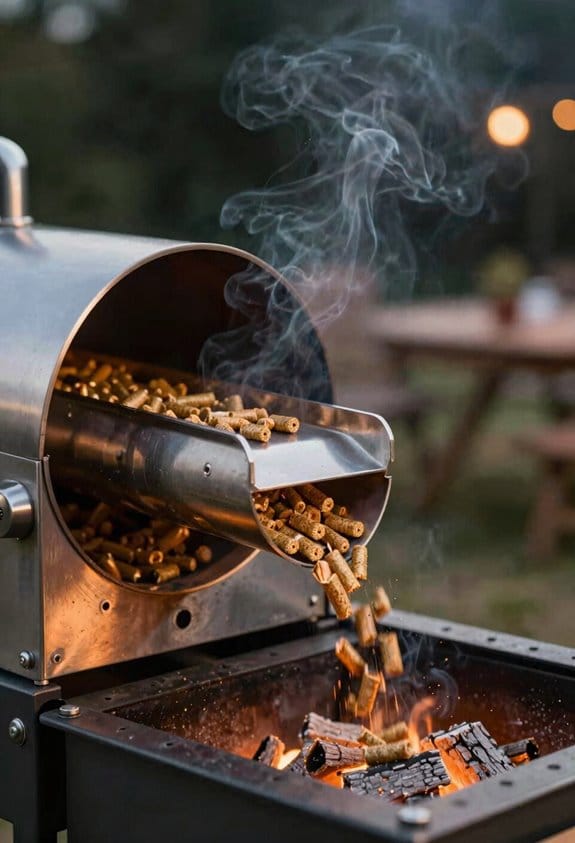
Once your pellets are loaded into the hopper, an auger system automatically moves them from storage into the fire pot where they’ll ignite and burn. The auger, which resembles a rotating screw, is powered by an electric motor that pushes pellets downward at a controlled pace. Your grill’s digital controller manages feed calibration by adjusting how fast the auger turns based on temperature readings from inside the cooking chamber. When you want higher heat, the auger feeds more pellets; when you need lower temperatures, it slows down delivery. Regular motor maintenance, including occasional cleaning and inspection, keeps your auger system running smoothly and guarantees consistent fuel delivery throughout your cooking session.
How Your Pellet Grill Ignites

Before your pellet grill can produce heat and smoke, it needs to ignite the pellets in the fire pot, which happens through a process involving an electric igniter and controlled airflow. When you start your grill, the hot rod igniter—positioned through careful spark placement inside the fire pot—heats to a high temperature, typically igniting the first pellets within five minutes. Simultaneously, the draft induction fan activates, forcing oxygen into the combustion chamber to support the growing flames. Safety timers built into your grill’s system guarantee the igniter shuts off once the fire establishes itself, preventing damage to the heating element. This automated ignition sequence eliminates the need for manual fire-starting methods, making your pellet grill remarkably user-friendly and reliable every time you cook.
How the Fan System Maintains Even Heat

Beyond the ignition process, your pellet grill relies on a sophisticated fan system to circulate heat evenly throughout the cooking chamber, ensuring that food cooks uniformly regardless of its position on the grates. The draft induction fan forces air through the fire pot, where combustion occurs, creating the airflow balance necessary for consistent temperature distribution. This blower motor works continuously during cooking, drawing oxygen to maintain the flame while pushing heated air and smoke circulation throughout the entire chamber. The fan’s speed adjusts automatically based on your digital controller’s temperature settings, regulating combustion intensity. By managing both the oxygen supply and smoke circulation, the fan system prevents hot spots and cold zones, allowing you to achieve predictable, even cooking results across your entire cooking surface.
How Temperature Control Stays Precise
While the fan system circulates heat throughout your grill, a digital controller works behind the scenes to keep your cooking temperature exactly where you want it. This controller reads temperature data from a thermocouple, a sensor that measures heat inside the grill. When your grill drifts from the target temperature, the controller adjusts the auger speed automatically, feeding more or fewer pellets as needed. Advanced models use PID tuning, a sophisticated algorithm that prevents overshooting by predicting temperature changes and responding gradually. This accounts for thermal lag, the delay between when you add fuel and when the grill’s temperature actually rises. The result is stable, consistent heat for perfectly cooked meals.
Why You Can Walk Away: The Automation Advantage
Once you set your desired temperature on a pellet grill’s digital controller, you can effectively walk away and let the automation handle the rest. The grill’s auger system continuously feeds pellets at controlled rates, adjusting based on thermocouple readings that monitor internal temperatures. This automatic adjustment maintains your set temperature without manual intervention.
Many modern pellet grills offer remote monitoring through WiFi and mobile apps, allowing you to check temperatures and food progress from anywhere. Built-in auto safety features prevent overheating and guarantee consistent fuel delivery. The combination of precise temperature control and automated pellet feeding transforms grilling into a genuinely hands-off experience. You can focus on other tasks while your grill maintains perfect cooking conditions, making pellet grills ideal for busy cooks who want reliable, flavorful results.
What You Can Cook on a Pellet Grill
Pellet grills excel at far more than just smoking meat, offering versatility that rivals dedicated cooking appliances. You can grill burgers and steaks at high temperatures, bake pizzas and breads using indirect heat, and smoke briskets low and slow over hours. Some advanced models feature sous vide integration, allowing you to cook vacuum-sealed foods at precise temperatures before finishing them on the grill’s surface. Beyond traditional meat options, vegetarian options thrive on pellet grills—roasted vegetables, grilled portobello mushrooms, and wood-fired flatbreads develop complex flavors impossible to achieve indoors. The consistent temperature control makes everything from fish to desserts possible. This cooking range transforms your pellet grill into a year-round outdoor kitchen capable of handling nearly any recipe you’d prepare in a traditional oven or stovetop.
How Pellet Grills Deliver Wood-Fired Flavor
The versatility you’ve discovered with a pellet grill comes directly from its ability to infuse food with authentic wood-fired flavor, which sets it apart from other outdoor cooking methods. Different wood pellets produce distinct smoke profiles, creating smoke complexity that enhances your dishes. When you select hardwood pellets—whether oak, hickory, or fruitwood—you’re choosing specific flavor characteristics for flavor pairing with your meat or vegetables. The auger system delivers pellets consistently to the fire pot, where they burn completely and produce clean blue smoke rather than thick white smoke. This controlled combustion guarantees steady, predictable flavors throughout your cooking process. The combination of precise temperature control and natural wood smoke creates the authentic wood-fired taste that makes pellet grills increasingly popular among backyard cooks seeking superior flavor without traditional smoker complexity.
Frequently Asked Questions
How Often Do I Need to Refill the Hopper During Cooking?
You’ll refill your hopper based on your grill model’s capacity and the pellet feedrate you’re using. Higher temperatures consume more pellets faster, so I’d check every few hours during longer cooks.
What Type of Hardwood Pellets Work Best for Different Meat Flavors?
Want to elevate your meat’s flavor profile? I’ve found hickory pairs wonderfully with beef and pork, while fruitwoods match perfectly with poultry and fish, letting you customize each cook’s taste.
Can I Use a Pellet Grill in Cold or Wet Weather Conditions?
You can definitely use your pellet grill in cold or wet weather. I’d recommend investing in weatherproof covers and proper positioning to protect it. Cold smoking’s possible too with the right setup and insulation techniques.
How Much Electricity Does a Pellet Grill Consume During Operation?
While you’re savoring wood-fired flavor, I’ll tell you that your pellet grill’s power draw remains minimal—typically 100-150 watts. That’s surprisingly low energy cost, making it efficient despite the electric motor and digital controller running continuously.
What Maintenance Is Required to Keep My Pellet Grill Functioning Properly?
I’ll help you maintain your pellet grill by regularly cleaning grates to prevent buildup, inspecting the igniter for wear, emptying ash from the firebox, and checking the auger for pellet jams.


