
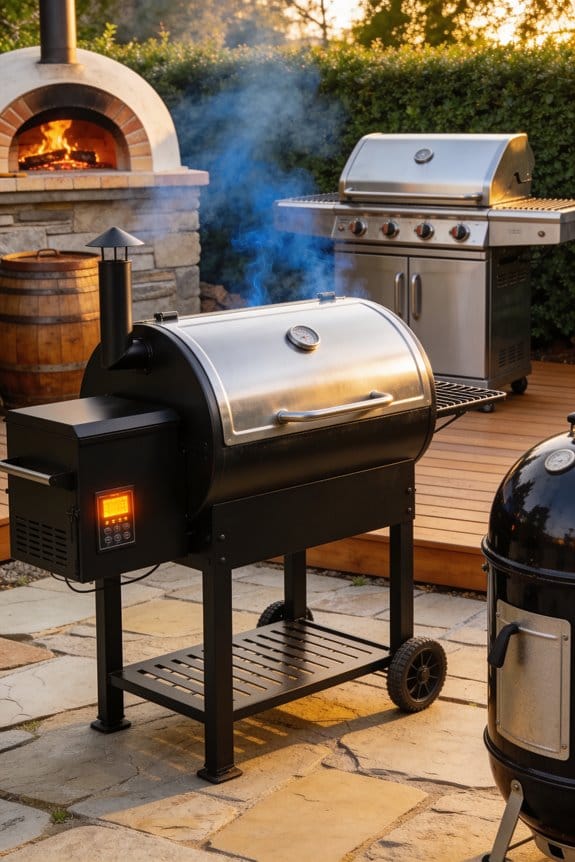

After every cook, wipe your grates while they’re warm using nylon brushes or aluminum foil to remove residue without scratching. Empty the grease bucket completely to prevent overflow and fire hazards. Once cooled and unplugged, vacuum ash from the firepot and barrel carefully, avoiding the auger tube. Skip wire brushes since they damage grates; instead, use mild detergent and water for washing. Monthly inspections of vents, smokestack, and the auger tube prevent blockages that reduce heating performance. The sections ahead explain each step in greater detail.
Key Takeaways
- Wipe grates while warm using nylon brushes or aluminum foil to remove residue safely without scratching surfaces.
- Empty the grease bucket completely after each cook to prevent overflow and maintain cooking performance.
- Line drip trays with foil for easier disposal and minimal cleanup after every cooking session.
- Allow grill to cool thirty to sixty minutes and unplug before deep cleaning to prevent burns.
- Vacuum ash from firepot and barrel every two to three cooks to maintain airflow and efficiency.
Wipe Grates and Empty the Grease Trap After Every Cook
After every cooking session, you’ll want to wipe down your grates and empty the grease trap, which are the two most important immediate maintenance tasks for your pellet grill. While your grates are still warm, use a grill brush or wadded aluminum foil to remove food residue and buildup. This prevents grease accumulation that can affect cooking performance. Next, empty the grease bucket completely after each use to prevent overflow and potential fire hazards. Lining your drip tray with foil makes disposal easier and keeps cleanup minimal. Regular attention to these tasks supports both seasonal maintenance cycles and pet safety by reducing fire risks around your grill. These quick actions take just minutes but markedly extend your grill’s lifespan.
Cool and Unplug Your Grill Before Deep Cleaning
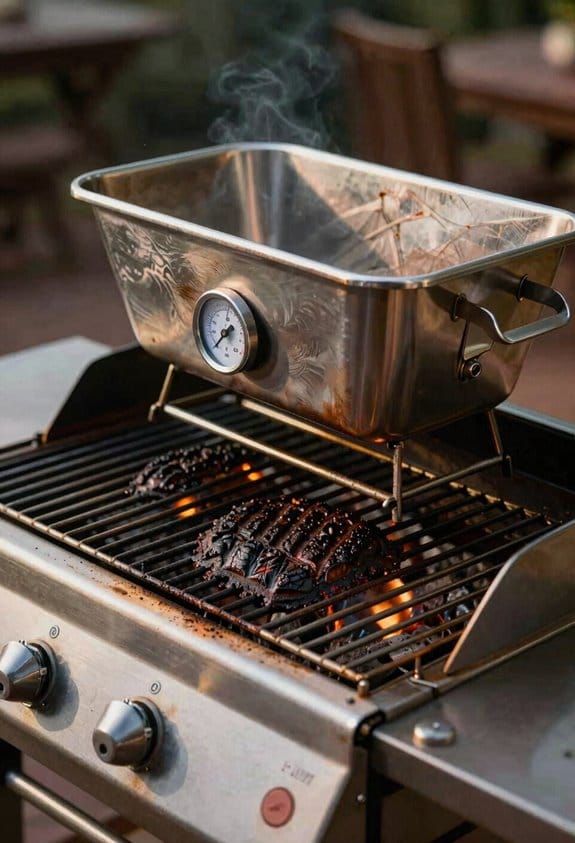
Before you begin any deep cleaning of your pellet grill, turning off the power and allowing the unit to cool completely is absolutely essential for your safety. I recommend unplugging the grill entirely as your primary power disconnect step, which eliminates any electrical hazard while you work. Waiting for the grill to cool prevents burns from hot surfaces, grates, and internal components that retain heat long after cooking stops. This safety reminder shouldn’t be skipped, even if you’re in a hurry. Allow at least thirty to sixty minutes for complete cooling, depending on how long you’ve been grilling. Once the grill is cool and unplugged, you can safely proceed with vacuuming ash, removing the drip tray, and scraping grease without risk of electrical shock or thermal injury.
Vacuum Ash From the Firepot, Barrel, and Hopper
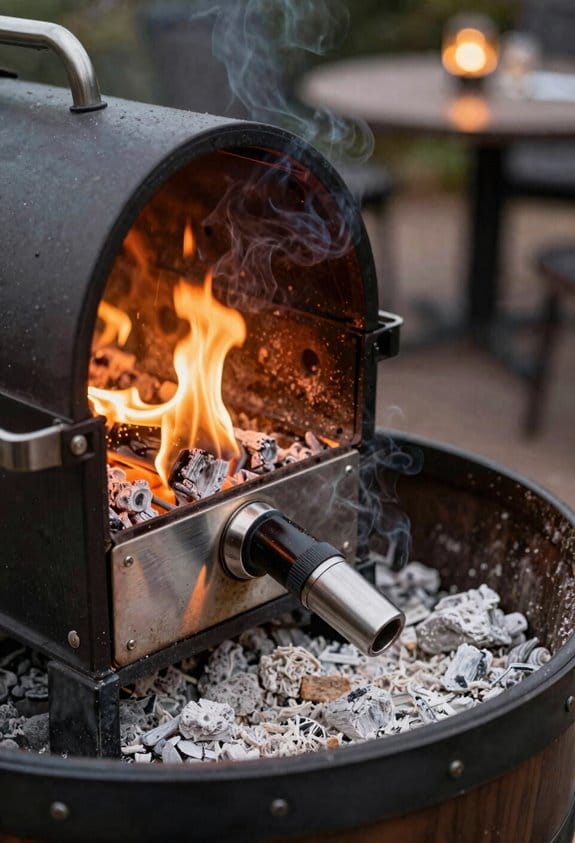
Vacuuming ash from the firepot, barrel, and hopper is one of the most important steps in maintaining your pellet grill’s performance and longevity. I recommend using a shop vac to remove accumulated ash, which prevents buildup that restricts airflow and reduces heating efficiency. Start by vacuuming the firepot thoroughly, where most ash collects during cooking. Next, clean the barrel’s interior walls and bottom, being careful around the auger tube. Finally, address the hopper, which requires pellet maintenance attention since ash accumulation interferes with pellet flow. This ash removal process should follow your deep cleaning schedule every 2-3 cooks. By maintaining these areas consistently, you’ll make certain your grill operates at peak performance and extends its operational lifespan considerably.
Brush Grates the Right Way: Skip Wire Brushes
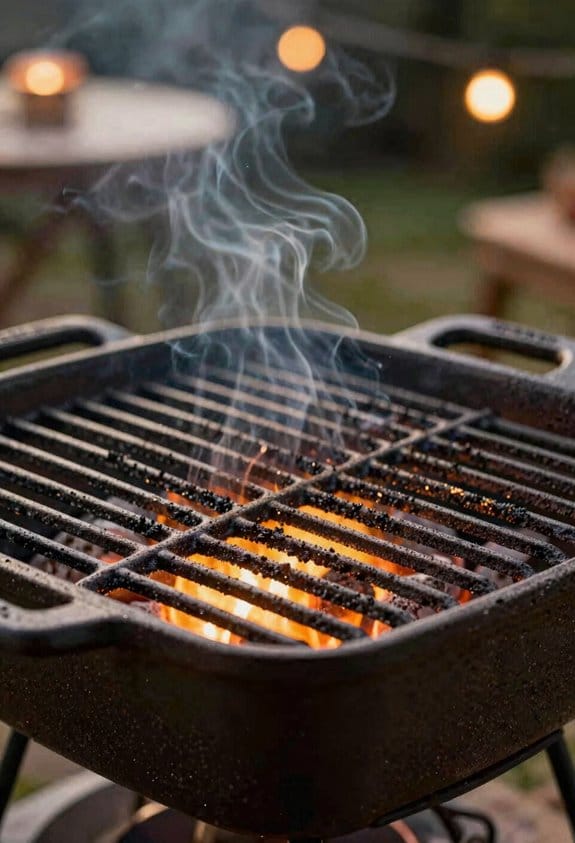
Cleaning your grill grates properly requires choosing the right tools, and I’d strongly recommend skipping wire brushes entirely. Wire brushes can scratch and damage your grates, creating spots where rust develops. Instead, I use nylon brushes, which clean effectively without harming the surface. While your grates are still warm after cooking, I brush them thoroughly to remove residue and buildup. For stubborn spots, I scrub with a wadded ball of aluminum foil, which works surprisingly well and won’t cause damage. After brushing, I wash the grates with mild detergent and rinse them thoroughly with water. This approach keeps your grates in excellent condition while ensuring they stay clean and ready for your next grilling session.
Inspect Vents, Smokestack, and Auger Tube Monthly
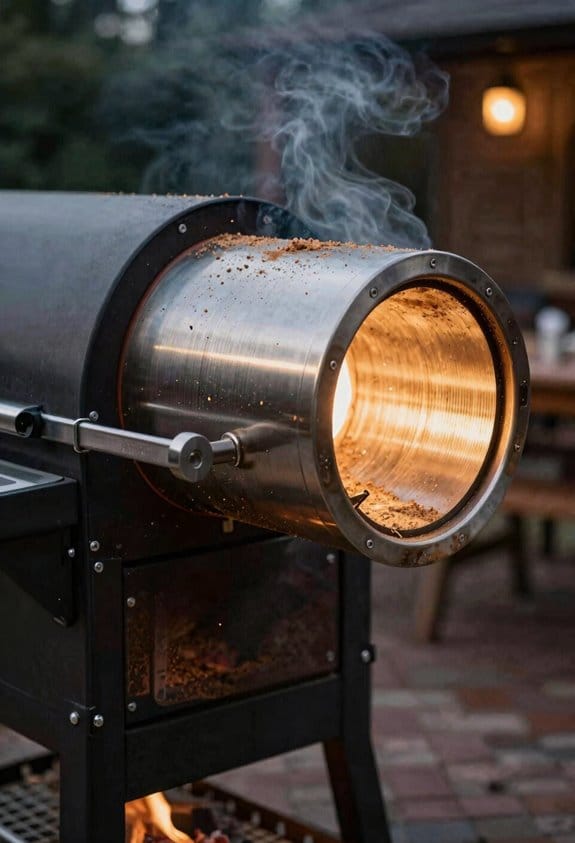
While keeping your grates pristine is important for cooking quality, maintaining the internal pathways of your grill is equally important for its overall performance and safety. I recommend inspecting your vents and smokestack monthly to prevent vent buildup, which restricts airflow and reduces cooking efficiency. Use a shop vac or aluminum foil ball to remove ash and debris from these areas carefully.
Additionally, conduct an auger inspection monthly to make sure it rotates smoothly without jamming. Check the auger tube for pellet residue or blockages that could prevent proper fuel delivery. If you notice resistance or hear grinding sounds, stop immediately and investigate further. These simple monthly checks help prevent costly repairs and keep your grill operating safely and reliably throughout the grilling season.
Frequently Asked Questions
Can I Use a Hose or Power Washer to Clean the Inside of My Pellet Grill?
No, I don’t recommend using a hose or power washer inside your pellet grill. Hose risks include water damage to electrical components and the hopper. Powerwasher damage can ruin internal parts, so stick with dry methods and vacuuming instead.
How Often Should I Clean the Grease Chute to Prevent Fire Hazards?
I’d recommend you clean your grease chute every 6 months for fire prevention. I also suggest weekly inspections to monitor grease buildup and consider monthly replacement of your drip tray liner to maintain safety.
What’s the Best Way to Line My Drip Tray for Easy Grease Disposal?
I’ll line my drip tray with aluminum foil or disposable liners for effortless grease disposal. Both methods contain mess, simplify cleanup, and eliminate scrubbing. I simply remove the liner after each cook and replace it fresh.
How Frequently Should I Clean the Hopper to Maintain Optimal Grill Performance?
I’d recommend cleaning your hopper every 4-5 bags of pellets. During monthly inspections, I check for buildup that affects auger maintenance. This keeps your grill running smoothly and prevents performance issues from pellet debris accumulation.
Is It Safe to Use Chemical Cleaners on the Exterior of My Grill?
I’d caution you against chemical cleaners—here’s why: they can compromise your grill’s surface finish and chemical compatibility with stainless steel. I recommend vinegar or mild soap instead, which safely maintain your grill’s integrity.


