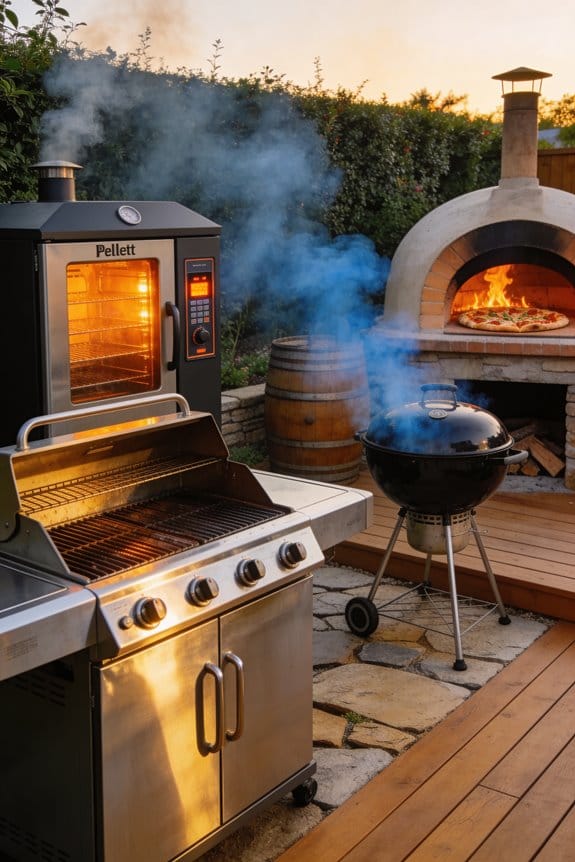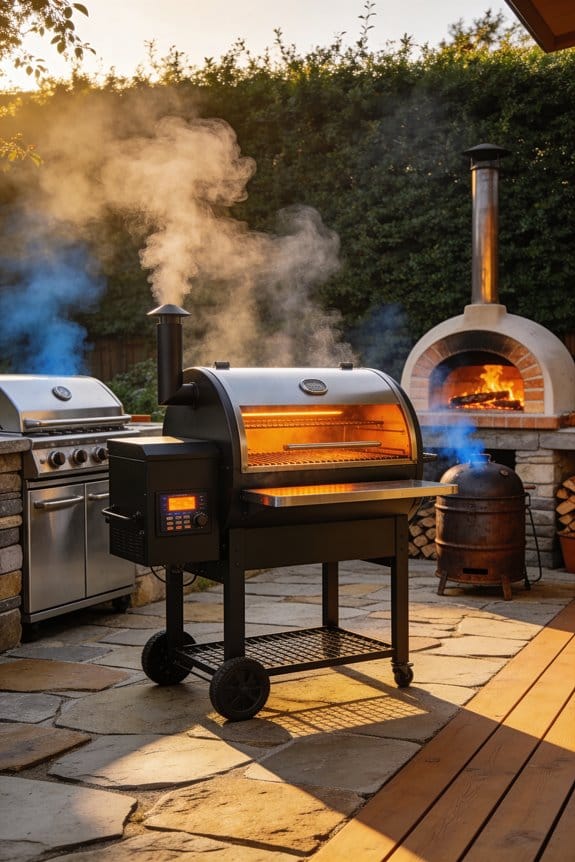


I’ve got you covered on winter pellet grilling. You’ll want premium hardwood pellets stored in airtight containers to prevent moisture damage, which makes them brittle and unreliable. Extend your preheat time by up to 50% since cold air slows ignition, then start around 350°F before lowering to your target temperature. Clean your firepot thoroughly to remove ash buildup that restricts airflow. Use insulation blankets to minimize heat loss, minimize lid openings during cooking, and shield your grill from wind and precipitation. PID control maintains temperatures within 5°F automatically, though you’ll burn more pellets compensating for cold conditions. The specific strategies ahead reveal exactly how to optimize each element.
Key Takeaways
- Premium hardwood pellets with high BTU output and proper moisture control ensure reliable ignition and consistent heat in freezing temperatures.
- Extended preheat time and firepot cleaning improve cold-weather startup reliability and reduce ignition lag during winter cooking sessions.
- Insulation blankets with reflective layers minimize heat loss and reduce pellet consumption by maintaining steady internal temperatures in harsh conditions.
- Limiting lid openings and using windbreaks protects convection efficiency and prevents heat loss from cold air drafts during winter cooks.
- PID control automatically adjusts pellet feed rates to maintain temperatures within 5°F despite cold weather, requiring no manual intervention.
Start With Premium Hardwood Pellets and Proper Winter Storage
When you’re grilling in cold weather, the foundation of success starts with what you put into your pellet hopper. I’d recommend choosing 100% hardwood pellets, which burn hotter and cleaner than lower-quality alternatives, helping your grill reach target temperatures faster despite freezing conditions. Moisture is your enemy in winter, so check moisture indicators on your pellet bags before purchasing. Store pellets in vacuum storage or airtight containers to prevent dampness from compromising performance. Oak and hickory blends provide high BTU output, giving you extra heat for extra-low temperatures. Premium pellets make certain even burning and less ash buildup, which means your grill maintains stability throughout winter cooking sessions. Proper storage protects your investment and guarantees reliable performance when weather challenges your setup.
Extend Your Preheat Time for Reliable Cold-Weather Ignition

Because cold air slows down the ignition process in your pellet grill, I recommend setting aside extra time before you start cooking. Cold ignition requires patience, since your grill needs additional time to reach peak operating temperature. I suggest starting at a higher temperature, around 350°F, then lowering it to your target once the grill stabilizes. This preheat timing strategy helps your pellet grill ignite more reliably in winter conditions. You might experience up to 50% longer startup times when temperatures drop and wind increases. Using a rapid igniter can speed this process considerably. During preheat, avoid opening the lid frequently, as this releases heat and extends your overall cooking preparation time.
Clean Your Firepot Before Winter Sessions for Peak Efficiency

Once your grill reaches its target temperature after that extended preheat, you’ll want to make sure the firepot—the heart of your pellet grill’s ignition system—is clean and ready to perform at its best. Before each winter session, I recommend performing a thorough firepot inspection to remove accumulated ash that builds up from previous cooks. This ash removal is critical because buildup restricts airflow and prevents pellets from igniting efficiently, which is especially problematic when cold temperatures already stress your grill’s performance. A clean firepot guarantees pellets burn hotter and reach your set temperature faster, reducing fuel waste during those lengthy preheats. Taking five minutes for ash removal before lighting up protects against tunneling and maintains the reliable ignition your grill needs in harsh winter conditions.
Use Insulation Blankets to Retain Heat and Cut Winter Fuel Costs

After you’ve cleaned your firepot and your grill stabilizes at temperature, an insulation blanket becomes your next strategic tool for winter success. These blankets wrap around your grill’s exterior, minimizing heat loss during cooking sessions. Proper insulation placement along the sides and lid creates a thermal barrier that reduces pellet consumption markedly. Quality blanket materials, typically heavy-duty fabrics with reflective insulation layers, maintain internal temperatures effectively against cold air and wind. By retaining heat, you’re not forcing your grill to work harder compensating for weather conditions. This means fewer pellets burn while you cook, lowering your fuel costs throughout winter. The blanket functions continuously during your cook, providing steady temperature stability and extending your grill’s efficiency when conditions are most challenging.
Minimize Lid Openings to Prevent Heat Loss While Cooking

Every time you lift your grill’s lid during cooking, you’re allowing warm air to escape into the cold winter environment, and your grill must work harder to recover that lost heat. Each opening disrupts the convection process inside your cooking chamber, forcing your pellet grill to burn additional fuel just to regain lost temperature.
To minimize this problem, plan your cooking approach beforehand. Check your food through the window rather than opening the lid repeatedly. When you must open it, do so quickly and decisively. Cold air rushes in while heat rushes out, and opening the lid also allows drafts to dampen the fire’s efficiency.
Shield Your Grill With Waterproof Covers and Wind Protection
While your grill’s insulation and operational techniques go a long way in winter cooking, external protection from the elements is equally important for maintaining performance and longevity. Waterproof covers guard against snow, rain, and ice accumulation, which can compromise your grill’s function. When selecting cover fabrics, choose materials that repel moisture while allowing ventilation to prevent condensation buildup underneath. Strategic windbreak placement around your grill reduces heat loss caused by cold air circulation, which forces your system to work harder and consume more pellets. Covers also ease snow removal, since snow doesn’t actually insulate your grill despite common misconceptions. Shield vents and seams specifically from sleet and freezing rain. Keeping your grill dry protects against moisture affecting pellet feed systems and burn quality throughout winter.
Play It Smart: Winter Temperature Sequencing for Consistent Results
Understanding how temperature sequencing works in winter helps you achieve consistent cooking results, since cold weather requires a deliberate approach rather than simply setting your grill to your desired temperature and expecting immediate performance. Cold sequencing involves staged ramps, meaning you increase temperatures gradually rather than jumping directly to your target setting. I recommend starting at 350°F initially, allowing your grill to stabilize and build consistent heat throughout the chamber. Once the grill reaches this intermediate temperature, lower it to your desired cooking temperature. This staged approach prevents temperature swings and guarantees even heat distribution. Expect up to 50% longer preheat times in cold, windy conditions. Your grill’s reliable PID control maintains steadiness throughout this process, ultimately delivering more predictable and uniform cooking results despite winter’s challenges.
Why Do Pellet Grills Struggle in Freezing Temperatures?
When temperatures drop below freezing, pellet grills face multiple interconnected challenges that reduce their efficiency and performance. Cold drafts penetrate seams and vents, pulling heat away from your cooking chamber and forcing your grill to work harder maintaining temperature stability. Moisture in the air can freeze inside pellet tubes, creating ignition lag that delays startup and makes reaching your target temperature frustratingly slow. Pellets themselves become brittle and dense in freezing conditions, burning less efficiently and requiring longer preheat times. Your grill’s internal components struggle with reduced airflow as cold air settles in the firebox. These combined factors—cold drafts, ignition challenges, and pellet performance issues—explain why winter cooking demands extra preparation and patience from you.
How Does PID Control Keep Your Grill Stable in Winter?
Your grill’s PID control system acts like a smart thermostat that constantly monitors temperature and makes tiny adjustments to keep conditions steady, even when winter weather tries to disrupt your cooking. This adaptive algorithm detects temperature fluctuations caused by wind, snow, or freezing air, then automatically adjusts pellet feed rates to compensate. Sensor calibration guarantees the system accurately reads actual grill temperatures, preventing overheating or undercooling. When you set your target temperature, the PID controller continuously compares it against real-time readings, making rapid micro-adjustments to maintain stability. This reliable engineering holds temperatures within 5°F of your set point regardless of harsh weather conditions. The result: you get consistent cooking performance throughout winter without manual intervention, though you’ll still burn more fuel due to increased heat loss from cold environments.
Frequently Asked Questions
Will Snow on My Grill Cover Actually Help Insulate It During Winter Cooking?
No, I’d remove it. Snow doesn’t insulate your grill; it actually blocks cover ventilation and traps moisture. You’ll want a clear, dry cover protecting your grill from winter’s elements instead.
How Much Longer Should I Expect My Winter Cooking Sessions to Take Overall?
You should expect 10-25% longer cooking times overall. I’d budget extra time for longer preheating and slower smoke development, especially in cold, windy conditions where your grill works harder maintaining temperatures.
What Pellet Type Works Best for Maintaining Heat in Extremely Cold Temperatures?
I’d recommend high density pellets and heat retention blends like oak and hickory for extreme cold. They’ll burn hotter, reach temperatures faster, and you’ll maintain steadier heat despite harsh winter conditions.
Can I Use My Grill in Freezing Rain, or Should I Wait?
You shouldn’t grill in freezing rain due to safety concerns and surface corrosion risks. I’d recommend waiting for clearer conditions. Use a waterproof cover to shield vents and seams from sleet and freezing rain, protecting your grill’s longevity.
How Often Should I Replace My Grill Cover for Optimal Winter Protection?
I’d replace your grill cover every 1-2 years depending on material degradation from harsh winters. Inspect it seasonally before storage—if it’s cracking or worn, get a new one for peak winter protection.