
I’d recommend matching your wood pellets to your meat’s intensity. Hickory works great for beef and pork because it delivers bold, bacon-like smoke that penetrates dense cuts effectively. Oak provides heavier flavor for fatty meats like brisket, while cherry and apple offer lighter profiles for chicken and delicate proteins. You can also blend woods or try bourbon pellets for sophisticated depth. The specific cut and cooking time you’re planning will determine how much smoke character you’ll need.
Key Takeaways
- Hickory pellets deliver bold, bacon-like smokiness perfect for beef and pork with excellent penetration into dense cuts like brisket.
- Oak pellets provide heavy, intense smoke ideal for bold meats like beef ribs, burning hotter and longer for substantial flavor.
- Cherry pellets offer light, versatile smoke suitable for pork, chicken, beef, and seafood without overwhelming delicate meat flavors.
- Apple pellets provide gentle, mild sweetness excellent for chicken and pork, recommended as a starting point for lighter taste preferences.
- Blend multiple pellet types to create layered flavors; adjust consumption based on cook time and temperature for optimal results.
Hickory Pellets: Bold Smoke for Beef and Pork
Hickory pellets deliver a bold, bacon-like smokiness that works exceptionally well with beef and pork, making them one of the most popular choices for serious barbecue enthusiasts. I find that hickory’s robust smoke profile guarantees excellent smoke penetration into dense cuts like brisket and pork shoulder, creating that authentic, smoky flavor many people seek. The flavor pairing works particularly well because hickory complements the natural richness of these meats without overwhelming them. You’ll notice consistent burning characteristics that allow for controlled cooking temperatures throughout your smoking session. Whether you’re preparing prime rib, grilled chicken, or smoked lamb t-bones, hickory pellets deliver reliable results. Their versatility across different meat types makes them an ideal choice for anyone beginning their pellet-smoking journey or refining established techniques.
Oak Pellets: Heavy-Duty Smoke for Intense Flavors
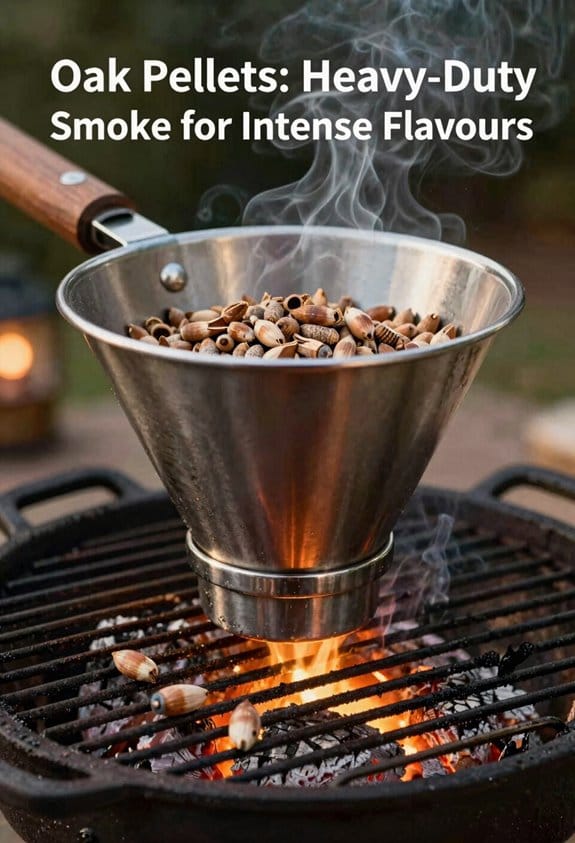
When you’re ready to move beyond the balanced smokiness of hickory, oak pellets offer a heavier, more intense smoke profile that’ll transform your barbecue results. Oak contains natural oak tannins, which create that deep, traditional smoke flavor associated with classic barbecue. This wood works exceptionally well with bold meats like beef ribs and brisket that can handle aggressive smoking.
For best results, consider charcoal pairing with oak pellets to enhance heat consistency and smoke intensity. Oak burns hotter and longer than many alternatives, making it ideal when you want substantial flavor penetration into meat. The strong smoke profile means oak suits experienced pitmasters seeking maximum impact. Use oak as your primary wood choice when tackling heavy, fatty cuts requiring robust flavoring to reach their full potential.
Cherry Pellets: The Versatile All-Rounder
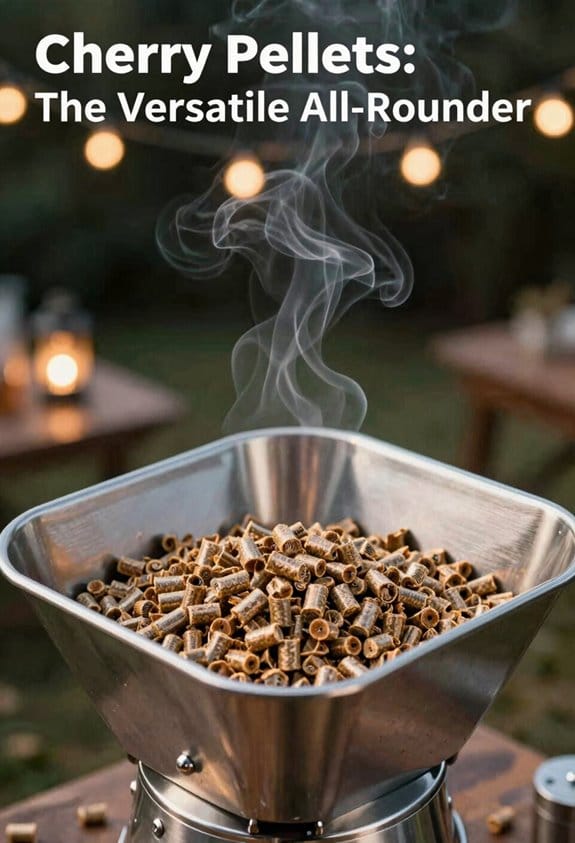
After exploring oak’s heavy-handed approach to smoking, cherry pellets offer a strikingly different experience that works across multiple meat types and cooking preferences. I find cherry pellets deliver light smoke flavor, making them ideal for pork, chicken, beef, and seafood without overwhelming delicate tastes. Their subtle fruit pairing characteristics complement both bold and tender proteins effectively.
When using grill techniques with cherry pellets, I recommend them as an all-rounder option for experimenters. They combine beautifully in blends like maple-hickory-cherry, creating layered smoke profiles. For those seeking milder smoke intensity, cherry outperforms heavier woods. You’ll notice cherry enhances subtle flavor profiles without overpowering ingredients, making it versatile for various cooking styles and meat selections throughout your smoking journey.
Apple Pellets: Light Smoke for Delicate Meats
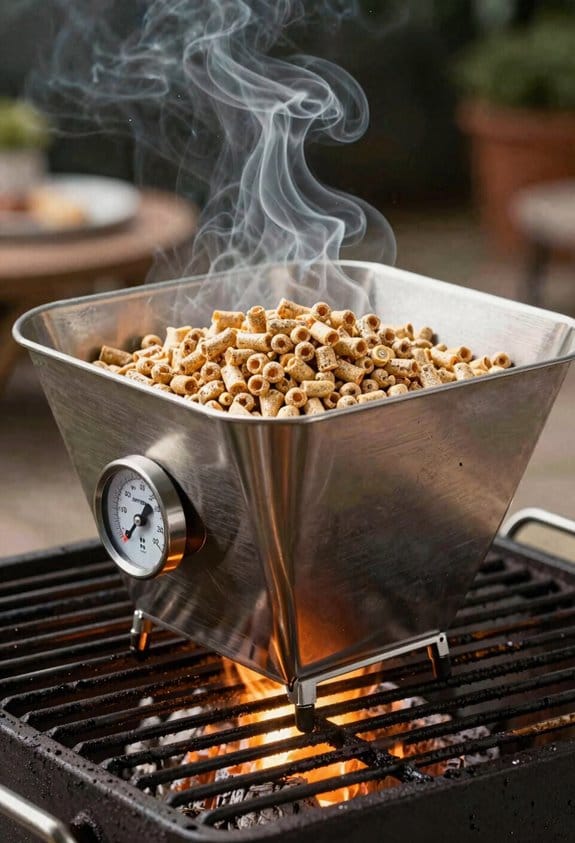
If you’re looking for a smoking wood that won’t overpower delicate meats, apple pellets frequently deliver the gentle, mild sweetness you need. I’ve found that apple pellets work wonderfully for chicken and pork, offering a delicate pairing that enhances rather than masks natural flavors. The subtle sweetness complements seafood as well, though cherry remains the top choice for fish.
Apple pellets suit anyone avoiding heavy smoke, making them ideal when you prefer lighter taste profiles. They blend well with other fruit woods, allowing you to customize your smoking experience. If you’re new to smoking or prefer gentler flavors, I’d recommend starting with apple pellets. They provide consistent results without overwhelming your meat, giving you control over your final dish’s smokiness level.
Bourbon Pellets: Smoky Flavor Beyond the Basics
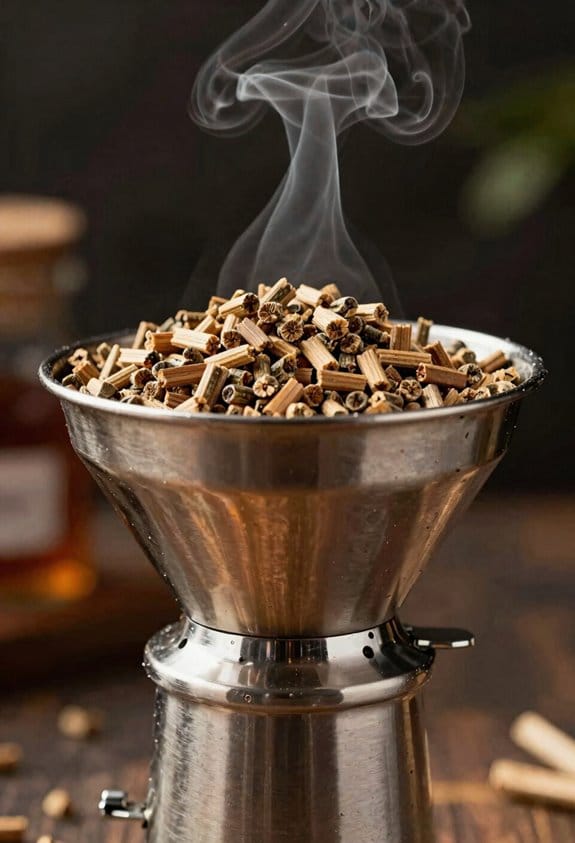
Bourbon pellets represent a distinct departure from the lighter, fruit-based woods I’ve discussed, offering a smoking experience that extends well beyond traditional meat applications. Unlike standard wood varieties, these pellets are infused with bourbon flavor derived from barrel aging processes, creating a sophisticated smokiness that complements diverse foods. You’ll find bourbon pellets work exceptionally well with pulled pork paired alongside BBQ sauce, delivering an authentic smoky taste that enhances the meat’s richness. Beyond proteins, they’re remarkably versatile for grilled corn seasoned with Cajun spices, vegetables, and even dessert pairing opportunities. This versatility makes bourbon pellets valuable for experimenters seeking unique flavor profiles. They offer a distinctive option when you want to move beyond conventional smoking methods while maintaining quality results across multiple cooking applications.
Blended Pellets: Mix Woods to Build Custom Smoke
When you want to create a smoke flavor that’s uniquely tailored to your preferences, blended pellets offer an excellent solution by combining different wood varieties into a single product. I find that flavor layering through wood pairing allows me to balance bold and subtle notes for specific tastes. For example, maple-hickory-cherry blends provide complexity that works well with poultry and fish. You can adjust smoke intensity by experimenting with different blend ratios, since each wood contributes distinct characteristics. Brands like BBQGuys Signature and Traeger offer ready-made blends, typically priced between $0.98 and $1.25 per pound. Creating custom blends lets you develop signature smoke profiles that match your cooking style and meat preferences, making blended pellets a practical investment for serious barbecuers.
Pellet Quantity and Burn Times by Meat Type
Because different meats require varying cook times and smoke intensity levels, I need to adjust both my pellet consumption and cooking duration based on what I’m smoking. Larger serving sizes like brisket or pork shoulder demand extended cook durations, sometimes twelve to sixteen hours, which means I’ll burn through more pellets than quick-cooking chicken breasts. A typical smoker consumes one to three pounds of pellets per hour, depending on temperature settings and airflow. When I’m preparing delicate seafood or poultry, I use fewer pellets and shorter cook times, perhaps two to four hours. However, bold meats like beef ribs require heavier smoke and longer durations, necessitating increased pellet quantities. Understanding these relationships helps me estimate fuel needs and plan my smoking sessions effectively before starting.
Frequently Asked Questions
Can I Mix Different Wood Pellet Types Together in My Smoker?
Yes, I’d recommend mixing different pellet types together. You’ll achieve flavor layering by combining fruitwoods blending with hickory or oak. This experimentation creates complexity—try maple-hickory-cherry for balanced, nuanced smoke that suits various proteins beautifully.
How Do I Store Wood Pellets to Maintain Freshness and Quality?
I’d store your wood pellets in airtight containers kept in a cool, dry place with climate control. This prevents moisture absorption and preserves their quality for peak smoking performance over time.
What’s the Difference Between Premium and Standard Wood Pellet Brands?
I’ve found premium brands prioritize superior hardwood sourcing and deliver more consistent flavor profiles across batches. Standard options vary more in quality and burn characteristics, though they’re budget-friendly for casual smoking.
Do Wood Pellets Expire, and How Long Do They Last?
I’ve found that wood pellets don’t truly expire, but they do degrade. Their shelf life depends on moisture content and storage conditions. High humidity compromises burn efficiency and odor retention, so I’d use them within 6-12 months.
Are There Safety Concerns With Using Infused Pellets Like Bourbon?
I’ve found bourbon pellets are safe to use—they’re food-grade infusions designed for smoking. The bourbon flavoring won’t harm you; it’ll just enhance flavor transfer to your meat without combustion concerns.