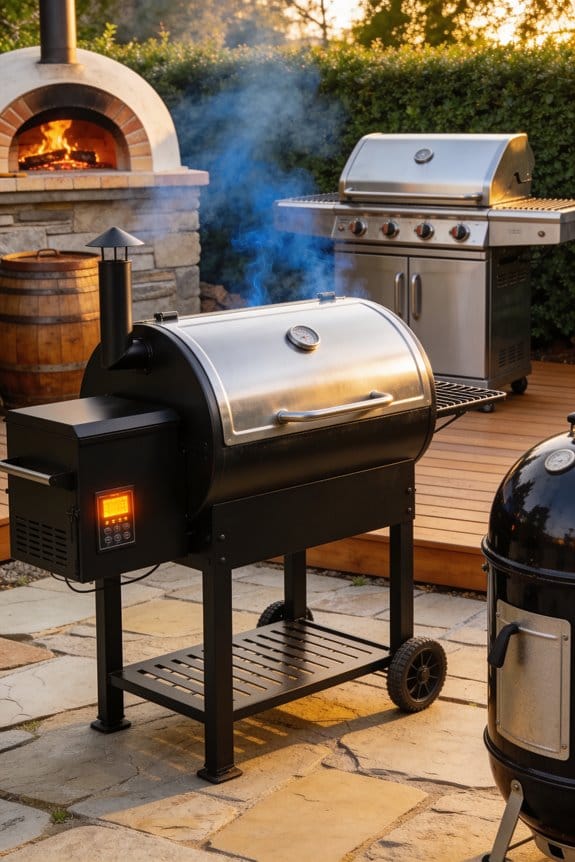


Your pellet grill isn’t reaching temperature for several fixable reasons. Low-quality pellets without kiln drying create excessive ash that clogs airflow and sensors. A dirty temperature probe reports falsely low readings, causing the grill to overfeed pellets. Check that your fire pot and chimney aren’t blocked with ash, as this restricts oxygen flow. Verify your auger’s feed rate matches your grill’s specifications. Cold weather and wind also reduce heat retention. Each issue has a straightforward solution that’ll restore your grill’s performance.
Key Takeaways
- Use high-quality pellets with less than one percent ash content to eliminate temperature control problems and ensure consistent performance.
- Clean the temperature probe regularly to prevent false low readings that cause dangerous pellet overfeeding and unstable heat.
- Remove ash buildup from the fire pot and chimney to restore proper airflow and combustion efficiency.
- Calibrate the auger feed rate to deliver optimal fuel without causing insufficient heat or dangerous temperature swings.
- Account for cold weather, wind, and humidity as environmental factors that significantly reduce heating performance.
Start With Pellet Quality: The #1 Cause of Temperature Swings
When your pellet grill struggles to reach the temperature you’ve set, I’d recommend looking first at what’s fueling your fire—the pellets themselves. Low-quality pellets produce excessive ash that clogs your grill’s airflow and sensors, causing temperature swings between 200°F and 325°F despite your 250°F setting. Through pellet sourcing and brand comparisons, you’ll discover that premium pellets undergo kiln drying, which removes moisture and reduces ash content markedly. Cheap alternatives lack this process, leaving residue that interferes with heat regulation. I’ve found that switching to high-quality pellets that burn cleanly eliminates most temperature control problems. Check your pellet supplier’s specifications for ash content percentages—aim for less than one percent for peak performance and consistent cooking results.
Clean Your Temperature Probe
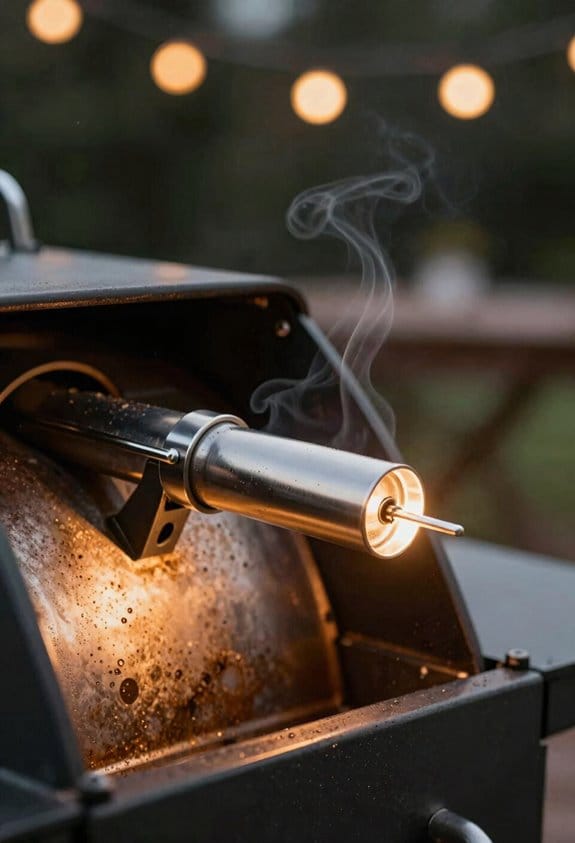
Once you’ve confirmed your pellets meet quality standards, the next step involves examining the component responsible for reading your grill’s temperature—the temperature probe, also called the RTD probe. Over time, ash and pellet residue accumulate on this sensor, causing inaccurate temperature readings. When your probe gets dirty, it reports falsely low temperatures, prompting your grill to overfeed pellets in compensation, creating dangerous temperature swings. Sensor maintenance is straightforward: locate your probe, gently remove it, and wipe it clean with a soft cloth. For thorough probe calibration, consult your grill’s manual for specific instructions. Regular cleaning prevents many temperature control problems and guarantees your grill maintains steady, reliable heat during every cook.
Clear Your Fire Pot and Chimney
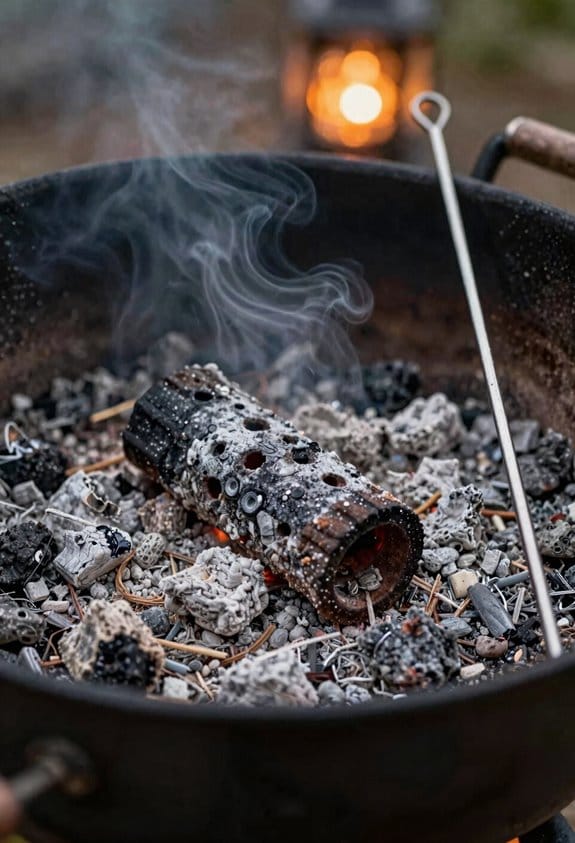
After cleaning your temperature probe, you’ll want to inspect and clear two critical areas where ash and pellet debris accumulate: your fire pot and chimney.
Your fire pot collects ash from burned pellets, which blocks airflow and prevents your grill from reaching desired temperatures. Use a grill brush or small shovel to remove this buildup regularly. Don’t overlook the chimney—ash removal here is equally important since blockages trap heat inside.
During your chimney inspection, check for excessive ash coating the interior walls. A clogged chimney restricts oxygen flow to your fire, markedly reducing combustion efficiency. Clear any obstructions you find, ensuring smooth airflow from bottom to top. This maintenance step prevents temperature fluctuations and helps your grill maintain consistent heat throughout your cooking session.
Check Your Pellet Feed Rate
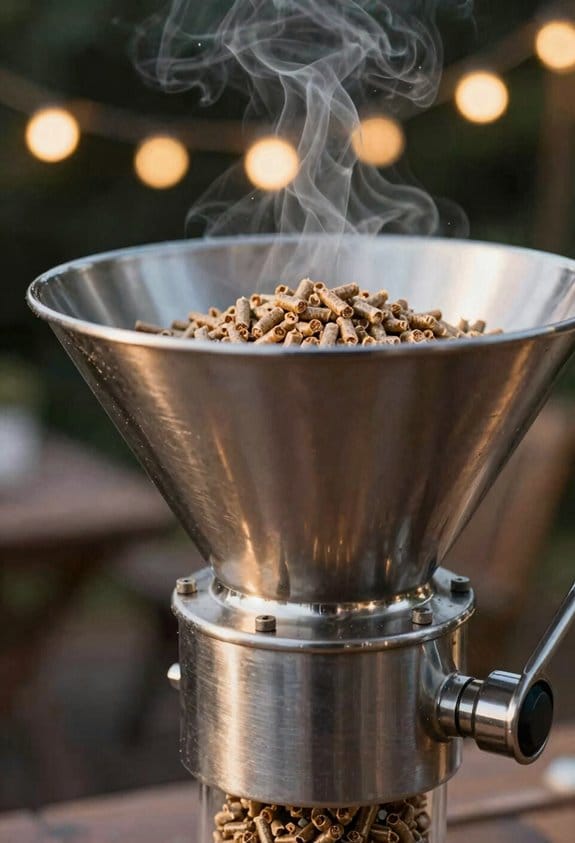
As you continue troubleshooting your grill’s temperature problems, the pellet feed rate deserves your attention because it directly controls how much fuel reaches your fire pot. I recommend starting with a hopper inspection to make certain pellets are flowing freely without blockages or moisture clumping. Next, examine your auger calibration, which determines how quickly pellets move into the combustion chamber. If your auger feeds too slowly, insufficient fuel reaches the fire, preventing temperature rise. Conversely, excessive pellets create too much fuel, causing overheating or incomplete combustion. Most grills allow you to adjust feed rates through their control panel settings. Check your manufacturer’s manual for proper calibration procedures specific to your model, then test at different settings to find your optimal burn rate.
Factor In Weather and Environment
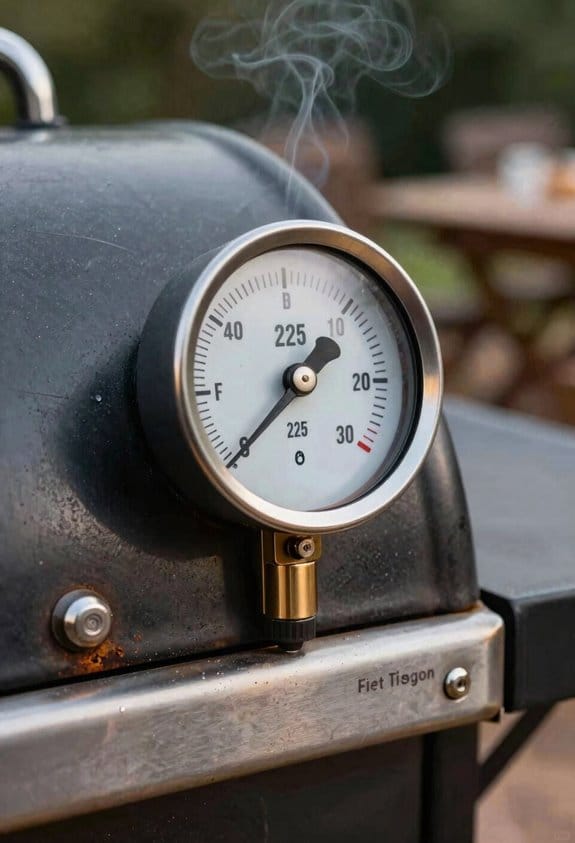
While you’ve adjusted your pellet feed rate and cleaned your components, external conditions around your grill can still undermine your efforts to reach the desired temperature. Weather plays a significant role in your grill’s performance. Cold temperatures slow the burn rate, making it harder to reach higher heat settings because the pellets combust more slowly in frigid air. Wind effects can disrupt heat retention by carrying warmth away from your cooking chamber, forcing your grill to work harder maintaining temperature. Humidity impact also matters; high moisture in the air affects pellet moisture content, which disrupts temperature control and combustion efficiency. Consider these environmental factors when troubleshooting temperature issues, and adjust your expectations during harsh weather conditions.
Frequently Asked Questions
How Do I Know if My Heat Shield Is Centered Correctly Over the Fire Pot?
Like a compass finding true north, I’d check for even visual gaps on all sides of your heat shield. I guarantee centered alignment by confirming thermal symmetry—equal spacing around the fire pot. Then I make fit adjustment tweaks until the shield sits perfectly balanced.
What’s the Ideal Moisture Content for Pellets to Maintain Consistent Temperatures?
I’d recommend keeping your pellets between 8-10% moisture content for peak performance. Store them in a cool, dry place away from humidity to prevent moisture absorption, which’ll help you maintain consistent temperatures throughout your cook.
How Often Should I Replace My RTD Temperature Probe for Accuracy?
Like a worn compass losing its bearing, your RTD probe degrades over time. I’d replace it every 2-3 years, though you’ll want a calibration routine annually to catch drift early and maintain accuracy.
Can a Misaligned Grease Tray Cause Temperature Fluctuations During Cooking?
Yes, a misaligned grease tray absolutely causes temperature fluctuations. When it’s out of position, you’ll experience airflow restriction that starves your fire of oxygen. Combined with grease buildup, you’re looking at inconsistent heat management throughout your cook.
Does Opening the Lid Frequently Affect My Grill’s Ability to Maintain Set Temperatures?
Yes, I’ve found opening your lid frequently causes significant heat loss and excessive air exchange, forcing your grill to work harder recovering to set temperatures, which disrupts consistent cooking conditions.