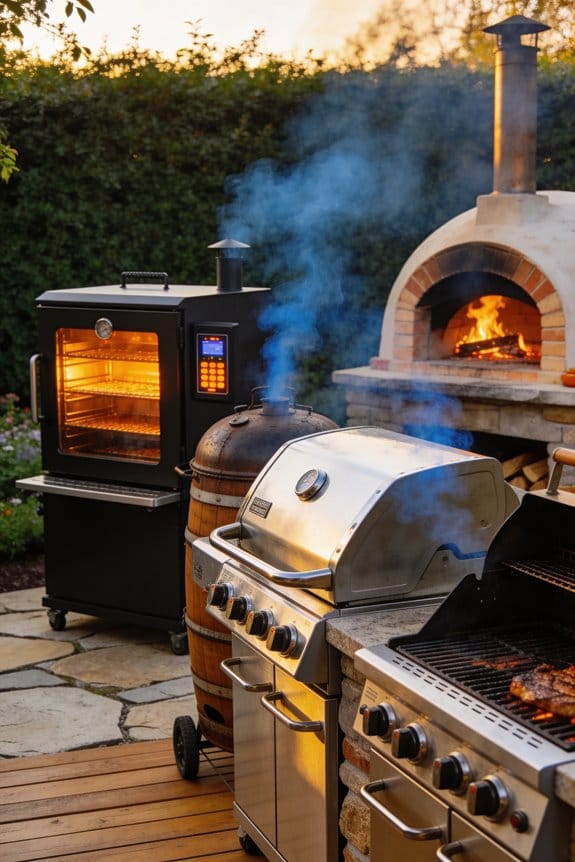

I’ll walk you through smoking a brisket on a pellet grill. First, select a 12–15 pound Prime or Choice brisket and trim fat to 1/4-inch. Season it overnight with equal parts salt and pepper, then smoke at 225°F for 6–8 hours until reaching 165°F internally. Wrap in butcher paper, increase heat to 250–275°F, and continue cooking until probe-tender around 202–203°F. Rest it wrapped in a cooler for two hours, then slice the flat against the grain and the point thicker. Each step markedly impacts your final results.
Key Takeaways
- Select a 12–15 pound USDA Prime or Choice packer brisket and trim fat to 1/4-inch thickness.
- Apply equal parts kosher salt and coarse pepper evenly, then refrigerate uncovered overnight for bark development.
- Preheat pellet grill to 225°F, place brisket fat side up, and smoke for 6–8 hours until 165°F.
- Wrap in butcher paper at 165°F, increase heat to 250–275°F, and continue cooking until probe-tender at 202–203°F.
- Rest in insulated cooler for two hours, then slice flat against grain and point thicker for burnt ends.
Choose and Trim Your Brisket for Smoking
Selecting the right brisket sets the foundation for your smoking success, so I’d recommend starting at your butcher counter or grocery store meat section. Look for a full packer brisket weighing 12-15 pounds, which gives you enough meat for even cooking. Choose USDA Prime or Choice grade for superior tenderness and flavor.
Once you’ve selected your brisket, trim methods become vital. I trim excess fat to a 1/4-inch thickness across the entire surface, which allows smoke penetration while maintaining moisture. Identify the point and flat sections—these two distinct muscles require equal attention during trimming for consistent results.
For brisket sourcing, building a relationship with your butcher guarantees quality cuts. Ask them to recommend their best packer briskets and request custom trimming if needed.
Season Your Brisket Overnight for Bark Formation
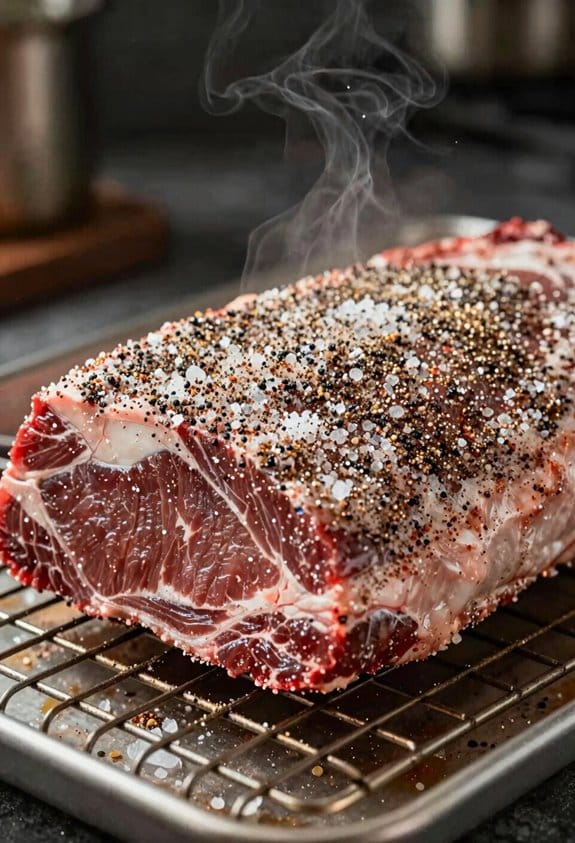
Preparing your seasoning rub is a critical step that directly impacts the final texture and flavor of your smoked brisket, so I recommend getting this right before you place the meat on your grill. I combine coarse black pepper and kosher salt in a 1:1 weight ratio, then apply this mixture evenly across all surfaces, including edges and crevices.
After seasoning, I let the rub adhere for at least 30 minutes. Then comes the important part: I refrigerate the brisket uncovered overnight. This seasoning chemistry process allows the salt to penetrate the meat while the fridge airflow helps develop a better bark—that mahogany-colored crust everyone loves. The uncovered storage is essential for best results.
Set Up Your Pellet Grill and Position the Brisket
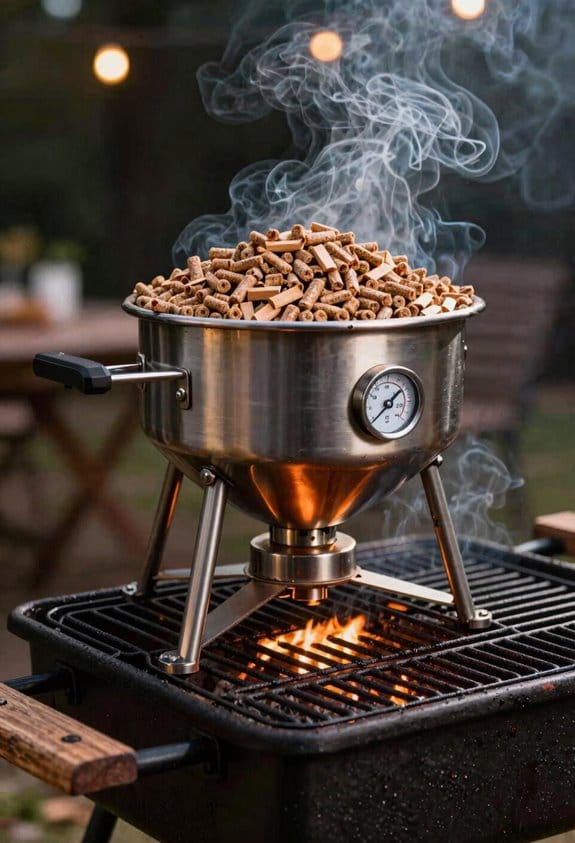
Before you place your seasoned brisket on the grill, you’ll need to prepare your pellet grill for the long smoking process ahead. Start by filling your hopper with hickory, oak, or mesquite pellets, ensuring proper pellet maintenance by checking for moisture and debris. Preheat the grill to 225°F and allow it to stabilize at that temperature before adding your brisket. For ideal grill placement, position your brisket fat side up on the second shelf if available, which promotes even heat circulation. Orient the point end toward the heat source for uniform cooking throughout both sections. Insert your temperature probe into the thickest part of the flat, avoiding any bones. These preparation steps establish the foundation for successful, consistent results during your entire smoking session.
Smoke Your Brisket at 225°F Through the Stall
Once your pellet grill stabilizes at 225°F and your brisket is positioned correctly on the grill, you’ll begin the initial smoking phase, which typically lasts 6-8 hours for a 12-14 pound brisket. During this time, you’ll monitor the internal temperature as it climbs toward 165°F. Expect a temperature plateau called “the stall,” occurring between 145-165°F, caused by evaporative cooling as moisture escapes the meat’s surface. This is completely normal and doesn’t indicate a problem. Check your brisket every 1.5-2 hours rather than frequently opening the lid, which disrupts heat stability. Watch for rich mahogany bark development across the surface. Once you’ve reached 165°F internally, you’ll proceed to wrapping, allowing carry over cooking to continue the process efficiently.
Wrap and Cook Your Brisket to Probe Tenderness
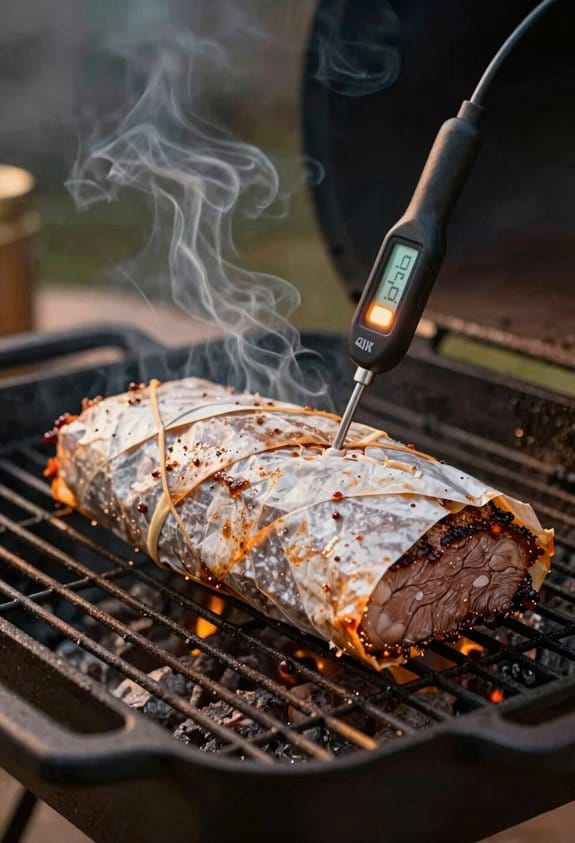
When your brisket’s internal temperature reaches 165°F, it’s time to wrap it in a double layer of butcher paper, which’ll help retain moisture while allowing some smoke to penetrate the meat during the final cooking phase. After wrapping, increase your pellet grill temperature to 250-275°F. Continue cooking until the brisket reaches 195-203°F internally, checking for probe tenderness by inserting a toothpick or temperature probe—it should slide through like butter with minimal resistance. For added moisture and flavor, consider tallow basting by pouring rendered fat over the wrapped brisket during this stage. This entire wrapping and finishing phase typically takes 4-6 hours, depending on brisket size and grill consistency. Total smoking time usually ranges from 12-18 hours for a full packer.
Rest Your Brisket for Maximum Juiciness
After you’ve pulled your brisket from the pellet grill at that perfect 202-203°F internal temperature, you might think you’re ready to slice and serve, but I’m telling you that resting your meat is where the magic happens for maximum juiciness. During the resting phase, carryover cooking continues as residual heat works through the meat, allowing fibers to relax and reabsorb precious juices that cooking expelled. I recommend using the cooler technique by wrapping your brisket in a clean towel and placing it inside an insulated cooler for at least two hours. This method maintains warmth while preventing moisture loss. The resting period guarantees each slice retains maximum tenderness and flavor, transforming your brisket into a truly exceptional final product.
Slice Your Brisket Against the Grain
Proper slicing technique separates an excellent brisket from an ordinary one, and understanding the grain structure of your meat makes all the difference in texture and tenderness. I recommend separating the point from the flat first, since they have different grain directions. The flat’s grain runs lengthwise, so I slice against grain perpendicular to those fibers, creating 1/4-inch serving portions that break apart easily when chewed. The point, which has a more complex grain pattern, I slice thicker for chopping into burnt ends. When you cut against grain rather than with it, you shorten the muscle fibers, resulting in more tender, easier-to-eat pieces that enhance your overall brisket experience.
Frequently Asked Questions
What Pellet Wood Flavor Works Best for Brisket, and Does It Matter Which Brand?
I’d recommend hickory for its depth or oak for balance. Fruitwoods work too, but I’ve found brand matters less than pellet quality—look for consistent size and low ash content for better results.
How Do I Know When My Brisket Has Hit the Stall and How Do I Push Through It?
You’ll hit the stall when your internal temperature plateaus between 145-165°F. I push through by wrapping in butcher paper, increasing heat to 250-275°F, and monitoring with my moisture probe for tenderness.
Can I Smoke a Brisket Overnight, and Is It Safe to Leave Unattended?
Yes, I’d smoke your brisket overnight, but I won’t leave it completely unattended. Modern pellet grills have reliable temperature controls for overnight safety, though I’d check it periodically or use a wireless thermometer monitoring system.
What’s the Difference Between the Point and Flat, and Why Does It Matter?
I’ll tell you—the point’s fattier with point characteristics making it perfect for burnt ends, while the flat’s leaner with flat texture ideal for slicing. Imagine a competition where each shines differently.
How Should I Store Leftover Smoked Brisket, and How Long Does It Stay Fresh?
I’d store your leftover brisket in the refrigerator for up to four days, or vacuum seal it for freezer storage lasting three months. Vacuum sealing prevents freezer burn and maintains quality when you’re ready to reheat.