
I’ll cold smoke cheese by selecting hard varieties like cheddar or aged gouda, which won’t melt easily. I’ll use a pellet smoker tube filled one-third full with fruitwood pellets, placing my cheese on a cooling rack inside a smoker or grill. I’ll smoke for two to four hours, flipping pieces every thirty minutes to guarantee even smoke exposure. Once finished, I’ll wrap it tightly and refrigerate for at least one week so flavors fully develop before enjoying my homemade smoked cheese.
Key Takeaways
- Use hard cheeses like cheddar or Parmesan; avoid soft varieties prone to melting during smoking.
- Fill a pellet smoker tube one-third to three-quarters full with fruitwood pellets for consistent smoke production.
- Cold smoke cheese for two to four hours, flipping pieces every thirty minutes for even exposure.
- Place cheese on a wire cooling rack inside a grill or smoker to contain smoke safely.
- Wrap smoked cheese tightly and refrigerate for one week minimum to allow smoke flavor integration.
Pick Cheeses That Won’t Melt
Since cold smoking exposes cheese to smoke without applying much heat, you’ll want to select varieties that won’t soften or lose their shape during the process. I recommend hard or semi-hard cheeses like cheddar, Parmesan, and Pepper Jack, which maintain their structure under smoking conditions. Aged gouda and smoked provolone also work exceptionally well for cold smoking projects.
You should avoid soft cheeses such as brie or cream cheese, since their high fat content causes them to melt easily. I’ve found that both supermarket cheeses and premium varieties perform effectively, so you don’t need expensive options to succeed. Cut your selected cheese into blocks or wedges to increase surface area, which allows the smoke to penetrate more thoroughly and develop richer flavors throughout the smoking process.
Gather Your Smoking Equipment
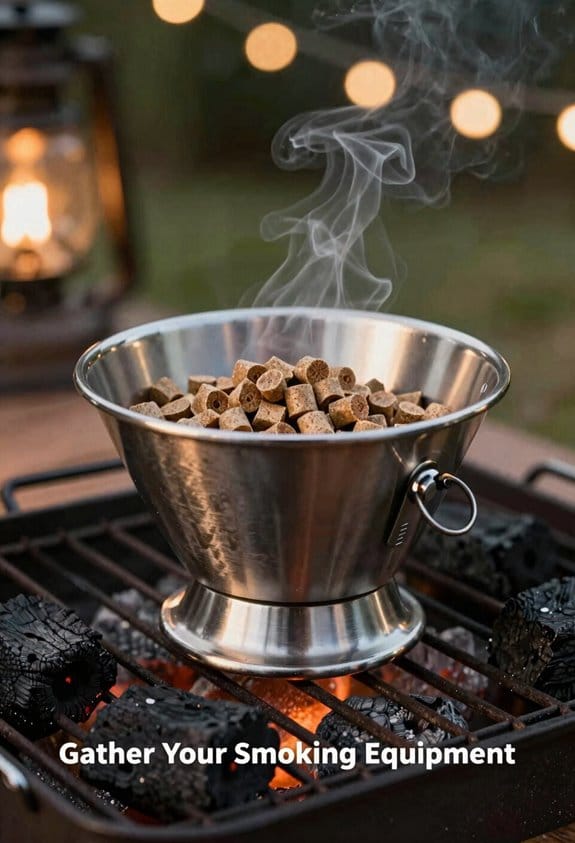
Now that you’ve selected your cheese, you’ll need to gather the right equipment to smoke it properly. A pellet smoker tube is essential, and you’ll fill it one-third to three-quarters full with pellets. You’ll also need a grill, smoker, or box that can contain smoke without generating excessive heat. Heat-safe mesh perforated baking liners protect your cheese while allowing smoke to circulate freely. A wire cooling rack holds the cheese during smoking and helps with transport afterward. For smoking safety, make sure your equipment is clean and functioning correctly before use. Regular equipment maintenance prevents rust and extends the life of your tools. Finally, have a vacuum sealer or tight plastic wrap ready for storing your finished smoked cheese.
Choose and Load Your Smoke Fuel
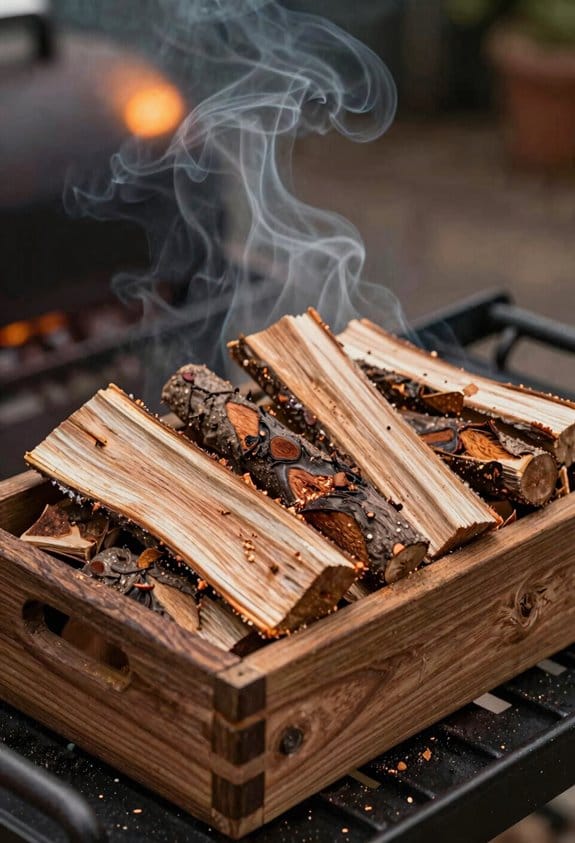
Selecting the right fuel transforms your smoking results, so understanding your options matters greatly. For pellet selection, I recommend fruitwood pellets like almond or Cabernet, which provide superior flavor compared to standard varieties. Fill your pellet tube one-third to three-quarters full, guaranteeing consistent smoke production throughout your session.
If you’re using alternative methods, soak wood chips for thirty minutes before use. Natural lump charcoal works effectively in small amounts, minimizing unwanted heat generation. For extended smoking sessions, I’ve found that sawdust placed in a pie plate smolders reliably for hours.
Regarding smoke safety, never use regular wood chips in your pellet tube, as they’ll combust rather than smolder. Proper fuel prevents excessive heat and guarantees your cheese stays perfectly cool while absorbing delicious smoke flavor.
Cold Smoke for 2–4 Hours
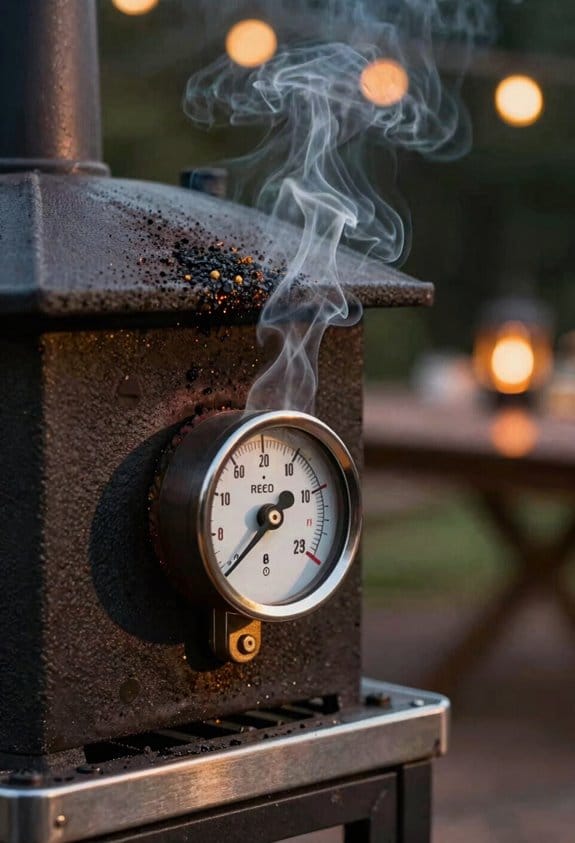
Once your fuel is burning and producing a steady smoke stream, you’re ready to begin the cold smoking process, which typically lasts between two and four hours depending on your desired flavor intensity. I recommend starting with two hours, then checking your cheese’s progress. During smoking, flip your cheese pieces every 30 minutes to make certain even smoke exposure. The smoke intensity builds gradually, so don’t rush the process. After two hours, taste a small piece to assess whether you want stronger flavor pairing characteristics. If you prefer more pronounced smoke flavor, continue smoking up to four hours total. Remember, the pellet tube produces consistent smoke for three to five hours, giving you flexibility in timing your smoking session.
Monitor Cheese While Cold Smoking
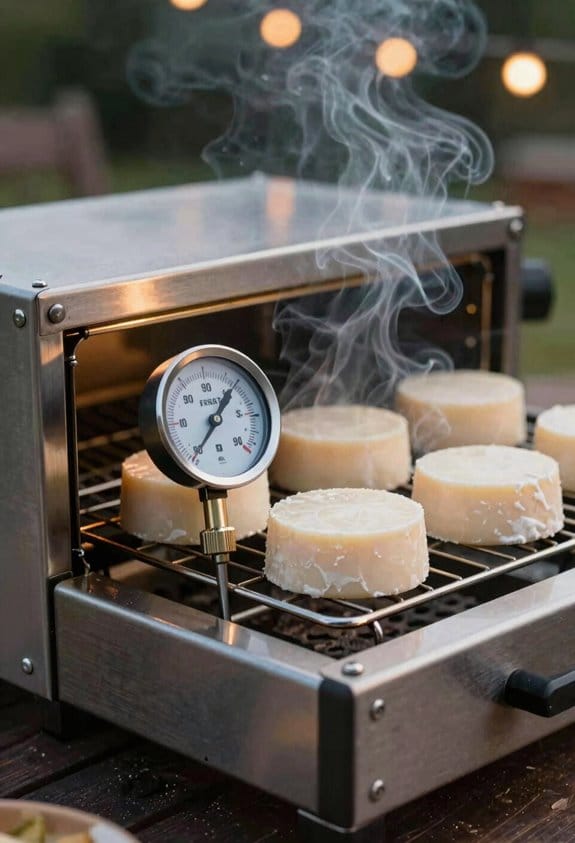
While your cheese smokes over the next two to four hours, keeping a close eye on what’s happening inside your smoker helps you catch any problems before they affect your final product. Conduct visual checks every thirty minutes to confirm the cheese isn’t melting or sweating excessively. Look for a thin, golden smoke layer forming on the surface, which indicates proper smoking. Monitor your smoke alarms if they’re nearby, as they shouldn’t trigger during cold smoking. Check that your pellet tube continues producing smoke consistently throughout the process. If you notice any melting, immediately reduce the temperature or move the cheese farther from the smoke source. These observations guide your adjustments and guarantee better results.
Wrap, Rest, and Refrigerate
After your cheese finishes smoking and you’ve removed it from the smoker, you’ll want to wrap it immediately to preserve the smoke flavor you’ve worked to develop. Use vacuum sealing or tight plastic wrap to create an airtight seal, which prevents moisture loss and flavor degradation. Store your wrapped cheese in the refrigerator for at least one week, allowing the smoke flavor to fully integrate throughout. I recommend labeling dates on your packages so you know when you smoked each batch. For serving suggestions, pair your smoked cheese with crackers, cured meats, or fresh fruit on a charcuterie board. Properly stored cheese lasts two to three months, giving you plenty of time to enjoy your homemade creation.
Frequently Asked Questions
Can I Use Store-Bought Cheese, or Do I Need Premium Artisanal Varieties?
You’ll absolutely knock your socks off using store brand blocks—I’m telling you, they’re a million times better than you’d think. Supermarket varieties work just as effectively alongside imported wheels for cold smoking at home.
How Long Should I Rest the Cheese After Smoking Before Eating?
I’d recommend resting your cheese for at least 24 hours after smoking, though I find waiting a full week gives you the best flavor development. You’ll notice the smoky notes integrate beautifully into the cheese during this resting duration.
What’s the Ideal Spacing Between Cheese Pieces on the Rack?
Good things come to those who space them out. I’d recommend maintaining 1-inch gaps between your cheese pieces in a staggered arrangement. This guarantees proper smoke circulation around each block, preventing uneven smoking and allowing consistent flavor development throughout.
Can I Cold Smoke Cheese Multiple Times for Extra Flavor?
Yes, I can cold smoke cheese multiple times for flavor layering. You’ll want to rest the cheese between sessions, allowing flavors to develop. Double smoking creates richer, more complex taste profiles without risking melting.
How Long Does Cold-Smoked Cheese Stay Fresh in the Refrigerator?
Haven’t you wondered how long that smoky flavor’ll last? I’d say your cold-smoked cheese maintains excellent storage duration and flavor longevity for about two to three weeks when vacuum-sealed and refrigerated properly.