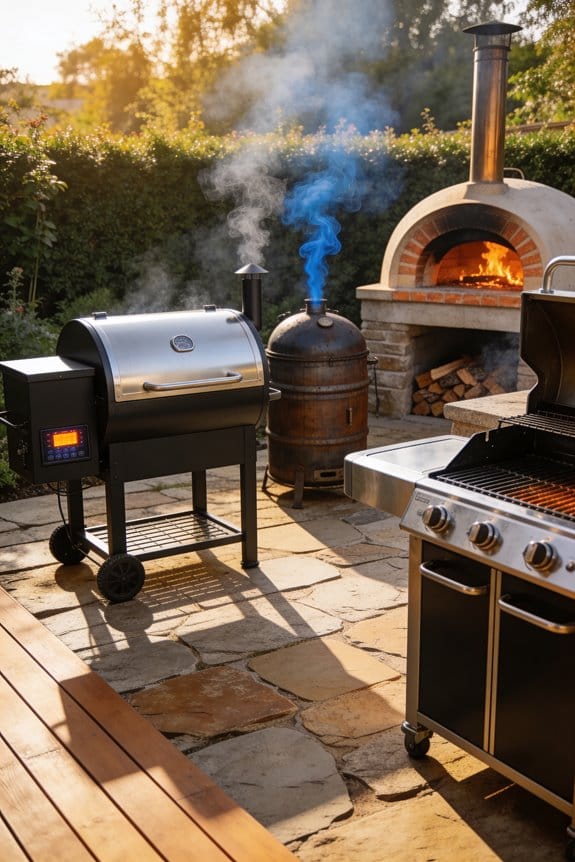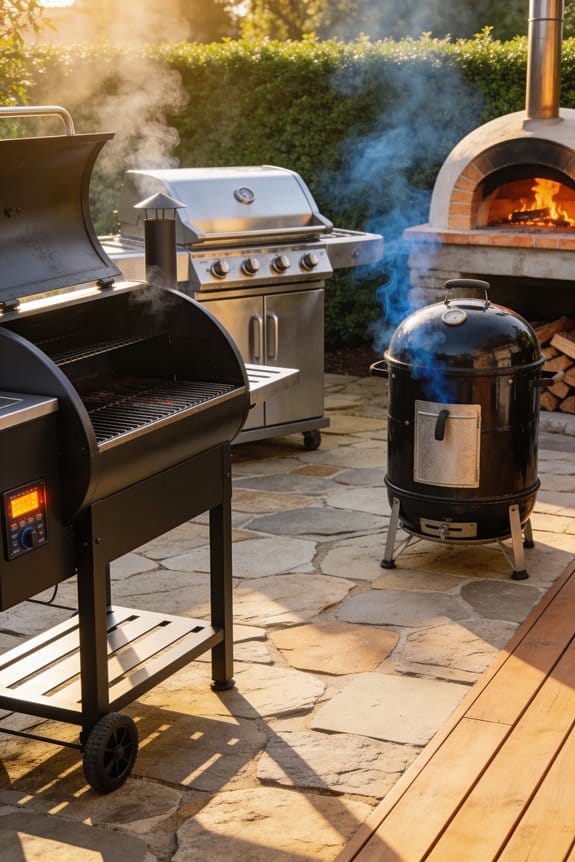


Gravity-fed smokers work through a vertical hopper that releases charcoal downward into a controlled burn zone, where it smolders steadily while airflow systems distribute heat evenly throughout the cook chamber. I’ve found they’re perfect for casual home cooks who want hands-off operation for 8–24 hours, and they’re equally suited for competition pitmasters who need precise temperature control and remote monitoring. The sealed design prevents temperature swings, making consistent results achievable whether you’re smoking brisket on your patio or competing professionally. Understanding how each component contributes to performance reveals why they’re becoming the go-to choice for serious smoking enthusiasts.
Key Takeaways
- Gravity-fed smokers use a vertical hopper that continuously delivers charcoal downward into a controlled burn zone for consistent heat.
- A sealed chamber with precise airflow controls and digital fans distribute heat evenly throughout the cooking space, eliminating hot spots.
- Ball valves and dampers regulate oxygen intake and exhaust to maintain stable, low temperatures ideal for extended smoking sessions.
- Casual home cooks benefit from compact designs and hands-off operation lasting 8–24 hours with minimal temperature monitoring required.
- Competition pitmasters rely on WiFi-enabled controls, sealed designs, and precise temperature management to support remote monitoring during long events.
Why Gravity-Fed Smokers Deliver Superior Results
Because gravity-fed smokers use a bottom-up controlled burn system, they create more consistent and even heat distribution throughout your cooking chamber than traditional offset smokers. This design delivers enhanced smoke that circulates evenly, preventing hot spots where food cooks unevenly or burns. The gravity-fed mechanism guarantees a steady supply of fresh charcoal enters the burn zone as fuel depletes, maintaining stable temperatures without sudden fluctuations. Digital fans or convection systems push heat through manifolds, distributing warmth across your entire cooking surface. This flavor consistency means your brisket, ribs, or chicken cook uniformly, achieving that perfect bark and tenderness throughout. The sealed chamber, combined with precise airflow control, maximizes smoke penetration while minimizing temperature swings that compromise results.
How the Gravity-Fed System Works: Charcoal to Firebox

Now that you understand how gravity-fed smokers produce superior and consistent results, you might wonder how the charcoal actually gets from the hopper to the firebox where it burns. The process relies on simple physics: charcoal dynamics work through gravity’s constant downward pull. As you load briquettes or lump charcoal into the vertical hopper at the top, they naturally feed downward into the controlled burn zone below. This zone, typically 6-12 inches deep, is where combustion occurs. Regular hopper maintenance guarantees smooth fuel flow; you’ll want to check for blockages or bridging. The charcoal continues flowing as embers consume it, creating a self-regulating system that demands minimal intervention from you throughout your cook.
The Controlled Burn Zone and Heat Generation

While the charcoal descends through gravity into your smoker’s firebox, it enters a carefully controlled environment where heat generation truly begins. This zone, typically 6-12 inches deep, represents the heart of your smoker’s operation. Understanding charcoal chemistry helps explain why this confined space works so effectively. As briquettes or lump charcoal burn in this restricted area, they produce consistent heat rather than rapid flames. Ember management becomes critical here; the goal isn’t complete combustion but rather a controlled smolder that generates steady temperatures. Air flowing across the burn zone sustains this process without igniting the entire fuel load. The ceramic firebrick lining protects the hopper while concentrating heat upward toward your cooking chamber, making this zone essential for your smoker’s efficiency and temperature consistency.
Regulating Temperature With Air Flow and Draft Control

Once heat and smoke rise from your controlled burn zone into the cook chamber, you’ll need a way to manage that energy, and that’s where air flow and draft control become your primary tools. A ball valve or digital fan regulates how much oxygen reaches the fire, directly controlling your burn rate and temperature. Airflow calibration requires adjusting these components until you achieve your target heat level. Damper placement at the smoker’s exhaust allows you to fine-tune pressure within the cook chamber, restricting air escape when you need higher temperatures and opening it for cooling. This combination of intake and exhaust control gives you precise temperature management, enabling the consistent low-and-slow cooking that gravity-fed smokers excel at delivering.
Even Heat Distribution Across Your Cook Chamber

With your air intake and exhaust damper working together to control temperature, you’re ready to tackle the next challenge: making sure that heat spreads evenly across your entire cooking surface.
A digital fan circulates hot air throughout your cook chamber, drawing it from the burn area through a transfer tube or manifold design. This manifold acts as a mixing hub, distributing airflow evenly from left to right, which eliminates hot spots that plague traditional smokers.
The sealed chamber design, combined with airflow balancing techniques, guarantees pressure builds uniformly around your food. Your stack damper then restricts exhaust strategically, directing heat where you need it most. This controlled convection system means you’ll achieve consistent results across your entire cooking surface without rotating racks constantly.
Extended Cook Times: Smoking Without Interruption
One of the most compelling advantages of gravity-fed smokers is their ability to sustain long cooking sessions, often lasting 12 to 24 hours or more, without requiring you to refill the fuel hopper. The gravity-fed mechanism continuously supplies fresh charcoal into the burn zone as fuel settles downward, maintaining consistent heat throughout your cook. This steady fuel delivery reduces the need for constant monitoring and adjustment.
Ember management plays a pivotal role in these extended sessions. As briquettes burn completely, ash collects below while remaining embers continue smoldering wood chunks for smoke production. The controlled burn zone guarantees efficient combustion without igniting your entire hopper supply. This combination of automatic fuel flow and managed ember activity allows you to smoke briskets, ribs, or pork shoulders through the night without interruption.
Gravity-Fed Smokers for Casual Home Cooks
If you’re a backyard cook who enjoys hosting weekend barbecues but doesn’t want to spend all your time tending a fire, a gravity-fed smoker might be exactly what you’re looking for. These smokers offer a compact footprint that fits nicely in most patios or yards without dominating your outdoor space. The gravity-fed design means you load charcoal once and let gravity handle the fuel delivery, so you’re free to socialize with guests instead of constantly managing temperatures. Because the hopper feeds charcoal automatically into the burn zone, you’ll enjoy extended cooking sessions lasting 8-24 hours with minimal intervention. Easy cleanup happens afterward, since ash collects in a removable bucket below. This combination of convenience, space efficiency, and hands-off operation makes gravity-fed smokers ideal for casual home cooks seeking reliable barbecue results.
Gravity-Fed Smokers for Competition Pitmasters
While casual backyard cooks appreciate the convenience and simplicity that gravity-fed smokers provide, competition pitmasters demand something more demanding from their equipment. These professionals rely on precise temperature control and consistent heat distribution to execute their competition strategies flawlessly. The WiFi-enabled digital controls and draft management systems allow pitmasters to monitor their cooks remotely, vital for team logistics when managing multiple smokers simultaneously. Extended burn times—up to 24 hours without refueling—enable them to tackle lengthy competitions without interruption. The sealed design eliminates hot spots, ensuring uniform results across batches. For serious competitors, gravity-fed smokers deliver the reliability, precision, and fuel efficiency necessary to maintain winning performance under pressure.
Frequently Asked Questions
Can I Use Wood Pellets in a Gravity-Fed Smoker, or Only Charcoal?
You’ll need charcoal—wood pellets aren’t compatible with gravity-fed smokers. Their design requires briquettes or lump charcoal for proper fuel conversions. I’d recommend exploring pellet smokers if you’re interested in that fuel type instead.
How Often Should I Clean the Ash Bucket During Smoking Sessions?
I’d recommend emptying your ash bucket every 8-12 hours during smoking sessions. Excessive ash buildup restricts airflow, compromising your smoker’s performance. Regular cleaning guarantees consistent temperature control and peak combustion efficiency throughout your cook.
What Is the Learning Curve for Beginners Using Digital Temperature Controls?
I’d say you’ll master the digital controls within your first two sessions. Once you’re comfortable with interface familiarity and beginner troubleshooting, you’ll find them intuitive. Most folks appreciate how they eliminate guesswork on temperature management.
Are Gravity-Fed Smokers Portable, or Are They Designed for Permanent Installation?
I’d say gravity-fed smokers come in both styles. You’ll find portable models with wheels that you can move around your yard, while fixed installation options are built into permanent structures. Choose based on your needs.
How Does Weather, Like Wind or Cold, Affect Cooking Performance?
As they say, “weather’s the cook’s uninvited guest.” I’ll tell you wind effects can steal heat and cold impact your fuel efficiency, but sealed designs and digital controls help me maintain steady temperatures despite Mother Nature’s interference.