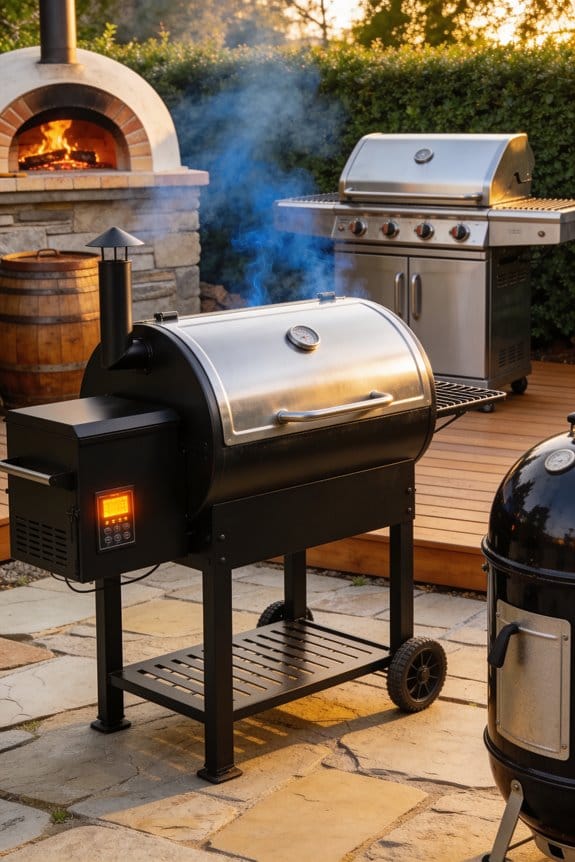


The smoke setting on your pellet grill controls how often the auger feeds pellets into the firebox, not the temperature itself. By adjusting the auger cycle—lengthening pauses between pellet drops—you create more smoldering, which produces denser smoke. This maximizes flavor penetration at lower temperatures around 160–180°F. You’ll typically use smoke mode during startup to build flavor intensity before switching to higher cooking temperatures for food safety. Understanding auger mechanics reveals why pellet blend choices and timing adjustments dramatically transform your smoke output.
Key Takeaways
- The smoke setting controls auger cycling frequency to regulate pellet feed rate into the firebox for maximum smoke production.
- Smoke mode operates at low temperatures (160–180°F) to allow wood smoke compounds to penetrate and adhere to food surfaces.
- Slower auger cycles create smoldering rather than rapid combustion, maximizing smoke output during the flavor-building phase of cooking.
- Use smoke mode during startup and the first couple hours to establish intense smoke flavor before raising cooking temperature.
- Smoke setting prioritizes smoke flavor over temperature control and cannot maintain food safety alone due to inadequate cooking temperatures.
How the Smoke Setting Works on Your Pellet Grill
When you’re starting up your pellet grill, the smoke setting is what gets things going by controlling how much wood pellet smoke your food receives. The smoke setting works by adjusting the auger cycle, which determines how often pellets feed into the firebox. On Traeger grills, for example, the auger runs for 15 seconds, then pauses for 65 seconds. This timing creates maximum smoke exposure while maintaining lower temperatures around 160-180 degrees Fahrenheit. The pellet composition matters here—different wood types produce varying smoke flavors. Additionally, chimney draft affects how smoke moves through your grill, influencing the smoke intensity your food absorbs. This mode prioritizes smoke flavor over consistent temperature control, making it ideal for establishing fire during startup.
When to Use Smoke Mode (and When Not To)?

How do you know if smoke mode is the right choice for your current grilling situation? I’d use smoke mode during the first couple hours of grilling to maximize flavor, especially when you’re starting your grill. Smoke timing matters because you need the fire established before raising temperatures for cooking.
However, don’t rely solely on smoke mode for food safety. Since smoke mode doesn’t reach temperatures high enough to cook meat safely, you’ll need to switch to a higher temperature setting once you’ve achieved your desired smoke flavor. Think of smoke mode as a flavor-building phase, not your main cooking method. Use it strategically at the beginning, then shift to standard temperature settings for proper cooking and food safety compliance.
How Auger Cycles Control Your Smoke Output
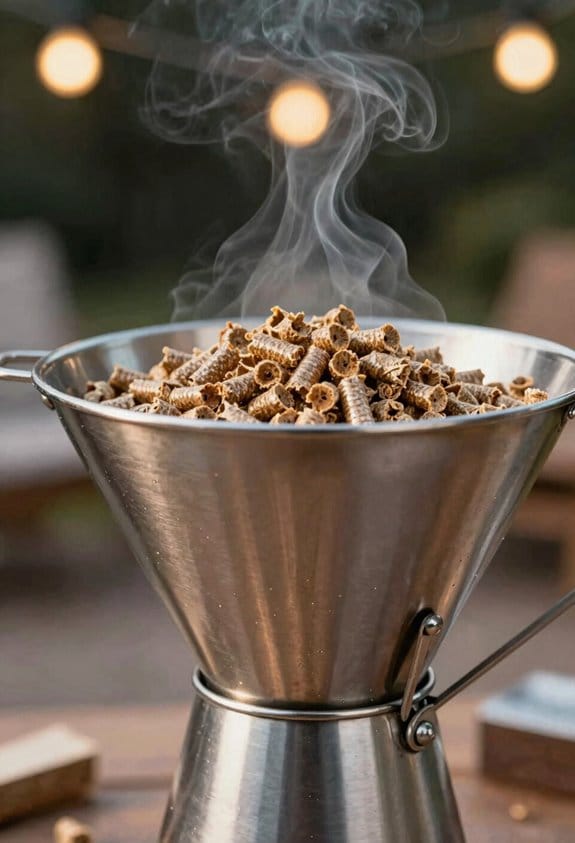
The auger—a screw-like mechanism inside your pellet grill—controls exactly how many wood pellets get fed into the fire, and understanding its cycles is what separates mediocre smoke from exceptional flavor. On Traeger grills, the auger cycles on for 15 seconds, then pauses for 65 seconds. This timing creates the ideal smoke production you’re after. Pit Boss grills let you adjust this cycle using the P setting, where higher numbers increase pauses between feeding cycles. Longer pauses mean pellet starvation, which actually intensifies smoke output by allowing wood to smolder rather than burn hotly. Shorter pauses feed pellets faster, reducing smoke. By mastering auger timing, you control whether your grill produces thin wisps of flavor or thick, billowing smoke that penetrates your food deeply.
Why Lower Smoke Temperatures Produce Maximum Flavor

Because wood smoke requires lower temperatures to properly penetrate and flavor food, running your pellet grill in the 160-225°F range produces markedly better results than higher heat settings. At these temperatures, the wood chemistry works differently than at high heat. Flavor compounds from burning pellets break down slowly and adhere to your food’s surface more effectively. When temperatures climb higher, these delicate flavor molecules dissipate into the air rather than coating your meat. The slower auger cycles during smoke mode allow pellets to smolder rather than burn rapidly, which maximizes smoke production. This gentle approach lets wood smoke penetrate deeper into the food’s fibers, creating that rich, authentic barbecue taste you’re seeking.
How to Boost Smoke Without Slowing Cook Time

You don’t have to choose between smoke flavor and cooking speed, since modern pellet grills offer several methods to increase smoke output while maintaining your target cooking temperature. Cold smoking techniques allow you to infuse your food with intense smoke flavor before raising heat for actual cooking, preserving both taste and efficiency. Additionally, pellet blend choices markedly impact smoke production—hardwood blends with higher bark content generate more smoke than pure pellets. You can also adjust your grill’s P setting or auger timing to extend pellet burn duration without lowering temperature. These strategies let you maximize smoke exposure while keeping your cook time on schedule, delivering restaurant-quality results without unnecessary delays.
Frequently Asked Questions
Can I Cook Meat to Safe Temperatures Using Only the Smoke Setting?
No, I wouldn’t recommend it. The smoke setting won’t reach safe internal temperatures for meat. You’re getting cold smoking conditions that create smoke rings, but you’ll need higher heat settings to actually cook your meat through.
Do All Pellet Grill Brands Have the Same Smoke Setting Temperature Range?
No, they don’t. I’ve found that while some brands hit 160°F and others run 180°F, brand variability and controller differences mean each manufacturer sets their own smoke parameters differently.
How Long Should I Keep My Grill on Smoke Mode Before Cooking?
I’d recommend keeping your grill on smoke mode for two minutes initially, then 1-2 hours during cooking for ideal flavor penetration. This preheat duration establishes your fire before raising temperatures for actual cooking.
Will Using Smoke Setting for Hours Waste Pellets Without Adding Flavor?
I’d say yes—you’ll burn through pellets quickly without maximizing flavor. Smoke chemistry peaks in the first couple hours; beyond that, you’re wasting pellet consumption on diminishing returns without noticeable taste improvements.
Can I Adjust Smoke Output on Traeger Grills Without Changing Temperature?
I can’t adjust smoke output on Traeger grills without changing temperature. The smoke setting’s fixed auger cycle—15 seconds on, 65 seconds off—controls pellet feedrate automatically. You’ll need an adjustable damper for smoke customization.