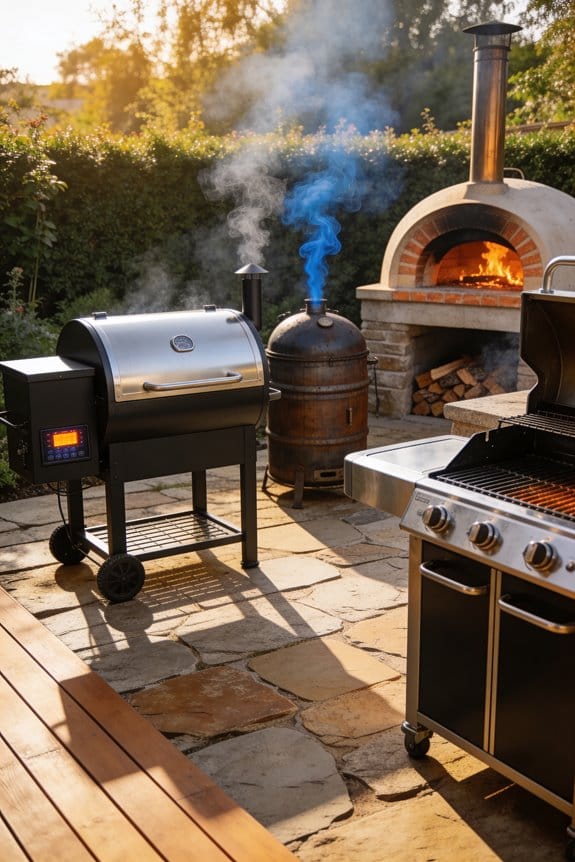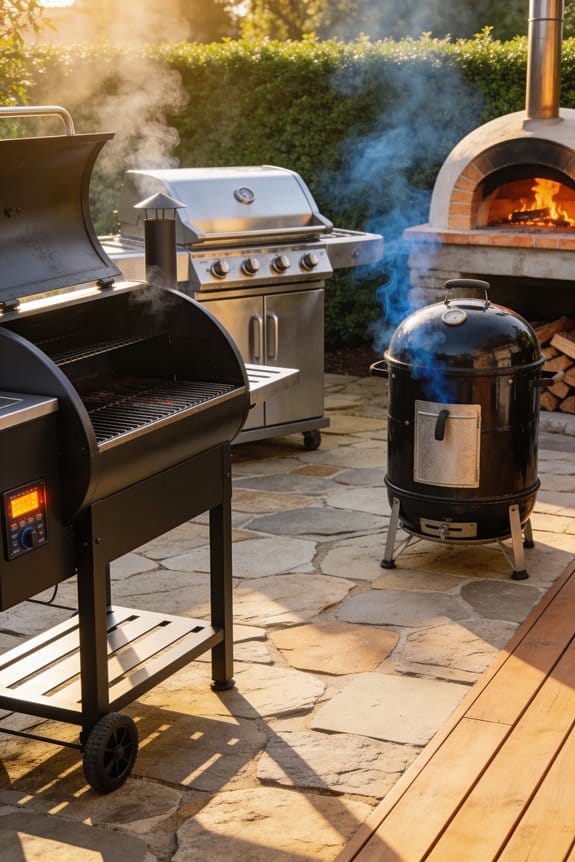


For your first smoke, I’d recommend choosing cuts with abundant fat and connective tissue like pork butt or chuck roast. These forgiving options stay moist during long cooks because fat renders and collagen converts to gelatin. When shopping, ask your butcher for well-marbled cuts with thick fat caps and test tenderness by gently bending the meat. Starting here sets you up for success before tackling tougher cuts like brisket, which requires more precision and experience to master properly.
Key Takeaways
- Start with pork butt or chuck roast; their abundant fat and connective tissue forgive beginner mistakes.
- Prioritize cuts with good marbling and thick fat caps to maintain moisture during extended smoking.
- Ask your butcher for well-marbled options and test tenderness by gently bending the cut.
- Progress from pork butt to chuck roast to brisket as your smoking skills develop.
- Match your cut selection to available cook time; ribs need 5–6 hours, tri-tip finishes faster.
Fat, Collagen, and Why Beginners Should Start There
When you’re new to smoking meat, understanding fat and collagen becomes your greatest advantage, because these two components transform tough cuts into tender, juicy results through the smoking process. Fat rendering occurs as heat slowly melts the fat throughout the meat, creating self-basting that keeps everything moist during long cooks. Collagen conversion happens when low temperatures break down connective tissue into gelatin, making formerly tough fibers edible and delicious. I’d recommend starting with pork butt, which contains abundant marbling and connective tissue. This forgiving cut absorbs smoke flavor while its fat content prevents drying out, even if your temperature control isn’t perfect. Choosing cuts rich in both fat and collagen gives you the best chance of success on your first smoke.
Pork Butt: The Most Forgiving First Smoke

If you’re ready to pick up a meat cut for your first smoking experience, pork butt stands out as the ideal choice because it combines forgiving characteristics that work in your favor. The shoulder cut features intense marbling throughout, meaning fat is distributed within the muscle fibers rather than just on the surface. This intramuscular fat self-bastes the meat during long, slow smoking, keeping it moist even if you don’t monitor temperature constantly. The thick fat cap on top protects the meat from drying out. Score this fat cap to improve seasoning penetration into the meat below. High connective tissue breaks down into gelatin, transforming the tough cut into tender pulled pork. This combination makes pork butt remarkably forgiving for beginners attempting their first smoke.
Beef Brisket: The Gold Standard Smoking Cut

Beef brisket’s reputation as the gold standard of smoking cuts stems from its remarkable transformation during the smoking process. When you smoke brisket, the fat renders slowly, creating a distinctive smoke ring just beneath the surface. This pink layer develops from the meat’s reaction to smoke compounds, indicating proper cooking. You’ll notice bark development, a flavorful crust that forms on the exterior.
Understanding the flat vs. point distinction helps you choose wisely. The flat offers leaner meat ideal for brisket slicing into neat portions, while the point contains more marbling for pulled brisket. Select pieces with ample fat, strong grain patterns, and tender texture. Test tenderness by gently bending the meat; greater flexibility suggests higher quality. Prime-grade brisket provides additional marbling for enhanced juiciness throughout your smoke.
Chuck Roast: Smoking Beef Without the 14-Hour Commitment

Consider chuck roast your shortcut to impressive smoked beef results. Unlike brisket’s demanding 10-14 hour cook time, chuck roast requires only 5-6 hours, making it a smaller workload and weeknight friendly option. This cut features similar tough fibers and connective tissue that transform into tender, flavorful meat through low-slow smoking.
Select well-marbled cuts to guarantee rich, beefy flavor and moisture retention throughout the cooking process. Chuck roast earns its nickname “poor man’s brisket” because it delivers comparable results at notably lower cost.
When smoking chuck roast, aim for a 205°F internal temperature. Hickory and pecan woods pair excellently with this cut, creating complementary smoke flavors. The reduced cooking time makes chuck roast an accessible choice for beginners seeking substantial beef without extensive time commitment.
Smoking Beyond the Basics: Ribs, Tri-Tip, and Chicken

Once you’ve mastered the foundational cuts like chuck roast and pork butt, you’re ready to explore smoking’s broader possibilities with beef ribs, tri-tip, and chicken. Beef ribs from the chuck plate require five to six hours of smoking and reach peak tenderness at 135°F internal temperature. Oak, cherry, hickory, and pecan woods complement their rich flavor. Tri-tip, sourced from the bottom sirloin, offers a lean yet tender profile that smokes efficiently over shorter periods. For poultry, smoked wings and chicken quarters provide forgiving options compared to breasts. When applying rib rubs to beef cuts, make certain of even coverage for maximum flavor development. These intermediate cuts build your smoking skills while expanding your repertoire beyond traditional brisket and pork.
What to Look for When Buying Your Meat
Selecting the right cut of meat is just as important as mastering your smoking technique, since what you purchase directly determines your final results. I’d recommend asking your butcher tips about which cuts have good marbling and fat caps, since these features guarantee juiciness during long smoking sessions. When examining meat, look for strong graining and test tenderness by gently bending the cut; more flexibility indicates better quality. Consider seasonal sourcing when planning your smoke, as certain cuts perform better during specific times of year. Prime-grade options offer additional marbling for superior results, though they cost more. For beginners, I suggest choosing fattier cuts like pork butt or chuck roast, which forgive timing mistakes and deliver consistently tender, flavorful outcomes through proper low-and-slow smoking.
Match Your Cut to Your Available Cook Time
Now that you’ve picked out a quality cut with good marbling and fat content, you’ll need to match it with the time you actually have available for smoking. Cook time varies substantially depending on your meat choice and portion size. Pork butt requires 10-14 hours, while chuck roast needs only 5-6 hours. Beef ribs also cook in 5-6 hours, making them ideal for shorter smoking sessions. Tri-tip finishes faster than larger cuts, suiting weekend afternoon smokes. Consider resting duration, which adds 20-30 minutes after cooking. Weather adjustments matter too; cold temperatures may extend your cook time. Plan backwards from when you want to serve, ensuring you select a cut matching your available time window realistically.
Your Smoking Progression: What to Smoke Next After Pork
After you’ve mastered pork butt and understand how fat and collagen render during long, slow smoking, you’re ready to expand your skills with beef cuts that demand similar techniques but offer different flavor profiles and challenges. Chuck roast represents your logical next step, requiring only 5-6 hours compared to brisket’s 10-14 hours. This shorter cook time lets you practice without overwhelming commitment. The smoke profile differs significantly from pork, gaining richness from beef’s deeper flavors. For wood pairing, hickory and pecan complement chuck roast beautifully, enhancing its beefy character. Once you’ve conquered chuck roast’s tenderization process, you’ll feel confident tackling brisket’s extended smoking requirements and more complex smoke penetration techniques.
Frequently Asked Questions
How Do I Know if My Meat Has Gone Bad Before Smoking It?
I’d check for appearance cues like discoloration or slime, then perform an odor test—if it smells sour or off, don’t smoke it. Trust your senses; bad meat won’t improve during smoking.
Should I Trim the Fat Cap Myself or Ask the Butcher to Do It?
I’d ask your butcher to trim it for you. They’ve got the expertise and proper tools to do it right. You’ll want a quarter-inch fat cap remaining—perfect for smoking and flavor development.
Can I Smoke Multiple Different Cuts of Meat at the Same Time?
Why’d you think you’re limited to one cut? Yes, you can smoke multiple meats simultaneously if you’ve got proper temperature control and monitor how each absorbs smoke flavor differently throughout the cook.
What’s the Difference Between Prime, Choice, and Select Grade Meats for Smoking?
I’d say prime has superior marbling impact compared to choice and select grades. Prime’s intramuscular fat renders beautifully during smoking, keeping your meat juicier. Aging methods also differ, with prime typically aged longer for enhanced tenderness and flavor development.
How Do I Store Leftover Smoked Meat, and How Long Does It Last?
I’ll store your smoked meat in cold storage for up to four days, or vacuum seal it for three months in the freezer—studies show properly sealed meat retains 99% of its quality versus standard wrapping.