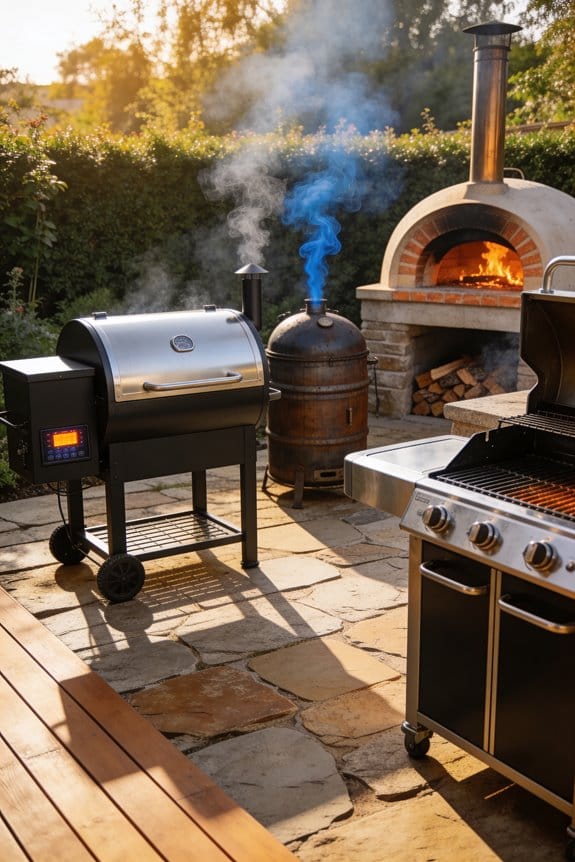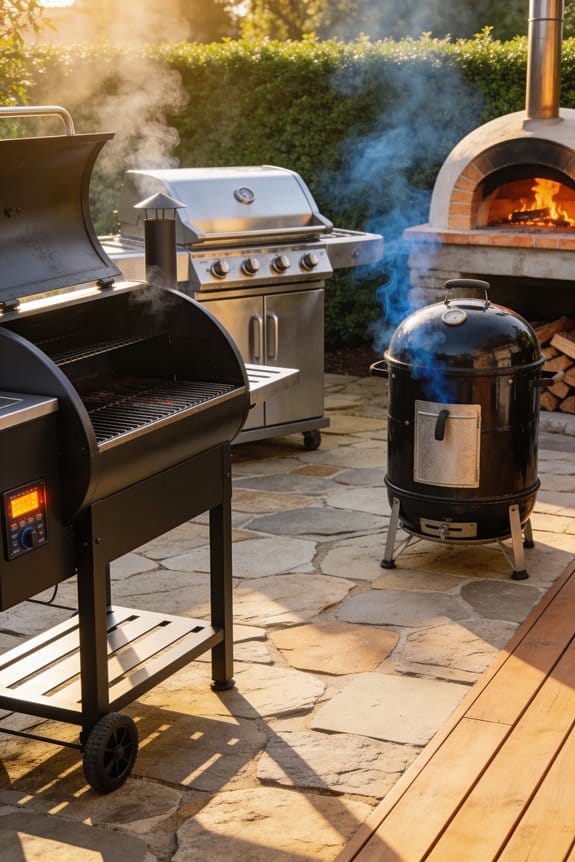


There are five main smoker types, each using different heat sources and airflow to cook meat differently. Offset smokers use a side firebox for traditional low-and-slow cooking. Vertical smokers stack racks for faster, even heating. Drum smokers retrofit steel barrels affordably. Kamado grills use ceramic for precise temperature control. Pellet smokers feature digital automation with wood pellets. Electric models offer beginner-friendly convenience but sacrifice authentic flavor. Your choice depends on budget, skill level, and cooking style—and each type has distinct advantages worth exploring further.
Key Takeaways
- Offset smokers use side-mounted fireboxes where smoke travels horizontally through the cooking chamber for traditional wood-fired flavor.
- Vertical smokers position heat beneath cooking areas, enabling bottom-up airflow through multiple racks for faster, even cooks.
- Pellet smokers feature digital controllers that automatically feed wood pellets, maintaining consistent temperatures with minimal hands-on involvement.
- Drum smokers retrofit steel barrels with charcoal baskets and vents, offering affordable, simple setups with strong flavor profiles.
- Electric and kamado smokers provide consistent heat control; electric prioritizes convenience while kamado ceramic construction excels in temperature precision.
Smokers vs. Direct Heat: Why Low-and-Slow Wins
When you’re deciding how to cook meat, you’ll encounter two main approaches: direct heat and smoking, each producing distinctly different results. Direct heat grills meat quickly using intense temperatures, while smoking employs low-and-slow cooking methods that transform food through smoke chemistry. During smoking, heat breaks down collagen, a tough protein in meat, converting it into gelatin that creates tender, juicy results. This process requires patience—sometimes hours—but delivers superior flavor and texture. Direct grilling produces a charred exterior quickly, yet often leaves interiors dry. Smoking’s extended cooking time allows smoke particles to penetrate deep into meat fibers, creating complex flavors impossible with direct heat. Understanding these differences helps you choose the right cooking method for your desired outcome.
Offset Smokers: The Traditional Choice for Low-and-Slow BBQ

Since the offset smoker emerged as the original southern-style barbecue method, it’s remained a favorite among serious pitmasters who want authentic results. The horizontal design features a side-mounted firebox that allows smoke to travel horizontally through the cooking chamber, creating that distinctive crispy exterior and moist interior you’re after.
Wood selection matters greatly here—hardwoods like oak or hickory burn longer and produce better flavor than softwoods. Fire management requires constant attention; you’ll need to monitor temperature regularly and adjust airflow through vents to maintain steady heat.
The quality depends largely on steel thickness and cooking area size. While this smoker demands more hands-on effort than modern alternatives, many barbecue enthusiasts consider the authentic results worth the investment and time commitment.
Vertical Smokers: Faster Cooks, Better Heat

Unlike offset smokers that move smoke horizontally through a cooking chamber, vertical smokers position the heat source directly beneath the cooking area, which creates a different cooking dynamic altogether. The vertical airflow design allows heat to rise evenly through multiple racks, cooking food faster than traditional offset models.
I’ve found that vertical smokers work well for meats requiring shorter cook times. They come in various configurations, including bullet and box styles, each offering distinct advantages. The bottom-up heat distribution guarantees consistent temperature across all cooking levels, reducing cold spots. This design also enables rapid searing when you want a browned exterior. Whether you’re smoking brisket or preparing chicken, vertical smokers deliver efficient, reliable results with minimal temperature fluctuations throughout your cooking process.
Drum Smokers: Affordable Simplicity in a Steel Barrel

If you’re looking for a smoker that doesn’t require the space of a vertical model or the investment of a traditional offset, drum smokers offer an invigoratingly straightforward approach to smoking meat. These smokers, commonly called Ugly Drum Smokers (UDS), are built from retrofitted steel barrels fitted with racks and adjustable vents. The design uses a charcoal basket positioned at the bottom, with a chimney system controlling airflow for temperature regulation. Charcoal sourcing is simple since you’ll need standard briquettes or lump charcoal readily available at most retailers. Barrel maintenance involves occasional cleaning and rust prevention to guarantee longevity. Despite their minimalist construction, drum smokers deliver strong, authentic smoky flavor while remaining highly affordable and effective for backyard barbecuing.
Kamado Smokers: Ceramic Precision and Versatility

Picture a smoker shaped like an egg, and you’ve imagined the kamado, a cooking device that combines ancient ceramic design with modern barbecuing technology. I find that kamados excel at temperature control because their ceramic construction provides exceptional heat retention and responsiveness. The ceramic material, which comes in various glaze variations, distributes heat evenly throughout the cooking chamber. What makes kamados particularly valuable is their dual fuel capability—you can use charcoal for traditional smoking or wood for enhanced flavor. Ceramic maintenance requires minimal effort; simply brush away ash and inspect for cracks periodically. The kamado’s versatility means I can smoke brisket at low temperatures or sear steaks at high heat. This flexibility, combined with the precise temperature management the ceramic design enables, explains why kamados have gained considerable popularity among serious barbecue enthusiasts.
Pellet Smokers: Set-and-Forget Technology
When you want the convenience of modern technology combined with genuine smoky barbecue flavor, a pellet smoker delivers exactly that. These smokers burn compressed wood pellets through an electric auger system, which feeds fuel into a firepot based on your temperature settings. A digital controller maintains heat between 160 and 500 degrees Fahrenheit, eliminating the need for constant monitoring. You simply set your desired temperature and let the smoker work. Pellet maintenance involves emptying ash periodically and checking the hopper for pellet supply. Flavor customization happens through selecting different wood pellet types, allowing you to experiment with hickory, mesquite, or fruitwood profiles. This versatility makes pellet smokers excellent for smoking, grilling, or even baking various foods.
Electric Smokers: Beginner-Friendly Convenience
Electric smokers take the convenience factor even further than pellet models by removing the need to manage fuel altogether. You simply plug in the unit, set your desired temperature on the digital control, and let it work. The electric heating element maintains consistent heat throughout your cooking session, which makes electric smokers ideal for beginners who want reliable results without constant monitoring.
These smokers offer low maintenance operation since there’s no charcoal to clean or pellets to refill. Compact countertop models fit easily in small spaces, making them accessible for apartment dwellers and those with limited outdoor room. However, they produce less robust smoky flavor compared to charcoal-based options, generating only about eighty percent of traditional barbecue taste. Despite this limitation, their user-friendly design and minimal hands-on management make them excellent entry points for new smoking enthusiasts.
Choose by Budget, Skill Level, and Primary Cook Style
With so many smoker options available, I’d recommend matching your choice to three key factors: how much you’re willing to spend, your experience level with smoking, and what foods you plan to cook most often.
Budget tiers range from affordable drum smokers and electric models under $300 to premium pellet and kamado smokers exceeding $1,000. Beginners benefit from electric or pellet smokers since they require minimal temperature management. As your skill progression advances, you might explore offset or vertical smokers that demand more hands-on attention but reward dedicated effort with superior flavor.
Consider your primary cook style too. Quick-cooking meats suit vertical smokers, while low-and-slow projects favor offset designs. Match these elements strategically, and you’ll find a smoker that fits both your wallet and cooking goals.
Smoker Comparison Chart: Price, Flavor, and Hands-On Time
To help you navigate your smoker selection, I’ve organized the major types into a comparison framework that examines three critical dimensions: initial investment, flavor quality, and the amount of active management required during cooking. Offset smokers demand higher upfront costs and continuous temperature monitoring, though they deliver superior flavor through traditional wood types. Pellet smokers offer mid-range pricing with minimal hands-on involvement, making them ideal for busy cooks. Electric smokers rank lowest in price but sacrifice authentic taste. Drum smokers provide exceptional value with strong flavor profiles. Kamado grills command premium prices yet excel in temperature precision. When selecting a smoker, consider your maintenance schedule alongside these factors, as charcoal-based models require more frequent cleaning and wood type adjustments than electric alternatives.
Frequently Asked Questions
How Often Should I Clean and Maintain My Smoker to Ensure Longevity?
Your smoker’s a reliable partner that needs consistent care. I’d recommend daily wipe downs after cooking and annual overhauls to inspect seals, grates, and thermometers. This routine keeps it performing like new.
What Size Smoker Do I Need for Cooking for Different Group Sizes?
I’d recommend a 250-pound capacity smoker for small gatherings, while larger parties need 500+ pounds. Consider portable options for flexibility or invest in large capacities for frequent entertaining.
Can I Use Different Types of Wood Pellets or Charcoal Interchangeably?
I’ll tell you straight: you can’t swap pellets and charcoal between smokers. Each fuel type’s wood compatibility differs—oak pellets won’t work in charcoal smokers. Different materials create distinct flavor transfer profiles, so matching fuel to your equipment matters.
How Do Weather Conditions Like Wind and Rain Affect Smoking Performance?
I’ve found that wind impact disrupts temperature stability, forcing you to make constant adjustments, while rain effects cool your smoker’s exterior and require you to shield your setup for consistent heat maintenance.
What’s the Typical Lifespan of Each Smoker Type Before Replacement?
I’d say smokers eventually “graduate” to retirement. Your average lifespan ranges from 5-15 years depending on material durability. I recommend watching for replacement signs like rust or heat loss. Check warranty limits—they’ll guide your expectations and investment timeline.