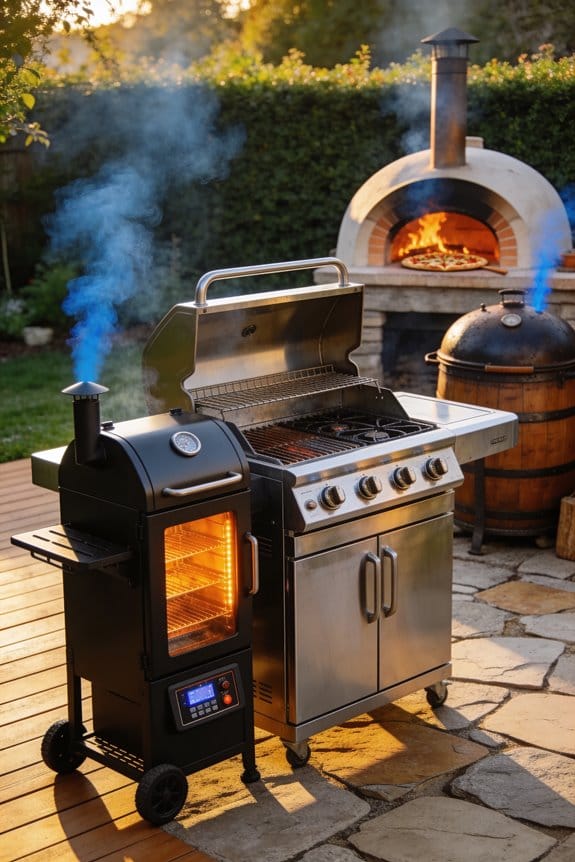

To make Neapolitan pizza at home, you’ll mix flour, water, yeast, and salt into dough, then let it ferment for three hours. Shape the dough into balls and hand-stretch each portion thin in the center with slightly thicker edges. Top with crushed San Marzano tomatoes, salt, olive oil, and fresh basil, then add mozzarella midway through baking. Preheat your outdoor oven to maximum temperature for at least forty minutes, bake five to six minutes until edges brown, then finish under the broiler for characteristic charring and blistering. The techniques for achieving authentic results involve specific timing and temperature details worth exploring further.
Key Takeaways
- Mix flour, water, yeast, and salt at 59–70% hydration, then bulk ferment approximately 3 hours at room temperature.
- Shape fermented dough into 335 g balls with thin centers and slightly thicker edges for authentic Neapolitan style.
- Preheat your oven to maximum temperature for at least 40 minutes to heat the stone evenly before baking.
- Use hand-crushed San Marzano tomatoes, Fior di latte mozzarella, and fresh basil for premium sauce and toppings.
- Bake 5–6 minutes until crust sets, add cheese midway through, then finish 1–2 minutes under broiler for blistering.
Build Your Pizza Dough Foundation: Flour, Water, Yeast, and Salt
Because the foundation of authentic Neapolitan pizza rests entirely on your dough, I’ll walk you through selecting and combining the four essential ingredients that’ll make or break your final result. Start with Caputo Doppio Zero flour, which produces superior elasticity compared to standard alternatives, though flour substitutions like all-purpose or bread flour work when necessary. Next, you’ll need water at 59-70% hydration ratios depending on your experience level—typically 600ml per kilogram of flour. This hydration experiments range allows you to adjust consistency as you learn. Dissolve 40-60 grams of salt per liter of water before mixing to prevent yeast damage. Finally, fresh yeast delivers better fermentation and lighter texture than dry yeast, requiring double the quantity if substituting. These four components create your pizza’s structural foundation.
Mix, Ferment, and Shape Your Pizza Dough
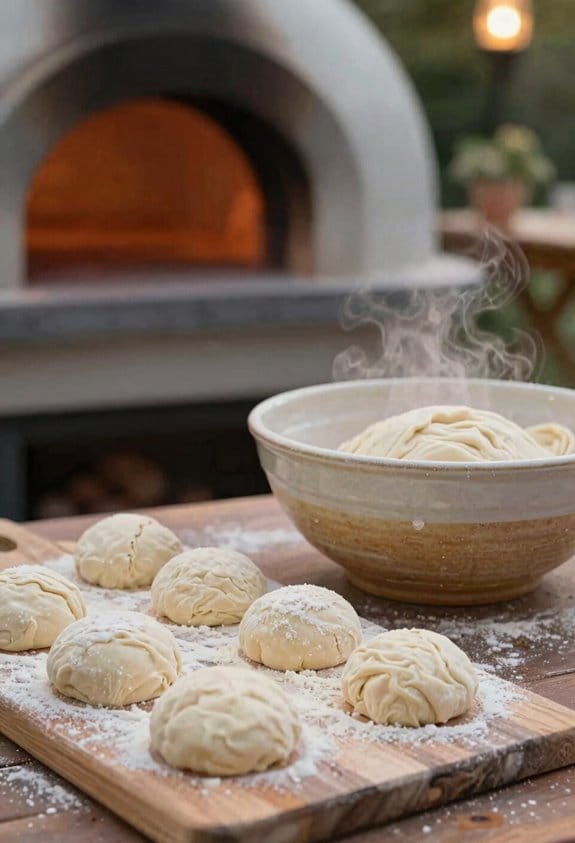
With your ingredients prepared, you’re ready to transform them into pizza dough through mixing, fermentation, and shaping. Start by pouring water into your mixer, then dissolve salt before adding flour gradually. This starter technique prevents yeast damage and guarantees even distribution. Mix until your dough springs back when poked, reaching a smooth consistency. For hydration experimentation, try ratios between 59-70% depending on your experience level, beginning with 600ml water per 1kg flour. After mixing, allow bulk fermentation for approximately 3 hours at room temperature. Once fermented, divide your dough into 335g portions and shape them into smooth balls. This preparation creates the foundation for stretching and baking your authentic Neapolitan pizza.
Make Authentic Pizza Sauce and Choose Your Toppings
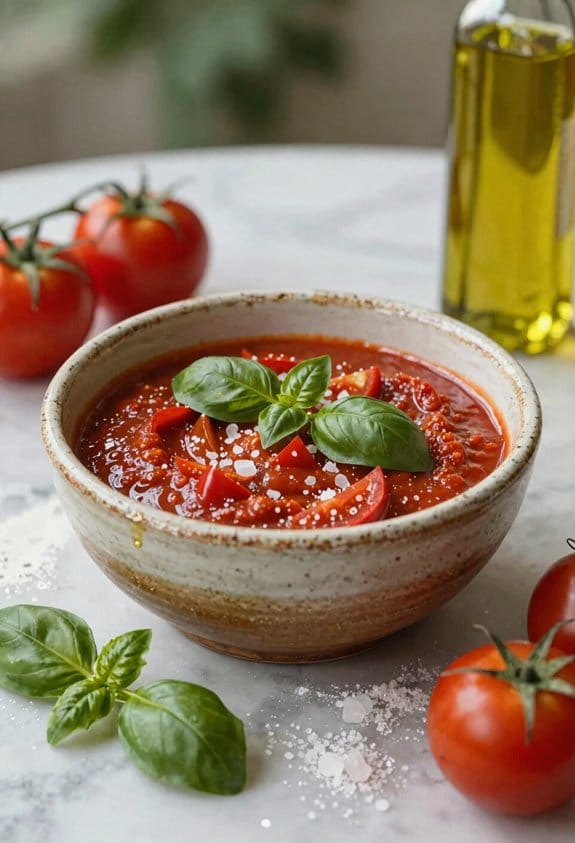
How should you approach building flavors in your pizza sauce? Start with premium San Marzano tomatoes, crushing them by hand to preserve their authentic texture and natural acidity. Combine crushed tomatoes with salt, extra virgin olive oil, and fresh basil chiffonade—thin ribbon-like cuts that distribute flavor evenly throughout your sauce.
For depth, consider adding garlic confit, which provides a mellow, sweet garlic note without the harshness of raw garlic. A touch of lemon zest brightens the sauce, cutting through richness while enhancing the tomatoes’ natural sweetness.
When selecting toppings, choose fresh Fior di latte mozzarella, drained thoroughly to prevent excess moisture from soaking your crust. Add grated Parmesan cheese and fresh basil leaves after baking for peak flavor and texture contrast.
Stretch Your Pizza Dough by Hand and Launch Onto the Stone
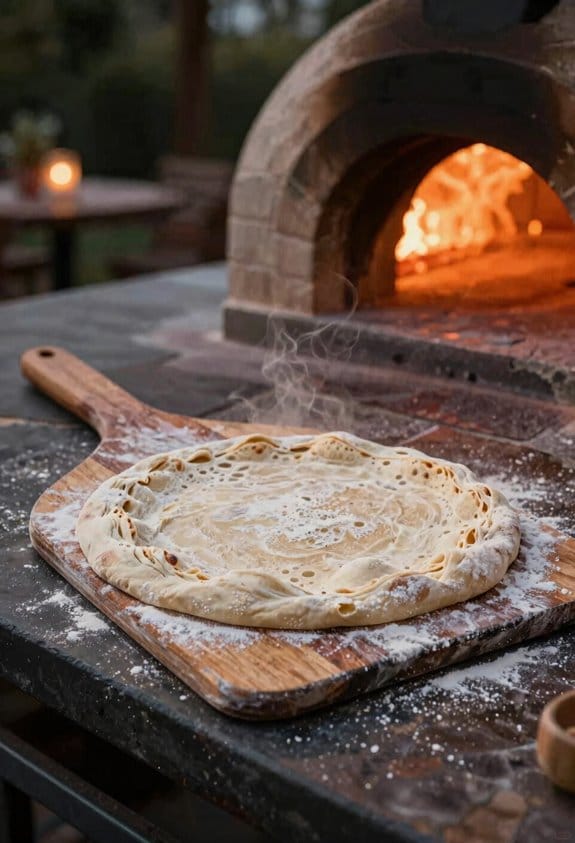
After your dough has completed its bulk fermentation and you’ve divided it into 335-gram portions and shaped them into smooth balls, you’re ready to transform those rounds into the thin, even base that defines authentic Neapolitan pizza. Use hand tossing techniques by gently stretching the dough with your fingertips, working from the center outward while rotating the ball. For edge flouring tips, dust your pizza peel with fine semolina flour to prevent sticking during preparation. Create slightly thicker edges while maintaining a thin center, characteristic of traditional Neapolitan style. Work quickly after stretching to avoid over-proofing. When ready, slide the stretched dough onto your preheated stone with one confident, swift motion, ensuring your peel moves freely before launching.
Bake Your Pizza to Perfection: Temperature, Timing, and Finish
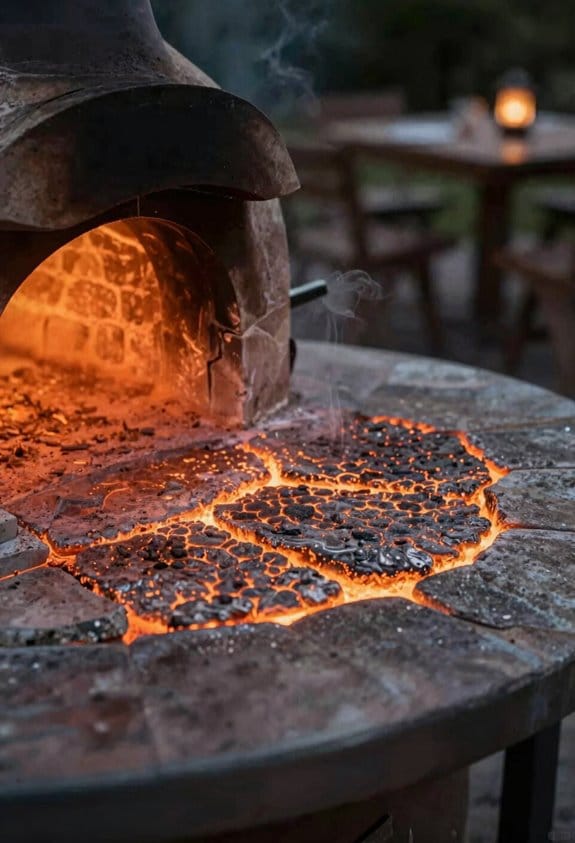
Since your pizza dough’s stretched base now rests on the hot stone, you’re entering the most critical phase of the baking process. Preheat your oven to maximum temperature for at least 40 minutes, guaranteeing thermal gradients develop evenly throughout the stone.
Bake your sauce-topped pizza for 5-6 minutes until the crust begins setting and edges show light browning. Add mozzarella and Parmesan cheese midway through baking rather than before, allowing proper melting without burning.
During the final 1-2 minutes, finish your pizza under the grill or broiler to achieve crust blistering and charcoal flavors characteristic of authentic Neapolitan pizza. Regular oven maintenance guarantees consistent temperature distribution. Launch your pizza using a quick, confident motion on the peel, verifying it moves freely before transferring onto the hot stone.
Frequently Asked Questions
What’s the Ideal Outdoor Temperature for Making Neapolitan Pizza at Home?
I don’t find specific outdoor temperature recommendations in the knowledge base. However, I’ve discovered that what matters most is your oven’s high heat—I preheat mine to maximum temperature for 40 minutes, enabling proper oven spring and ideal baking conditions.
How Long Can Pizza Dough Be Stored in the Refrigerator Before Baking?
I’d recommend storing your pizza dough in the refrigerator for up to 72 hours. This cold retardation actually enhances flavor development during extended fermentation time, giving you superior taste compared to room temperature rising.
Can I Use a Home Kitchen Oven Instead of an Outdoor Pizza Oven?
I’ll pretend your kitchen oven can replicate wood-fire magic—it can’t. You can adapt with convection settings and stone alternatives like pizza steel, though you’ll sacrifice authentic crust and those coveted charred spots.
What Equipment Do I Need Besides an Outdoor Pizza Oven to Make Pizza?
You’ll need a pizza peel for launching dough, mixing bowls, measuring tools, and a dough scraper. I’d recommend wooden peels for handling and quality flour choices like Caputo Type 00 for authentic results.
How Do I Maintain My Pizza Oven for Consistent Baking Results?
I’ll maintain consistent baking results through regular inspections of the stone and dome for cracks, plus ash removal before each use. You’ll need to clear accumulated ash regularly to guarantee even heat distribution and peak temperature control.