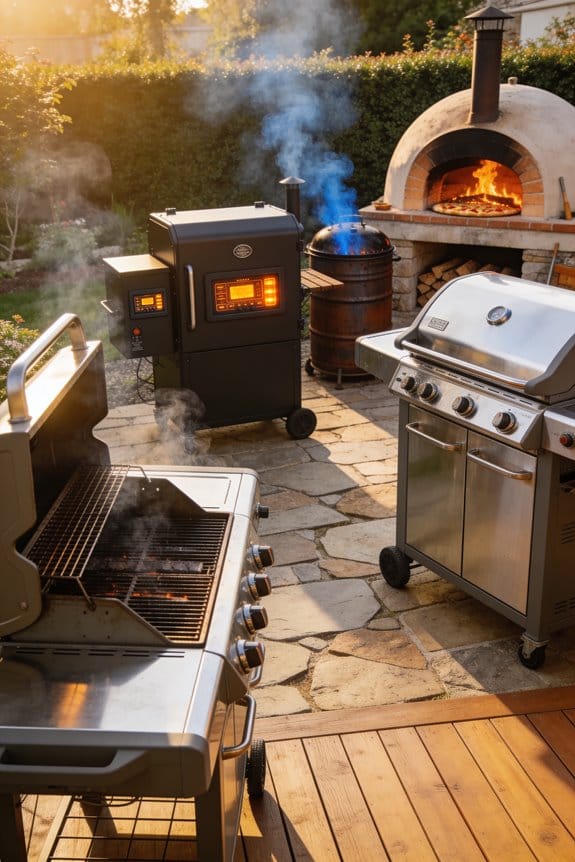

Pizza ovens cook pizza far better than regular kitchen ovens because they reach 700–950°F—three to four times hotter—while heating from all directions simultaneously. This extreme temperature sears your crust in 60–90 seconds, creating those signature air pockets and charred edges before moisture escapes. Meanwhile, the stone floor and dome shape reflect radiant heat onto your toppings evenly, locking in fresh flavors that regular ovens simply can’t achieve. Understanding how each heating element contributes reveals why this cooking method produces results you can’t replicate at home.
Key Takeaways
- Pizza ovens reach 700–950°F, creating intense heat that sears crusts in 60–90 seconds versus regular ovens’ slower 8–15 minute cook times.
- Dome-shaped stone floors reflect radiant heat 360° around pizzas, while regular ovens use single-element circulation for uneven cooking.
- Extreme temperatures instantly seal dough surfaces, trapping moisture and creating characteristic air pockets and leopard-spot charring impossible in regular ovens.
- Fast cooking preserves topping freshness, vibrant herb flavors, and cheese texture while preventing excessive browning that occurs in slower ovens.
- Wood-fired ovens add smoke complexity and char chemistry that create authentic flavor profiles regular kitchen ovens cannot replicate.
Temperature Extremes: Pizza Ovens Vs. Regular Ovens
When you’re making pizza, the temperature of your oven makes an enormous difference in how your final product turns out. Pizza ovens reach 700°F to 950°F, while regular kitchen ovens max out at 450°F to 550°F. This extreme gradient in temperature capabilities fundamentally changes how pizza cooks. The intense heat in pizza ovens sears dough instantly, creating crisp results you can’t achieve at home. Regular ovens lack this thermal power, requiring longer cooking times that risk drying toppings or leaving bases soggy. Understanding thermal cycling—how ovens maintain and distribute heat—reveals why pizza ovens excel. Pizza ovens retain heat through their stone floors and domes, maintaining consistent high temperatures. Regular ovens lose heat when you open the door, cooling down gradually during cooking.
60-Second Pizza: How Speed Locks in Flavor
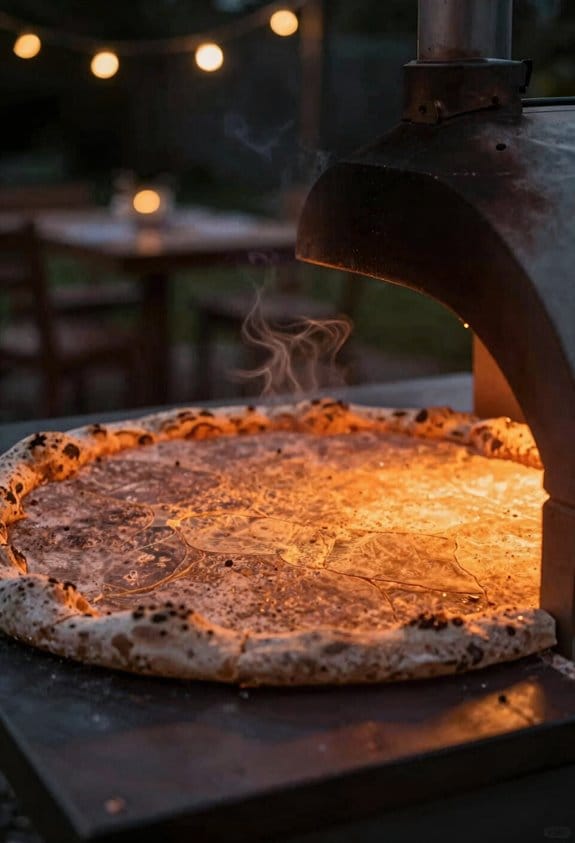
The speed at which pizza ovens cook isn’t just about saving time—it’s about preserving the quality of your ingredients. When I cook a second pizza in a pizza oven, the rapid retention of heat means I’m working with consistent temperatures that lock in flavor preservation. Your toppings don’t have time to lose moisture or wilt under prolonged exposure. Fresh vegetables maintain their crispness, cheese melts perfectly without browning excessively, and herbs retain their vibrant taste. In contrast, regular ovens require 8-15 minutes per pizza, allowing vegetables to dry out and flavors to fade. The pizza oven’s 60-90 second cook time means each pizza—whether first or second—benefits from intense, immediate heat that seals in pure ingredient flavors before they can deteriorate, delivering authentically flavorful results consistently.
Crust Texture That Home Ovens Simply Can’t Match
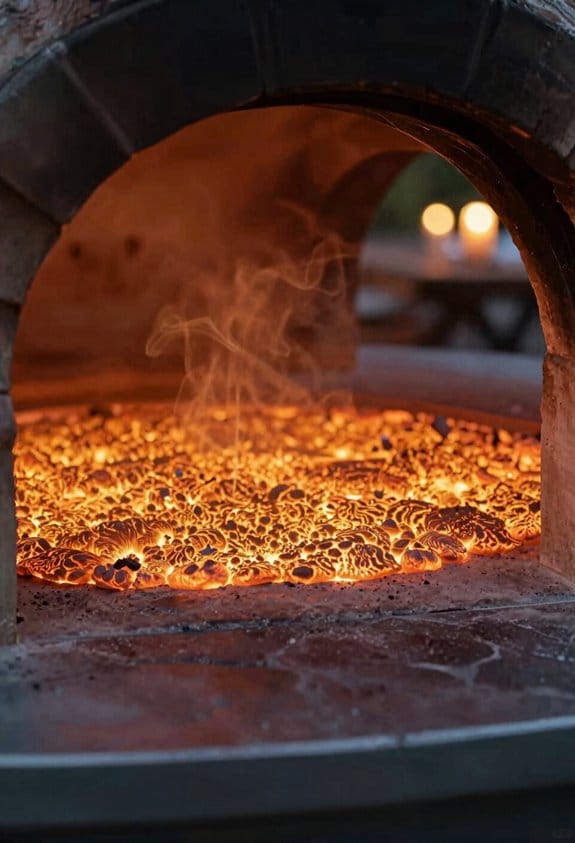
Because pizza ovens reach temperatures between 700°F and 950°F, they create a crust texture that regular household ovens simply cannot replicate. The intense heat causes rapid bubble formation throughout the dough, creating those characteristic air pockets you see in authentic pizzas. Meanwhile, edge charring happens almost instantly, developing the leopard spots that signal proper cooking.
Your home oven, maxing out around 450°F to 550°F, can’t achieve this speed. The slower cooking process breaks down gluten structure unevenly, resulting in dense, bread-like crusts. Pizza ovens maintain superior crumb resilience—that perfect balance between crispy exterior and chewy interior—because high heat seals the dough’s surface before moisture escapes from within. Regular ovens simply lack the thermal intensity needed for this transformation.
Why Heat From All Angles Changes Everything
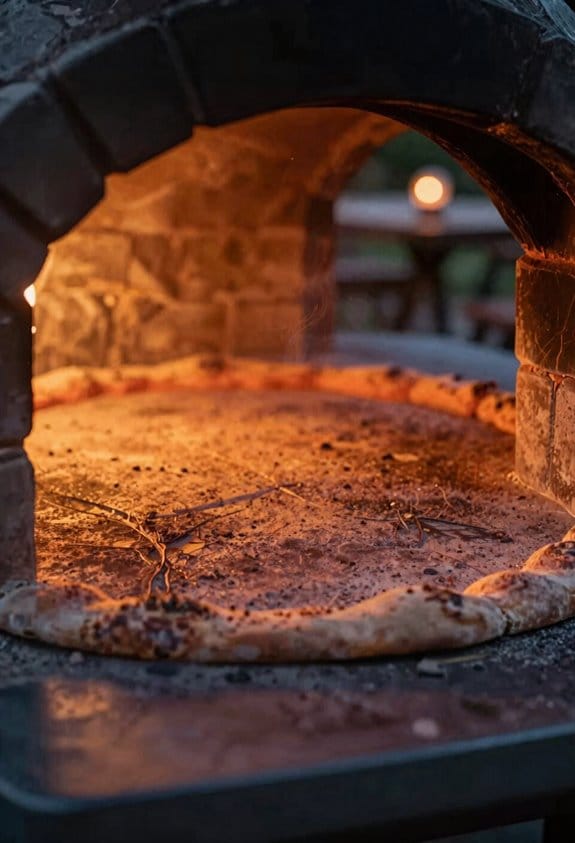
Unlike regular ovens that rely exclusively on circulating hot air from a single heat source, pizza ovens deliver thermal energy from multiple directions simultaneously—the stone floor below, the dome above, and direct flames around the sides. This 360° heat approach creates what’s called radiant convection, where heat radiates from all angles rather than just circulating. The stone floor sears your pizza’s bottom while the dome reflects intense heat downward onto toppings. Direct flames contribute additional thermal energy from the sides, ensuring even cooking throughout. Regular ovens can’t replicate this multi-directional approach because they depend on a single heating element and air circulation alone. This fundamental difference explains why pizza ovens achieve superior results in just 60-90 seconds while regular ovens require 8-15 minutes.
Fresh Toppings, Zero Moisture Loss: The Pizza Oven Advantage
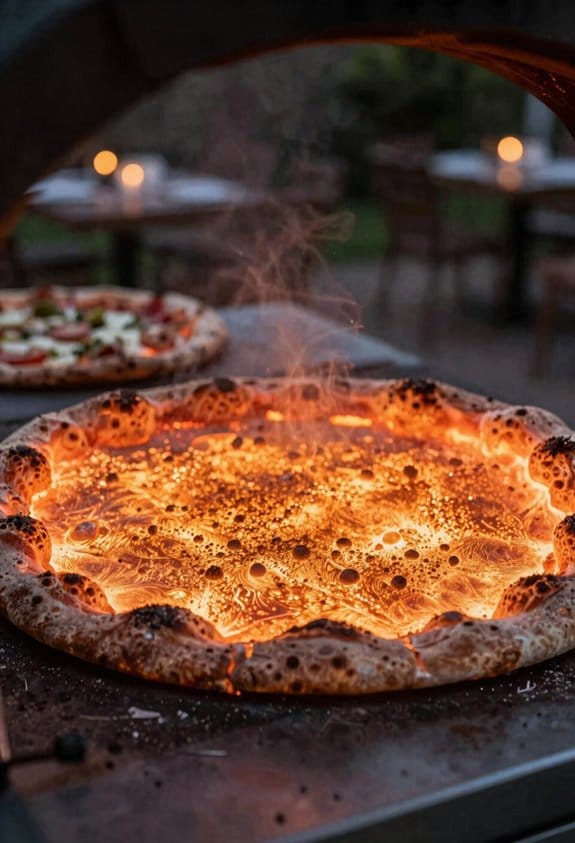
All that radiant heat from multiple angles doesn’t just cook your pizza faster—it also preserves the quality of your toppings in ways that regular ovens simply can’t match. When you use chilled toppings like fresh herbs, mozzarella, and vegetables in a pizza oven, the intense 60-to-90-second cook time locks in their natural moisture and flavors before they can dry out. Regular ovens require 8 to 15 minutes, during which your fresh herbs wilt and vegetables lose their crispness. The extreme heat from the stone floor and dome simultaneously sears the base while keeping toppings tender and flavorful. This means your pizza maintains restaurant-quality results, with vibrant ingredients that taste fresher than anything a conventional kitchen oven produces.
Wood Smoke and Char: The Flavor Premium You Can’t Fake
When you cook pizza in a wood-fired oven, you’re accessing a flavor dimension that regular ovens simply cannot replicate, no matter how advanced their technology becomes. The wood smoke creates smoke complexity—multiple layers of flavor compounds that infuse your pizza as it cooks. Meanwhile, the intense heat produces char chemistry, a chemical reaction where the crust’s surface caramelizes and browns. This charring develops rich, complex tastes that you can’t achieve in a regular oven. The open flames in wood-fired ovens add smoky char directly to your pizza’s surface, creating those desirable leopard spots. Regular ovens, relying only on circulating air, can’t generate this authentic flavor profile. The combination of smoke and high-heat char creates an irreplaceable taste experience that defines authentic Neapolitan pizza.
Frequently Asked Questions
Can Pizza Stone Accessories in Regular Ovens Truly Replicate Authentic Pizza Oven Results?
I’d say stone alternatives in your regular oven can’t truly replicate authentic results. They partially improve crust texture, but they fall short of pizza ovens’ intense, multi-directional heat that creates those signature charred, bubbly edges.
How Much Longer Does Preheating Take for Household Ovens Versus Dedicated Pizza Ovens?
Like a sprinter versus a marathoner, your household oven’s longer preheat takes 45-60 minutes versus a pizza oven’s 15-30 minutes. That thermal capacity difference means you’re waiting triple the time just to start cooking.
What Happens to Pizza Quality When Cooking Multiple Pies in a Home Oven?
When you’re cooking multiple pies in a home oven, I’ve found that oven crowding causes uneven heat distribution, leading to slice inconsistency. Your pizzas won’t cook uniformly, frustrating your guests and compromising quality.
Do Pizza Ovens Require Special Maintenance to Sustain Their Superior Cooking Performance?
Yes, they do. Imagine a wood-fired oven losing heat efficiency after months without flue cleaning. You’ll need regular stone seasoning and chimney maintenance to sustain that superior 900°F performance and consistent results.
Can Indoor Pizza Ovens Be Safely Installed in Residential Kitchens Without Ventilation Issues?
I’d strongly advise against it without proper ventilation planning. Indoor safety requires professional installation with adequate exhaust systems, as pizza ovens generate intense heat and smoke that’ll create serious hazards in residential kitchens.