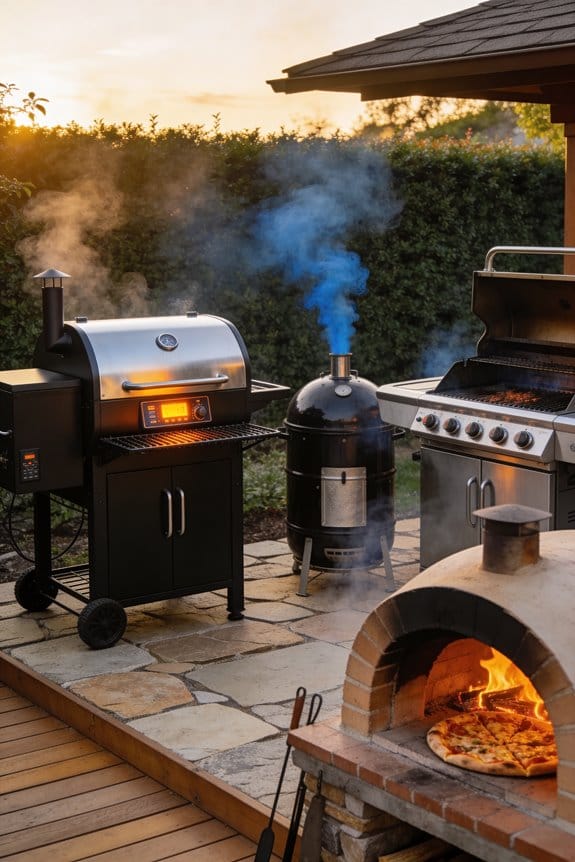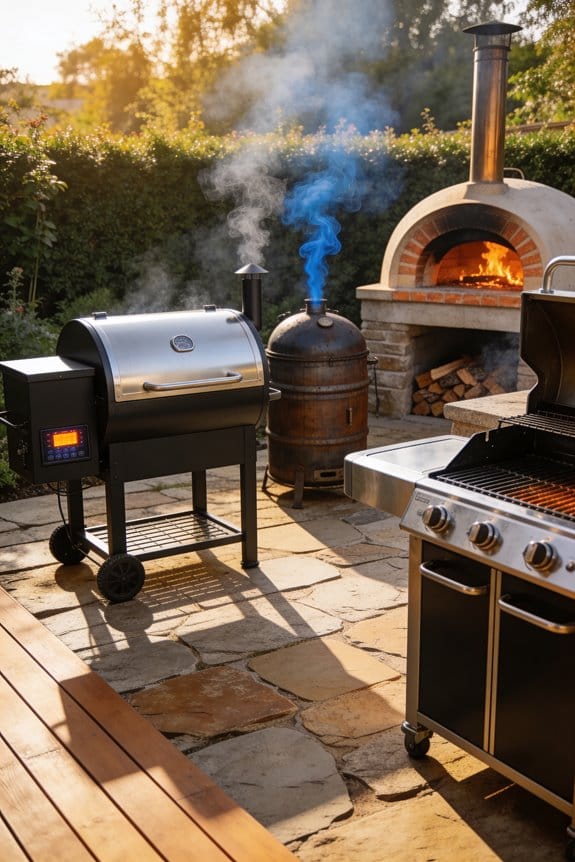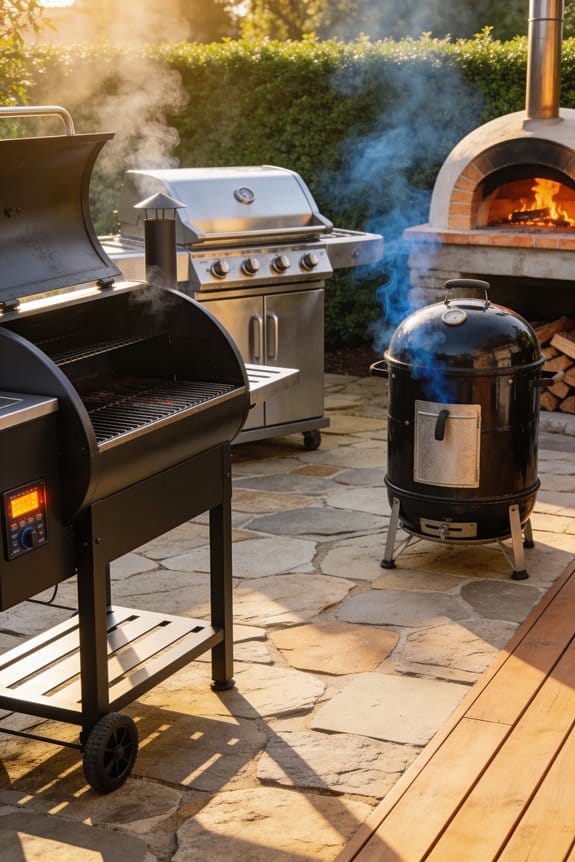
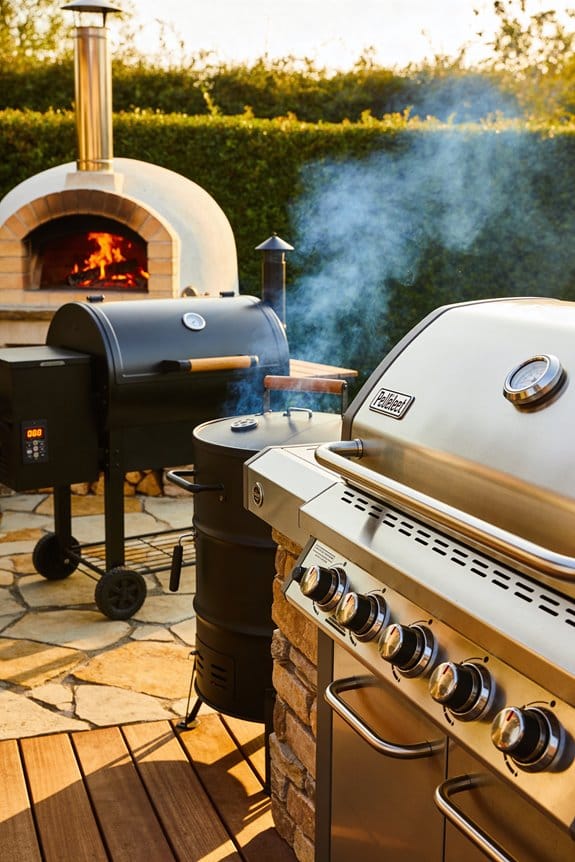

Smoking and grilling on a pellet grill differ primarily in temperature and cooking time. Smoking maintains steady heat around 225 degrees to slowly tenderize tough cuts over hours through indirect heat and circulated smoke. Grilling heats to 500–700 degrees for quick searing and charring in minutes. Your pellet grill’s convection fan keeps temperatures consistent either way, reducing hot spots. The method you choose depends on your cut type, available time, and whether you want tender results or charred texture. Understanding these distinctions helps you maximize your grill’s potential.
Key Takeaways
- Smoking uses low temperatures (~225°F) for hours to tenderize tough cuts; grilling reaches 500–700°F for quick searing and charring.
- Smoking relies on indirect heat and circulated smoke to penetrate meat; grilling uses direct, intense heat for fast cooking.
- Smoking produces milder, consistent smoke flavor; grilling creates char marks and caramelization without extended smoke exposure.
- Smoking consumes more pellets over longer cook times, increasing fuel costs; grilling is fuel-efficient for everyday meals.
- Pellet grill convection fans reduce hot spots in both methods, but smoking emphasizes tenderness while grilling prioritizes texture contrast.
Temperature: The Foundation of Smoking vs. Grilling
When you’re deciding between smoking and grilling on a pellet grill, understanding temperature is essential because it fundamentally determines how your food cooks and what flavors you’ll develop. Smoking operates at low temperatures around 225 degrees, allowing meat to tenderize slowly through indirect heat and smoke exposure. Grilling, by contrast, reaches 500–700 degrees for quick cooking and charring. This temperature difference affects how pellets burn and how smoke flavor develops. Consider ambient humidity when smoking, as it can influence cooking times and moisture retention in your meat. Thermal lag, the delay between temperature adjustments and actual heat changes, matters less with pellet grills than traditional smokers because their fans maintain consistent temperatures more reliably throughout your cook.
Heat Distribution on Pellet Grills
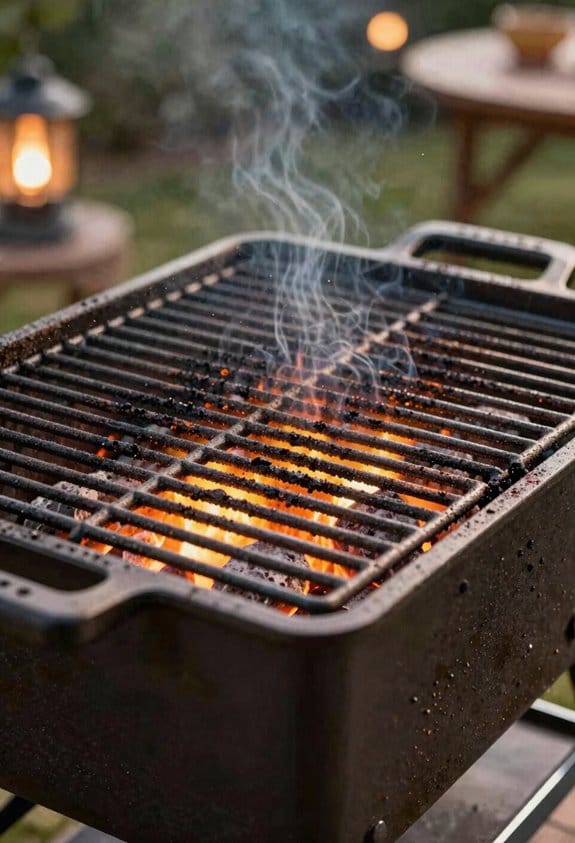
Beyond temperature settings, how your pellet grill distributes heat across the cooking surface determines whether you’ll get even results or hot spots that burn your food. I’ve found that pellet grills excel at creating even heat zones through their convection fan system, which circulates warm air throughout the cooking chamber. This design prevents the uneven cooking you’d experience with traditional charcoal grills. However, grate placement effects matter considerably. When I position food directly above the firebox, it receives more intense direct heat than food placed farther away. By understanding these heat distribution patterns and strategically placing your grates, you’ll achieve consistent cooking results across your entire pellet grill surface, whether you’re smoking low-and-slow or grilling at higher temperatures.
Smoking on Pellets: Low, Slow, and Tender
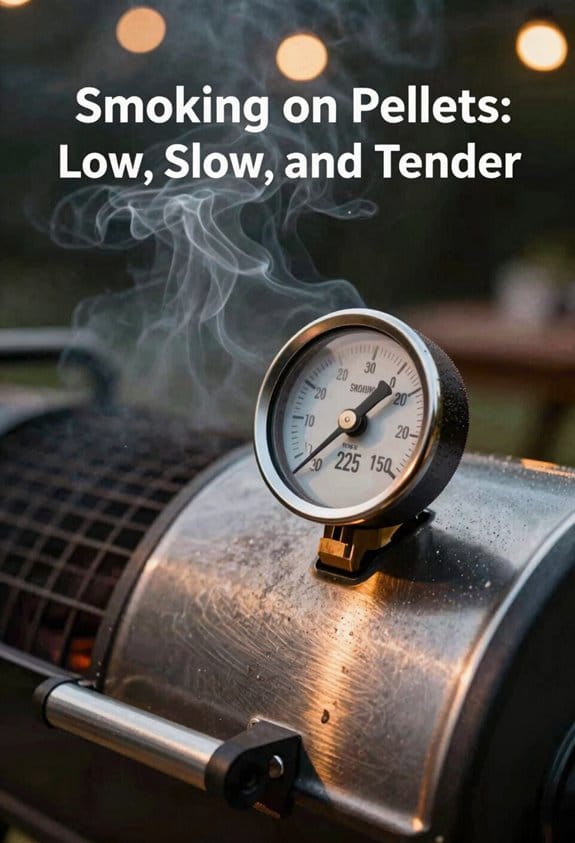
Mastering the art of low-temperature smoking on a pellet grill requires understanding how your equipment maintains steady heat for extended cooking periods. When you set your grill to around 225 degrees, the low temperature chemistry begins breaking down connective tissue in tough meat cuts, transforming them into tender, flavorful results. The indirect heat, circulated by your grill’s fan system, distributes smoke evenly across the cooking chamber. This consistent temperature prevents hot spots and burning, which you’d encounter with traditional charcoal smokers. Your pellet grill’s thermostat automatically feeds pellets into the fire pot, keeping conditions stable for hours. The slower cooking process allows smoke to penetrate deeply, creating that authentic smoked flavor without the intensity of wood splits.
Grilling on Pellets: High Heat for Char and Speed
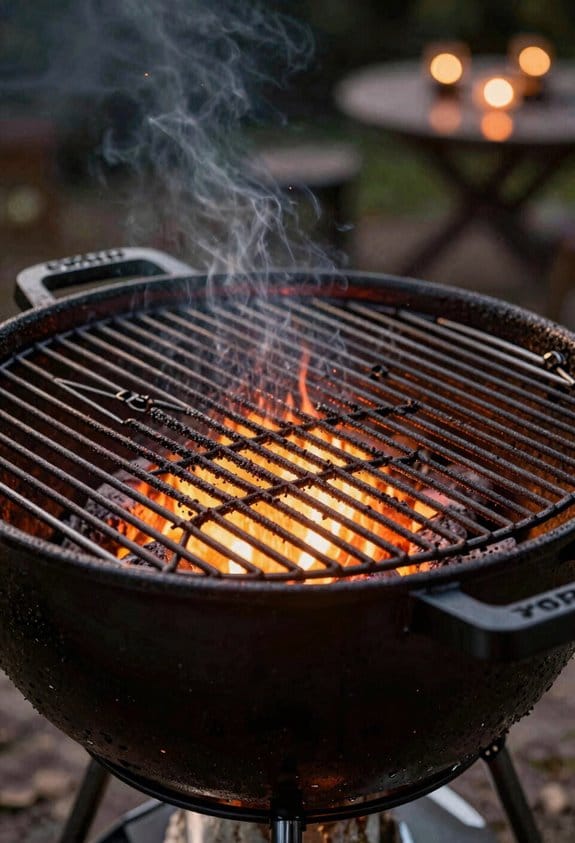
Shift your pellet grill into high-temperature mode, and you’ll unleash an entirely different cooking capability that transforms it from a smoker into a versatile grilling powerhouse. When you push temperatures to 500-700 degrees, your grill creates direct searing conditions perfect for quick cooking. The intense heat generates those coveted char marks and caramelization on steaks, burgers, and vegetables.
I find that grilling on pellets takes advantage of the convection system, which circulates heat evenly and prevents hot spots. This rapid sear capability means your food cooks faster than traditional smoking methods. Some pellet grill models include flame broilers that intensify direct heat exposure for additional browning power. While the grilling surface stays limited to the firebox area, the speed and precision make it ideal for everyday meals.
What Makes Pellet Grills Different From Other Cookers
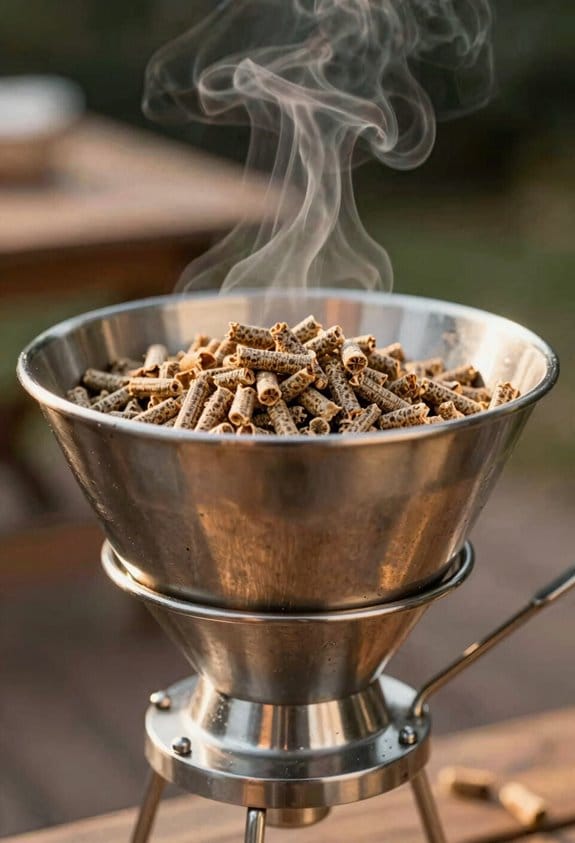
While traditional smokers, gas grills, and charcoal grills each excel in their own ways, pellet grills occupy a unique middle ground that combines the best features of all three. I find that pellet grills offer unmatched versatility because they handle both low-temperature smoking and high-heat grilling without requiring separate equipment. Unlike traditional smokers limited to lower ranges, pellet grills reach 500-700 degrees for searing while maintaining precise low-temperature control for smoking. Many modern models feature Wi-Fi connectivity, allowing you to monitor and adjust temperatures remotely from your phone. Additionally, pellet varieties like hickory and fruit woods let you customize smoke flavor intensity, giving you control that charcoal and gas grills simply don’t provide. This combination makes pellet grills ideal for cooks seeking flexibility and convenience.
Which Method Should You Use?
How do you decide whether to smoke or grill on your pellet grill? Your choice depends on meal planning and the time you have available. If you’re cooking tough cuts like brisket or ribs that benefit from low-and-slow cooking, smoking is your best option. You’ll want to take into account wood pairing too—hickory complements beef while fruit woods suit poultry. For quick dinners, grilling at high temperatures makes sense when you need fast results. Think about your guests’ preferences as well. Smokers prefer deeper, tender textures while others enjoy the charred exterior grilling provides. Your pellet grill’s versatility means you’re never limited to just one method, so choose based on your specific cooking needs and available time.
Pellet Costs and Smoke Flavor Trade-offs
Once you’ve decided whether to smoke or grill your meal, you’ll face another consideration that affects both your wallet and your cooking results: the cost of pellets and the smoke flavor they produce.
Understanding pellet lifecycle economics helps you budget effectively. Smoking demands more pellets since you’re maintaining low temperatures for extended periods, making it costlier than grilling. However, pellet grills produce milder smoke than traditional wood-burning smokers because pellets burn efficiently in smaller quantities.
This flavor economics trade-off means you’re sacrificing some smoke intensity for convenience and precision temperature control. While pellets generate cleaner, more consistent smoke without the deep richness of wood splits, they require less frequent restocking during shorter grilling sessions.
Evaluating your cooking preferences against fuel expenses helps you determine whether smoking’s extended cook times justify your pellet investment.
Frequently Asked Questions
Can I Switch Between Smoking and Grilling Modes Without Refilling My Pellet Hopper?
You might worry you’ll need constant refills, but I’ll tell you: yes, you can switch between smoking and grilling modes without refilling your hopper. Fuel management stays consistent during mode changeover since pellets feed continuously regardless of temperature settings.
How Often Do I Need to Clean My Pellet Grill Between Smoking and Grilling Sessions?
I’d recommend cleaning your pellet grill after every few sessions to prevent residue buildup. Since smoking and grilling create different byproducts, checking between uses helps maintain peak performance and extends your grill’s lifespan considerably.
Will Using Different Pellet Wood Types Affect My Grill’s Performance or Temperature Control?
Like different instruments in an orchestra, wood pellet types won’t affect your temperature control—they’ll only shift flavor profiles. I’ve found hickory and fruit woods burn consistently, maintaining steady heat while changing your smoke’s character and intensity.
What Safety Precautions Should I Take When Operating a Pellet Grill at High Temperatures?
I’d recommend you wear gloves and eye protection when operating at high temperatures. Clear your area of flammables, keep a fire extinguisher nearby, monitor your grill’s temperature consistently, and install a carbon monoxide detector for safety.
How Long Does a Full Hopper of Pellets Last During Smoking Versus Grilling?
I’ve found that smoking burns pellets slower than grilling due to lower temperatures. Your hopper typically lasts 8-12 hours smoking but only 3-4 hours grilling, depending on your specific burn rate and pellet consumption patterns.