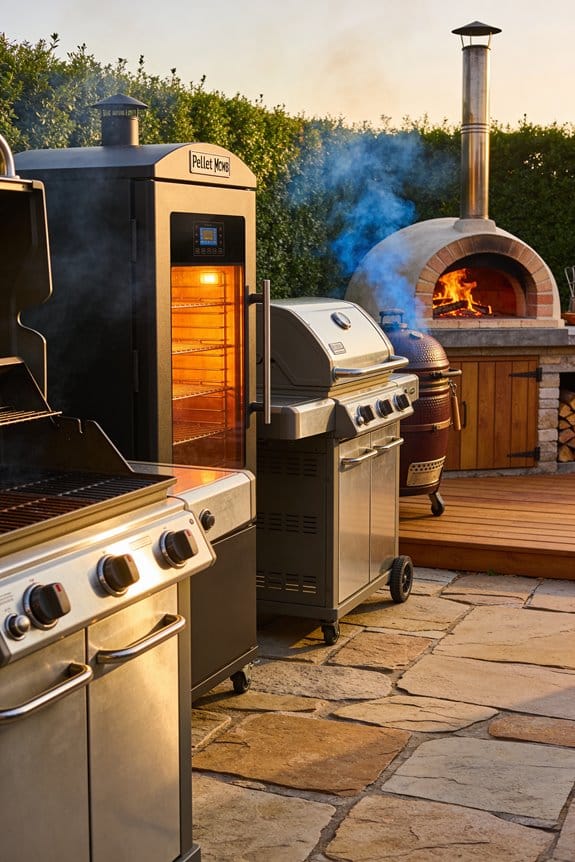

Grills rust when moisture, salt, and corrosive chemicals trigger electrochemical reactions between metal and oxygen. You can stop rust from spreading by cleaning grates after every use, drying all components thoroughly, and applying a thin coat of high-smoke-point oil like canola. Environmental factors like coastal humidity, high temperatures, and rain accelerate corrosion, so seasonal seasoning of cast iron and using breathable covers protect your grill during off-seasons. Consistent maintenance prevents overlooked rust hotspots on hinges and hardware that worsen over time. Understanding these specific causes and solutions will help you maintain your grill effectively.
Key Takeaways
- Moisture, salt air, grease buildup, and acidic food residues trigger electrochemical reactions that corrode metal surfaces.
- Clean grates after every use, dry thoroughly with towels, and apply high-smoke-point oil as protective barrier.
- Empty grease traps regularly and inspect hinges and hardware to prevent overlooked rust hotspots from forming.
- Coastal humidity, high temperatures, industrial pollution, and salt from snow-melt accelerate corrosion significantly.
- Use waterproof, breathable covers and store grills away from salt sources during off-season storage periods.
Why Grills Rust: Moisture, Salt, and Chemical Culprits
When you leave your grill exposed to the elements, you’re inviting rust to form through three main pathways: moisture accumulation, salt exposure, and corrosive chemicals. Moisture from rain and humidity creates condensation that triggers electrochemical reactions between metal and oxygen, breaking down protective coatings. Salt air near oceans accelerates this corrosion dramatically, even affecting stainless steel. Additionally, corrosive chemicals like pool chlorine and fertilizer residues vaporize and attack metal surfaces. Grease buildup traps moisture against your grill, intensifying rust formation. Food residues containing acids from marinades and vinegar etch metal further. Understanding these culprits helps you recognize why regular maintenance matters for preserving your grill’s integrity and functionality.
What Speeds Up Rust: Environmental Factors That Accelerate Corrosion
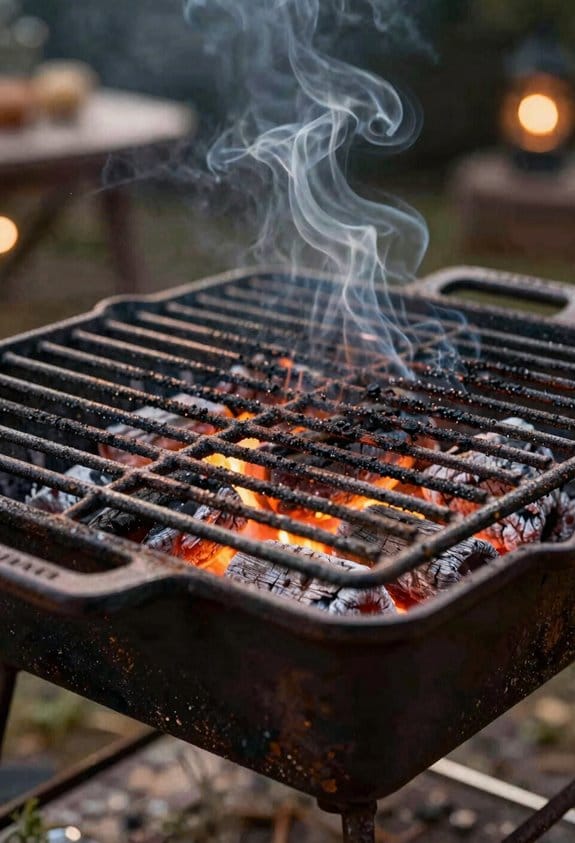
Several environmental conditions dramatically accelerate rust formation on your grill, pushing the corrosion process into overdrive. Coastal humidity combined with salty air creates an especially corrosive environment, even damaging stainless steel surfaces. High temperatures intensify this problem by weakening the chromium layer that normally protects stainless steel from rust.
Industrial pollution introduces acidic compounds that etch metal surfaces, while snow-melting salt causes pitting when it contacts your grill. Rain, wind, and UV rays work together to wear down protective coatings over time. Temperature fluctuations trigger condensation buildup on grates, trapping moisture against bare metal.
If you live near coastal areas or industrial regions, your grill faces markedly increased corrosion risk. Understanding these environmental factors helps you implement targeted prevention strategies specific to your location’s unique challenges.
5 Maintenance Mistakes That Invite Rust
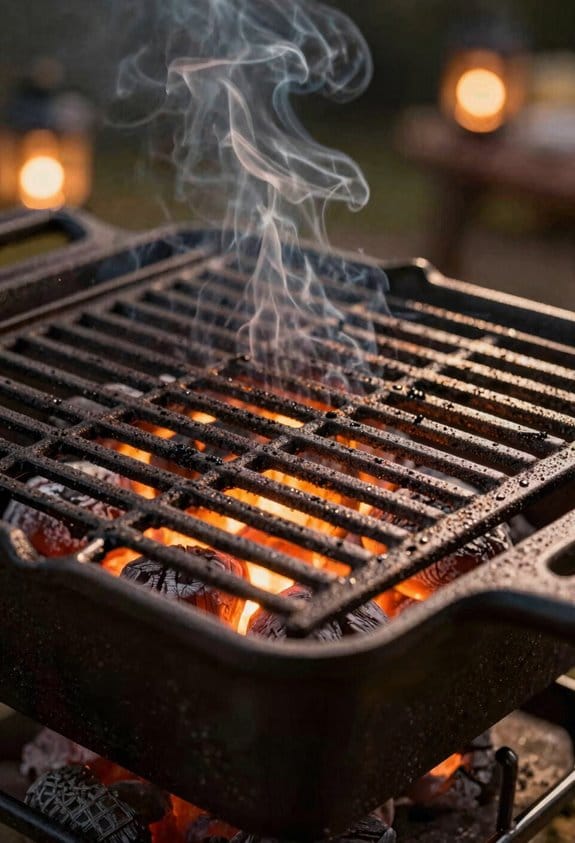
Since your grill’s protective finishes only work when you maintain them properly, neglecting regular upkeep creates an open invitation for rust to develop. Skipping post-use cleaning leaves food residue and grease that trap moisture against metal surfaces, accelerating oxidation. When you don’t empty grease traps and ash pans regularly, pooling liquids create rust-prone environments. Leaving grates wet after washing invites immediate corrosion because moisture reacts with exposed metal. Forgotten hinges and neglected hardware often become rust hotspots when overlooked during cleaning routines. Additionally, failing to apply protective oil coatings removes your grill’s moisture barrier. Infrequent deep cleaning allows buildup to accumulate, trapping acids and dampness. These maintenance gaps compound over time, transforming minor rust spots into serious corrosion problems that eventually compromise your grill’s functionality.
Your Grill’s Defense Plan: Cleaning, Drying, and Oiling
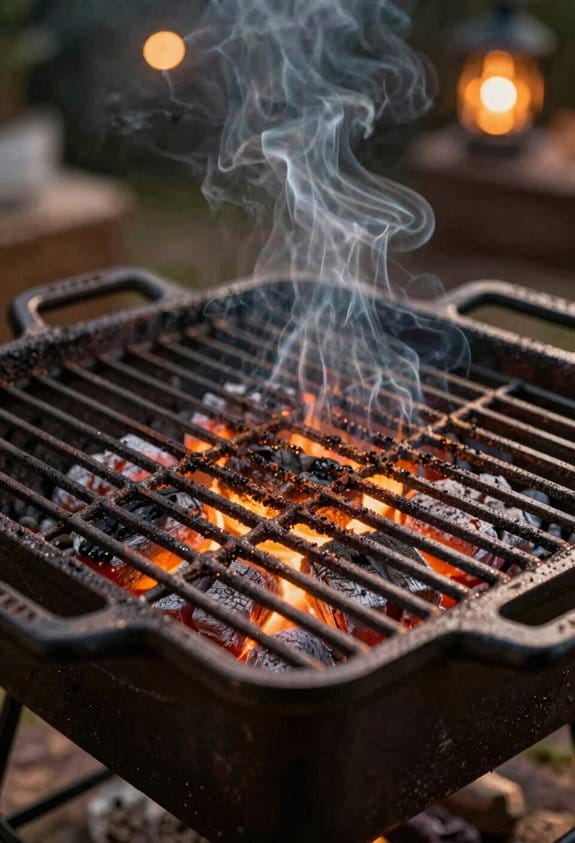
To build up your grill’s resistance against rust, you’ll need to establish a three-step defense system that works together to protect metal surfaces from moisture and oxidation. First, clean your grates after every use with appropriate tool selection—brushes, scrapers, or even an onion effectively remove food residue and grease that trap moisture. Second, dry everything thoroughly using a towel or low heat, since wet surfaces invite rust formation immediately. Third, apply a thin oil coat using high-smoke-point oils like canola, which repels water and creates a protective barrier. Routine inspections help you catch early rust spots before they spread. By combining consistent cleaning, complete drying, and regular oiling, you’re building layers of protection that keep corrosion at bay effectively.
Seasonal Protection: Seasoning Cast Iron and Covering Your Grill
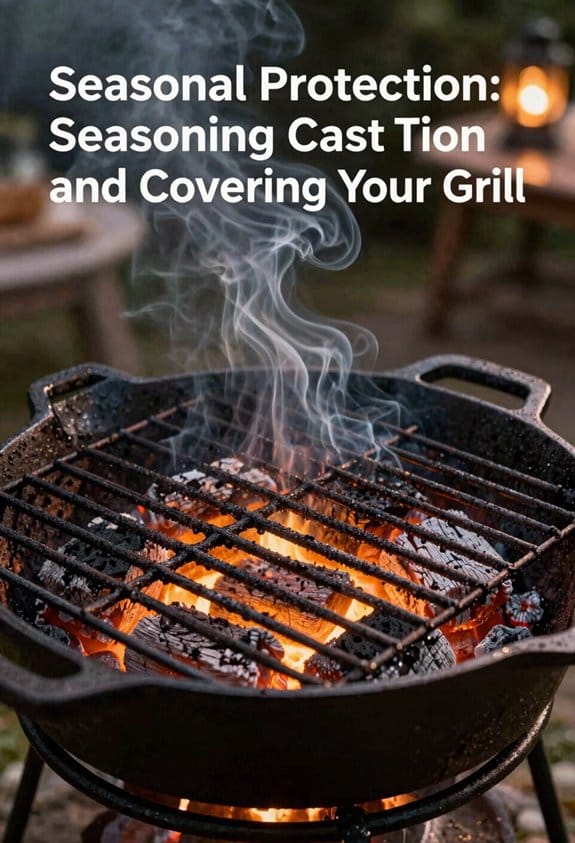
While your regular cleaning and oiling routine provides everyday protection, seasonal maintenance requires additional steps that address long-term rust prevention during storage periods and harsh weather conditions. For cast iron grates, seasoning frequency matters greatly—apply a protective oil layer every few months or before extended storage. Heat your grill to 350-400°F, coat grates with high-smoke-point oil like canola, and maintain this temperature for 40-60 minutes to create a durable barrier against moisture.
Cover materials also play a vital role in your defense strategy. Choose a waterproof, UV-resistant, breathable cover that prevents rain penetration while allowing air circulation underneath. This prevents condensation buildup that accelerates rust formation. Store your covered grill away from salt sources, pools, and direct weather exposure whenever possible, maximizing protection during off-seasons.
Frequently Asked Questions
Can I Use Regular Cooking Oil to Season My Cast Iron Grill Grates?
I’d avoid regular cooking oil for seasoning. You’ll want vegetable oil with a high smoke point like canola instead. The seasoning technique requires heating your grates to 350-400°F for 40-60 minutes to create a protective layer.
How Often Should I Replace My Grill Cover if It Shows Wear?
I’d replace your grill cover when you notice visible tears, fading, or water pooling on top—typically every 2-3 years with regular use. Watch for visual cues like cracking or UV damage that compromise its waterproof protection.
What’s the Best Way to Remove Rust That’s Already Started Forming?
I’d recommend soaking affected areas in vinegar to break down rust, then scrubbing with a steel brush to remove it. Dry thoroughly afterward and apply oil to prevent regrowth.
Is Stainless Steel Truly Rust-Proof in All Coastal Environments?
Can stainless steel truly withstand salt’s relentless assault? No—I’ve found that while it offers superior chloride resistance, extreme coastal exposure still compromises its stainless lifespan without proper maintenance and protective coatings.
Can I Use a Pressure Washer to Clean My Grill Grates Safely?
I’d avoid pressure washing your grill grates—it can damage protective coatings and force water into crevices. Instead, I recommend brushing with cold water and a mild detergent rinse, then drying thoroughly to prevent rust formation.