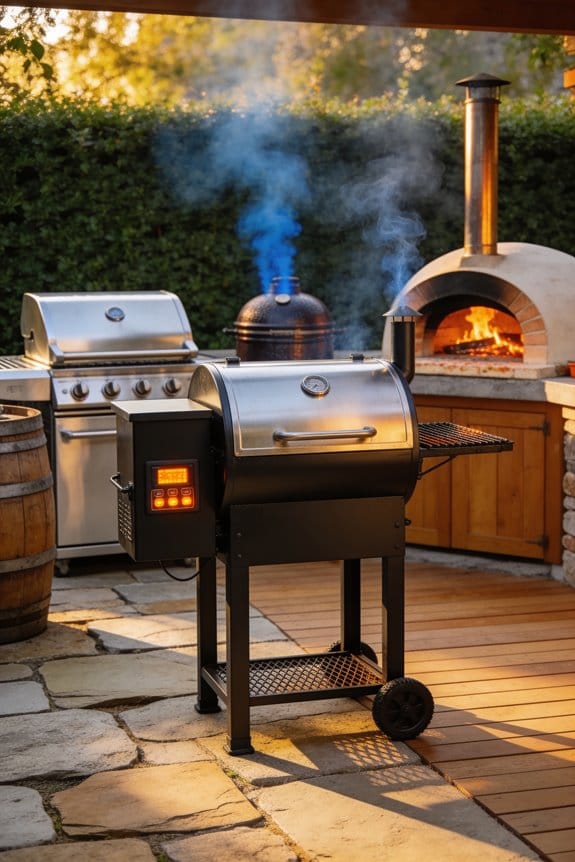
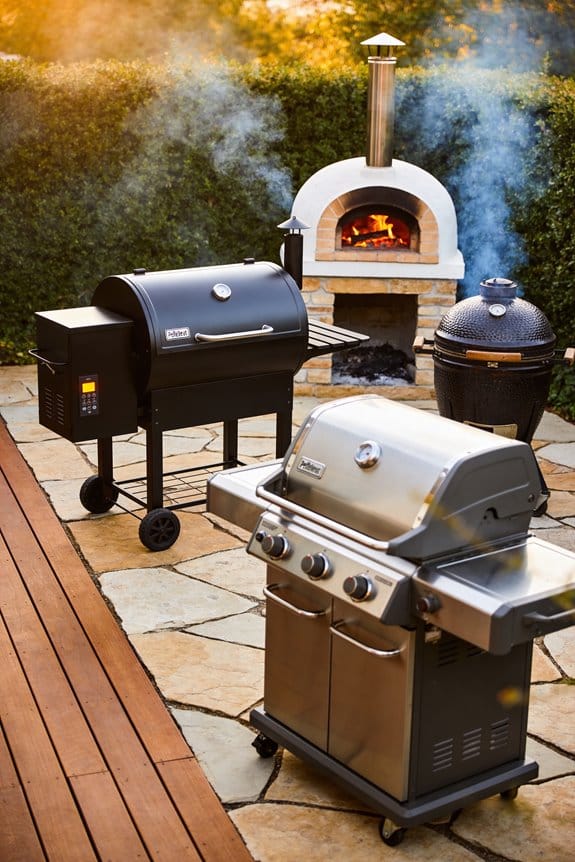

You’ll need to maintain a 10-foot horizontal distance from your grill to any combustible structures like your house, fence, or shed. This rule applies to both charcoal and gas grills under fire codes. However, vertical clearance matters equally—keep your grill away from overhead hazards like tree branches, porch roofs, and eaves since heat rises and can ignite materials above. Your specific restrictions depend on whether you’re using a balcony or ground-level space, so checking local codes and your building’s rules first guarantees you’re setting up safely. Understanding placement specifics will help you find the ideal spot.
Key Takeaways
- Maintain a 10-foot horizontal clearance in all directions from your grill to any combustible building structures or construction materials.
- Keep grills away from overhead hazards like porch roofs, eaves, tree branches, and gazebos where radiant heat can cause ignition.
- Position your grill on level, non-combustible ground such as concrete or gravel with adequate ventilation space surrounding it.
- Ensure the grill placement doesn’t block emergency exits and keeps flammable storage areas like sheds and woodpiles at safe distances.
- Check local fire codes and HOA policies, as balcony restrictions and building-specific rules may impose stricter requirements than standard regulations.
Understanding the 10-Foot Grill Clearance Standard
When you’re setting up a backyard grill, the most important safety rule you’ll encounter is the 10-foot clearance requirement, which applies to both charcoal and gas grills under the International Fire Code and California Fire Code regulations. This distance must be measured horizontally in all directions from your grill to any combustible construction, including wood siding, vinyl siding, and wooden decks.
Understanding grill zoning helps you identify safe placement areas on your property. However, code exceptions do exist for single-family dwellings, duplexes, and structures with automatic sprinkler systems, potentially allowing reduced distances in specific situations. Your local fire department may enforce stricter interpretations than state code allows, so checking with your jurisdiction guarantees compliance with applicable regulations in your area.
Why Vertical Distance Matters as Much as Horizontal Space
Most people focus on keeping their grills far enough away from walls and decks, but they overlook an equally dangerous threat lurking above their cooking area. Heat doesn’t just spread sideways—it rises upward through vertical convection, creating invisible danger zones overhead. You must maintain safe clearance above your grill, keeping it away from porch roofs, gazebos, and carports. Overhead foliage like tree branches and tall shrubs can ignite from radiant heat, even when positioned high above. Many people assume height provides protection, but it doesn’t. Eaves and overhanging structures present serious fire hazards regardless of their elevation. Your grill needs breathing room in all directions, including straight up, to prevent fires from spreading to structures above it.
Charcoal and Propane Grills: Know Your Specific Rules
Charcoal and propane grills operate under different safety rules because they present distinct fire hazards, so you’ll need to understand which restrictions apply to your specific grill type. Charcoal grills can’t be used on combustible balconies at all, while propane grills have tank storage restrictions that depend on your living situation. If you own a propane grill with a tank exceeding 1 pound capacity, you’re prohibited from storing it on combustible balconies. Smaller tanks under 2.5 pounds may be permitted in some areas. Both grill types require the standard 10-foot clearance from structures. Before seasonal maintenance or using your grill, check manufacturer guidelines and verify your local fire code requirements, since rules vary by location and building type.
Balcony and Apartment Grill Restrictions
Living in an apartment or condo means you’re working within stricter grill rules than single-family homeowners face, because your grilling decisions affect the safety of neighbors and shared structures. Most combustible balconies prohibit all charcoal and propane grills entirely, regardless of fire code exceptions. Your HOA enforcement policies often exceed state regulations, imposing complete grilling bans to minimize tenant liability concerns. Non-combustible patios with overhead sprinkler systems may allow limited grilling, though management approval remains essential. Many buildings restrict ground-level common areas too, requiring the standard 10-foot clearance from structures. Before purchasing any grill, review your lease agreement carefully. Your building’s specific restrictions typically supersede general fire codes, making direct communication with management essential for understanding what’s permitted on your property.
How Your Grill Model Changes Distance Requirements
While the 10-foot clearance rule applies to most backyard grills, your specific grill model may require different safety distances based on its heat output, design features, and manufacturer specifications. I’d recommend checking your grill’s owner’s manual first, since manufacturers often detail exact clearance requirements for your particular unit. The heat shielding design varies markedly between models—some grills use advanced insulation that reduces radiant heat, allowing closer placement to structures. Others lack this protection and need greater distances. Additionally, a 36-inch clearance zone around your grill’s perimeter helps with proper ventilation and safe movement while cooking. Your grill’s specifications ultimately determine whether you can meet fire code requirements in your specific location.
Placement Mistakes That Create Fire Hazards
Even though many homeowners understand the basic 10-foot clearance rule, I’ve observed that people often make placement decisions that undermine fire safety through overlooking specific hazards. One critical mistake involves positioning grills near exits, which blocks exits during emergencies and prevents quick escape if a fire occurs. Another common error is placing grills close to flammable storage areas, including sheds, garages, or woodpiles containing propane tanks, charcoal, or other combustible materials. I’ve also noticed homeowners positioning grills under eaves or tree branches, forgetting that heat rises vertically and can ignite overhead structures. These placement mistakes create compounding dangers because they combine multiple hazards simultaneously. Evaluating your grill location requires considering not just horizontal distance, but also vertical clearance, emergency accessibility, and proximity to stored flammable items.
Building Your Backyard Grilling Zone
After you’ve identified the mistakes that create fire hazards, you’re ready to design a grilling zone that keeps your family safe. Start by measuring out your 10-foot clearance from all combustible structures, then mark this boundary with safety signage so everyone understands the designated area. Position your grill on level, non-combustible ground like concrete or gravel, ensuring adequate space for movement around it. Consider seasonal storage by selecting a location accessible during warmer months but protected from extreme weather. Install overhead clearance checks to confirm no branches or structures hang above your cooking space. Finally, keep a fire extinguisher nearby and establish a clear perimeter where children and pets remain supervised while you’re grilling.
Frequently Asked Questions
Can I Use Heat Shields or Barriers to Reduce the Required Clearance Distance Around My Grill?
While heat barriers and reflective shields aren’t a silver bullet, they can help—but they won’t eliminate the 10-foot clearance requirement. I’d recommend checking your manufacturer’s guidelines and local fire codes, as they’re your best bet for compliance.
What Should I Do With Hot Charcoal Ash, and How Far Must Containers Be From Structures?
I’d keep your ash disposal containers outside and away from combustible construction entirely. For container placement, maintain that same 10-foot distance you’d use for the grill itself to guarantee safety.
Are Portable Grills Subject to the Same 10-Foot Clearance Requirements as Permanent Installations?
Studies show backyard grills cause nearly 10,000 fires annually. I’ll tell you portable grills aren’t exempt—they’re subject to the same 10-foot clearance requirements. However, some clearance exceptions exist depending on your local fire code’s portable safety classifications.
How Do I Check My Propane Hose for Leaks Before Grilling?
I’d mix soapy water and apply it along your hose connections and check valves. You’ll spot leaks where bubbles form. This bubble test should happen before every grilling session to make certain your propane system’s safety.
What Happens if My HOA Restrictions Conflict With State Fire Code Regulations?
you’ve followed fire code perfectly, yet your HOA can still restrict you further. I’d recommend HOA negotiation first, but legal remedies—consulting local authorities about enforcement conflicts—might become necessary if they’re unreasonably stricter.