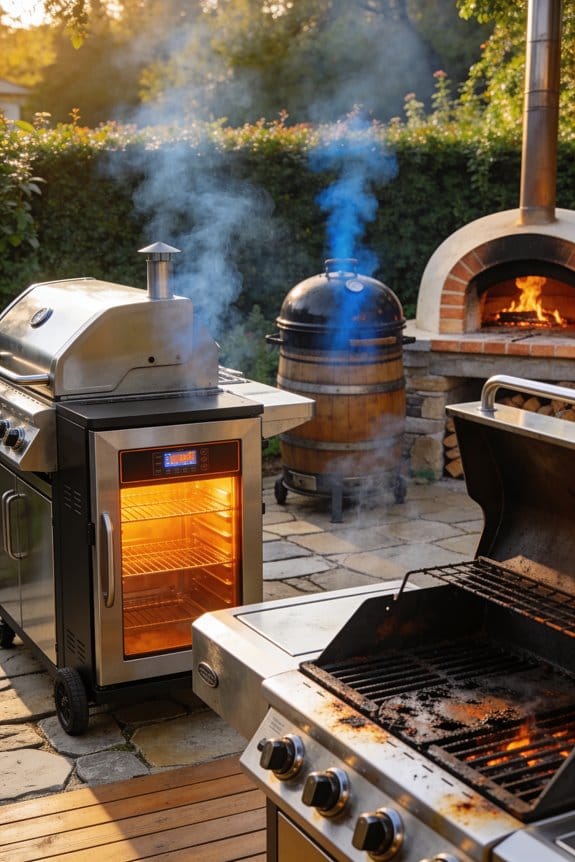


A grill cover protects your investment by shielding metal components from rust-causing moisture, UV rays, and pests. Without one, corrosion can damage burners and vents within a season, costing hundreds in repairs. Quality covers feature heavy-duty vinyl with reinforced, taped seams, ventilation panels to prevent mildew, and snug fits that resist wind. Look for waterproof zippers for convenient access and elevated designs that prevent ground moisture absorption. Inspect your cover seasonally for tears or weakened seams, replacing it every three to five years. Understanding these specifics helps you choose protection that extends your grill’s lifespan markedly.
Key Takeaways
- Grill covers protect metal components from rust, corrosion, and pest damage while extending your grill’s functional lifespan and resale value.
- Heavy-duty vinyl with reinforced, taped seams and fastening straps provides superior durability and water resistance against weather elements.
- Ventilation panels and waterproof zippers prevent moisture buildup and mildew while allowing convenient access without full cover removal.
- Custom-fit designs with light-colored materials reflect sunlight, prevent wind lift, and maintain continuous protection of vulnerable grill areas.
- Quality covers typically last three to five years; inspect seasonally and repair small tears promptly to maximize protection and longevity.
The Real Cost of Skipping a Grill Cover
When you decide not to use a grill cover, you’re making a choice that’ll cost you considerably more down the road. Exposure to rain, snow, and UV rays causes rust to spread rapidly across metal surfaces, requiring expensive repairs to burners, vents, and knobs. Moisture buildup leads to corrosion that weakens structural integrity, while debris accumulation demands constant maintenance neglect—scrubbing and cleaning consume your time before every cookout. Uncovered grills deteriorate faster, reducing their lifespan markedly. The resale impact becomes evident when you eventually try to sell; weathered grills command lower prices than well-maintained ones. A $50 cover prevents thousands in repair costs and preserves your investment’s value, making protection a practical financial decision rather than an optional accessory.
How a Grill Cover Stops Rust and Pest Damage

Beyond protecting your wallet from repair bills, a quality grill cover actively defends against two major threats that damage grills from both outside and inside: rust formation and pest intrusion. A durable cover acts as a critter barrier, preventing raccoons, insects, and birds from nesting inside your grill or contaminating cooking surfaces with droppings. Simultaneously, the cover shields metal components from moisture and oxygen, which combine to create rust. Heavy-duty vinyl exteriors with metal sealants along seams block water penetration that corrodes burners and vents. By maintaining this protective layer year-round, you’re fundamentally giving your grill’s metal parts a defense system, markedly extending its functional lifespan while keeping your cooking environment hygienic and safe.
What to Look for in a Quality Cover?

Since you’re investing in protection for your grill, choosing the right cover matters just as much as buying the cover itself. I’d recommend looking for heavy-duty vinyl material with reinforced stitching, which resists tears and weathering better than lighter fabrics. Ventilation panels are essential because they prevent moisture buildup that causes mildew and rust underneath. Check for taped seams and fastening straps that keep your cover secure during wind. Color options like tan or gray reflect sunlight better than dark colors, reducing heat absorption. A snug, custom fit guarantees the cover stays in place and shields all vulnerable areas. These features work together to deliver genuine, long-lasting protection for your outdoor investment.
Must-Have Cover Features

While a grill cover might seem like a simple product, I’ve found that certain features truly separate effective covers from mediocre ones. A custom fit guarantees the cover hugs your grill’s shape, preventing wind from lifting edges and exposing vulnerable areas. Waterproof zippers allow you to access your grill without removing the entire cover, keeping the interior protected during quick checks. Heavy-duty vinyl exteriors resist tearing and UV damage, while reinforced stitching prevents seams from splitting under stress. Ventilation panels are essential—they release moisture that builds up inside, preventing mildew and condensation damage. Elevated designs keep the cover from sitting directly on wet ground, reducing moisture absorption. Fastening straps anchor your cover firmly against strong winds, maintaining reliable protection year-round.
When to Replace Your Cover

Even the highest-quality grill cover won’t last forever, and knowing when to replace yours prevents your grill from losing its protection at a critical moment. I recommend performing a seasonal inspection each spring and fall to check for damage. Look for weakened seams, fading material, or holes that compromise protection. Small tears warrant immediate tear repair using patch kits, but extensive damage suggests replacement time. If your cover shows multiple issues, won’t secure properly, or no longer sheds water effectively, investing in a new one protects your grill better than a failing cover. Most quality covers last three to five years with proper care, making replacement a worthwhile investment for continued protection and grill longevity.
Frequently Asked Questions
Can I Use a Grill Cover in Extremely Hot Climates Without Damaging the Grill?
Yes, I’d recommend using a cover in hot climates if it has proper heat ventilation to prevent trapped warmth. Look for breathable materials that block UV degradation without creating dangerous steam buildup around your grill.
How Often Should I Clean Underneath My Grill Cover to Prevent Mold?
I’d recommend doing monthly inspections underneath your cover to catch moisture buildup early. Plan seasonal deep cleaning during spring and fall to prevent mold from thriving in trapped humidity.
Are Universal Grill Covers as Effective as Custom-Fitted Covers for My Specific Model?
I’d argue universal covers simply won’t match your grill’s precision fit. Custom covers seal gaps better, ensuring superior airflow management and protection. You’re investing in exact specifications that universal options can’t deliver for your specific model.
What’s the Difference Between Vinyl and Canvas Grill Cover Materials for Durability?
Vinyl’s heavier-duty and requires less vinyl maintenance, but canvas offers superior canvas breathability, reducing moisture buildup. I’d choose vinyl for harsh climates and canvas if you’re concerned about mildew in humid areas.
Can I Leave a Grill Cover on While the Grill Is Still Warm After Cooking?
No, I’d recommend waiting until your grill cools completely. Residual heat trapped under the cover creates condensation buildup, which promotes rust and moisture damage to your grill’s interior components.