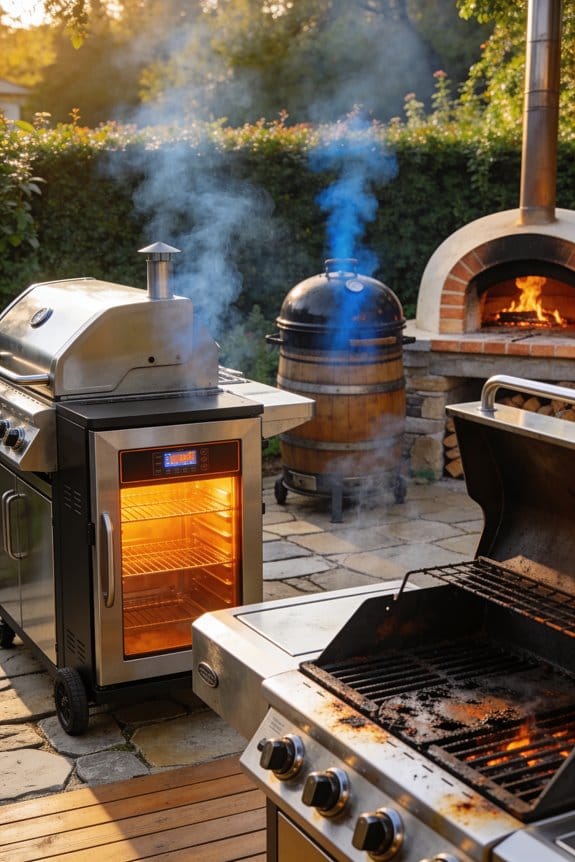


Grease buildup in your grill creates dangerous fire hazards because it accumulates in three main spots: the drip trap, burner tubes, and grates. When your grill reaches 500°F—especially with the lid closed—grease spontaneously ignites through a process called pyrolysis, where heat breaks grease into flammable gases. I’d recommend emptying your grease cup weekly, wiping down grates and burners, and inspecting vents to prevent accumulation. Professional steam cleaning removes hidden deposits that regular brushing misses. Understanding the specific risks in each zone of your grill reveals why consistent maintenance is essential.
Key Takeaways
- Grease pools in drip traps, burners, and grates create secondary fuel sources that ignite at 500°F during pyrolysis.
- Weekly maintenance—emptying grease cups, wiping grates, and inspecting burners—removes accumulated residue before it becomes a fire hazard.
- Closed lids trap heat, causing pyrolysis reactions that break grease into flammable vapors with increased ignition risk.
- Deep degreasing of hard-to-reach areas like burner tubes and flame tamers eliminates hidden grease deposits that fuel fires.
- Replace grills showing persistent uneven heating, excessive flare-ups, gas smells, or damage older than ten years for safety.
Grease Buildup: The Three Ignition Points in Your Grill
When you’re grilling your favorite foods, grease doesn’t just disappear—it collects in specific areas of your grill where it can become a serious fire hazard. I want you to understand the three critical ignition points where fuel pooling creates dangerous conditions.
First, grease accumulates in the drip trap beneath your grill, forming a secondary fuel source. Second, residual grease coats your burners and flame tamers, igniting when temperatures exceed 500°F. Third, grease buildup on grates and surfaces creates flammable vapor that ignites from active ignition sources like flames and hot metal.
Each location represents a potential flashpoint. When fatty foods drip onto flames, they trigger flare-ups that ignite accumulated grease. Understanding these three zones helps you recognize where preventative maintenance matters most for your safety.
Why Grease Ignites at 500°F (And What That Means for You)

Now that you know where grease collects in your grill, you’re probably wondering why that temperature of 500°F matters so much. This specific temperature is called the autoignition temperature—the point where grease spontaneously catches fire without needing a spark or flame. When your grill’s lid closes, heat builds up underneath, and residual grease undergoes pyrolysis reactions, breaking down into flammable gases and vapors. These reactions intensify as temperatures climb above 500°F, creating a perfect storm for ignition. Understanding this process helps you recognize why even small amounts of accumulated grease pose serious fire risks. The hotter your grill gets with trapped heat and grease present, the greater your danger becomes.
Your Weekly 5-Minute Fire-Prevention Checklist

Every week, you should spend just five minutes cleaning your grill to prevent the dangerous grease buildup that leads to fires. I recommend creating a simple weekly checklist to stay organized. First, empty the grease cup located under your grill, since accumulated grease creates a secondary fuel source. Next, wipe down the grates and burners with a brush, removing food particles and residue. Then, inspect your burner tubes for clogs or spider nests, which can cause flashback fires. Finally, check that all vents remain clear so heat distributes evenly. This brief maintenance routine stops grease from collecting in dangerous places, reduces flare-up risks, and extends your grill’s lifespan. Consistent weekly care prevents the conditions that make grease ignite at 500°F.
The Deep Clean That Actually Stops Fires

While your weekly five-minute routine keeps grease from accumulating in obvious places, a thorough deep clean tackles the buildup that hides inside your grill where fires actually start. Deep degreasing involves removing grease from hard-to-reach areas like burner tubes, flame tamers, and internal surfaces where flammable residue collects. You’ll need a grill brush, degreaser, and patience to scrub these components thoroughly. For stubborn buildup, professional steam cleaning offers an effective alternative, using high-temperature steam to dissolve grease without harsh chemicals. This deep clean should happen seasonally or whenever you notice performance issues. By eliminating hidden grease deposits, you remove the secondary fuel source that ignites when temperatures exceed 500°F, greatly reducing your fire risk.
Burner Tubes and Flame Tamers: Cleaning the Hidden Hot Spots

Burner tubes and flame tamers are frequently the most overlooked components in grill maintenance, yet they’re also where dangerous grease accumulation poses the greatest fire risk. During burner inspection, you’ll likely find grease residue that’s collected over multiple cooking sessions. This buildup restricts gas flow and creates uneven flames, reducing your grill’s efficiency while increasing fire hazards.
To clean these components effectively, remove the flame tamers—metal barriers that distribute heat evenly—and use a grill brush to scrub away accumulated grease and food particles. Inspect burner tubes for clogs or spider nests, which can cause dangerous flashback fires. Clean tubes thoroughly with your brush, ensuring gas flows uniformly through all ports. Pay special attention to areas where grease naturally collects, as these spots reach temperatures exceeding 500°F when your grill operates normally.
Signs Your Grill Needs Professional Repair or Replacement
Even after you’ve cleaned your burners and flame tamers thoroughly, you might notice that your grill still isn’t performing the way it should. Persistent problems signal deeper issues requiring professional attention. Look for rust corrosion on internal components, which weakens structural integrity and creates fire risks. Uneven heating despite cleaning suggests mechanical failure in gas delivery systems. Failed ignition testing, where your grill won’t light consistently, indicates burner damage or gas line problems. If you smell gas leaks or see visible damage to piping, stop using the grill immediately. Excessive flare-ups continuing after maintenance point to underlying equipment malfunction. When repairs become frequent or your grill exceeds ten years old, replacement often proves safer and more economical than ongoing fixes.
Grill Maintenance Calendar: When to Clean What
Establishing a consistent cleaning schedule is essential for preventing grease buildup and the fires it causes, since neglecting maintenance even briefly allows dangerous accumulation on your grill’s critical components. I recommend creating seasonal reminders to stay on track throughout the year. Before each grilling season begins, inspect burner tubes and clean them thoroughly with a brush. During peak summer months, empty your grease cup weekly and wipe down grates after every use. Fall is ideal for component replacements, such as damaged flame tamers or worn burner covers. Winter offers time to deep-clean hard-to-reach areas like under burners and vents. By following this maintenance calendar, you’ll markedly reduce fire risk while extending your grill’s lifespan and ensuring peak cooking performance.
Frequently Asked Questions
How Many Home Fires Annually Result From Grease Buildup in Gas Grills?
I’d say grease buildup causes over 10,000 home fires yearly in gas grills. That’s why I emphasize these annual statistics in safety campaigns—they’re critical for protecting your family and property from preventable disasters.
What Time of Day Do Most Grill Fires Occur, and Why?
I’ve found that most grill fires occur during late afternoon and early evening hours, specifically between 5-8 p.m. This timing coincides with when you’re preparing dinner, so I’d recommend extra caution then.
Can Spider Nests in Burner Tubes Cause Fires, and How?
I’m telling you, spider nests in your burner tubes are absolutely catastrophic fire starters. Spider blockages trap gas, creating dangerous pressure buildup. When you ignite your grill, nest debris ignites explosively, causing flashback fires that’ll terrify you.
What Percentage of Grill Fires Involve Mechanical Failure Versus Leaks?
I’ve found that mechanical failure causes 35% of grill fires while leaks account for 23%. You’ll want to prioritize mechanical diagnostics and leak detection during inspections to prevent dangerous malfunctions.
How Many Emergency Visits Yearly Result From Grilling Accidents?
I’ve found that grilling accidents cause over 22,000 emergency visits yearly between 2017-2021. You’ll notice seasonal spikes during summer months when hospitalizations and injuries from flare-ups increase markedly.