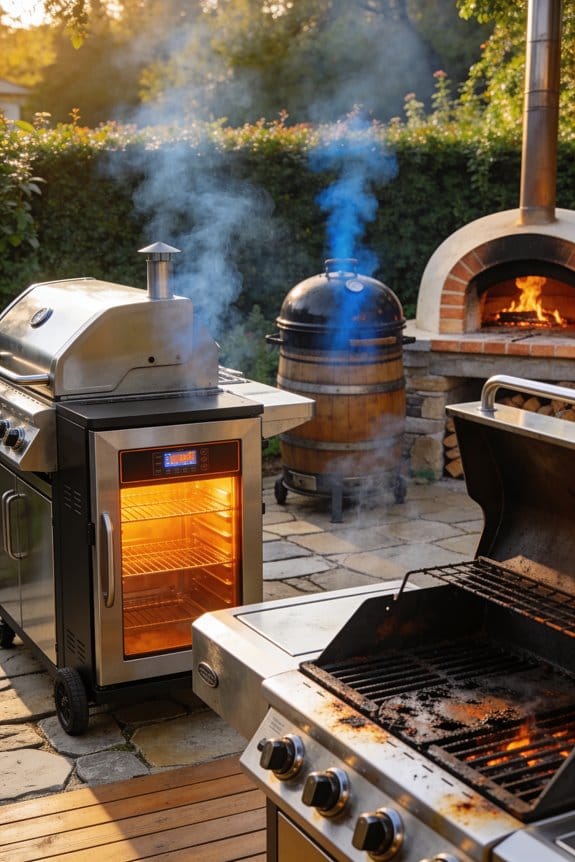


To store your grill safely over winter, I’d recommend starting by disconnecting and storing your propane tank upright in a well-ventilated outdoor area away from heat sources. Next, thoroughly clean every surface, then dry completely to prevent rust. Coat metal components with cooking oil for protection. Wrap burners in plastic bags to block insects, and cover your grill with a heavy-duty, breathable cover in a sheltered location. Following these steps guarantees your grill’s longevity, though there’s considerably more detail worth exploring about each process.
Key Takeaways
- Disconnect and store the propane tank upright in a well-ventilated outdoor area away from heat sources and children.
- Clean the grill thoroughly, then coat metal components and burners with cooking oil to prevent rust and moisture damage.
- Wrap burners in plastic bags and tape gas line openings to block insects, spiders, and other pests from entering.
- Select a heavy-duty, breathable grill cover that fits snugly and store the grill in a sheltered, elevated location.
- Elevate the grill from the ground and ensure it’s positioned away from vents and strong winds during winter storage.
Disconnect and Store Your Propane Tank First
Before you clean or cover your grill, you’ll want to disconnect your propane tank right away, since storing it indoors—even in a garage or shed—creates a serious explosion hazard if the tank develops a leak. Once disconnected, store the tank upright in a well-ventilated outdoor area away from vents, heat sources, and children. Propane education emphasizes that proper tank labeling helps you identify your fuel source and pressure specifications. Before storage, inspect your tank for leaks or damage, then make sure the valve is fully closed. Use a propane tank cover to shield the valve from snow, ice, and debris during winter months. This protective step prevents weather damage and maintains your equipment’s safety and functionality throughout the season.
Clean Your Grill Before Storage
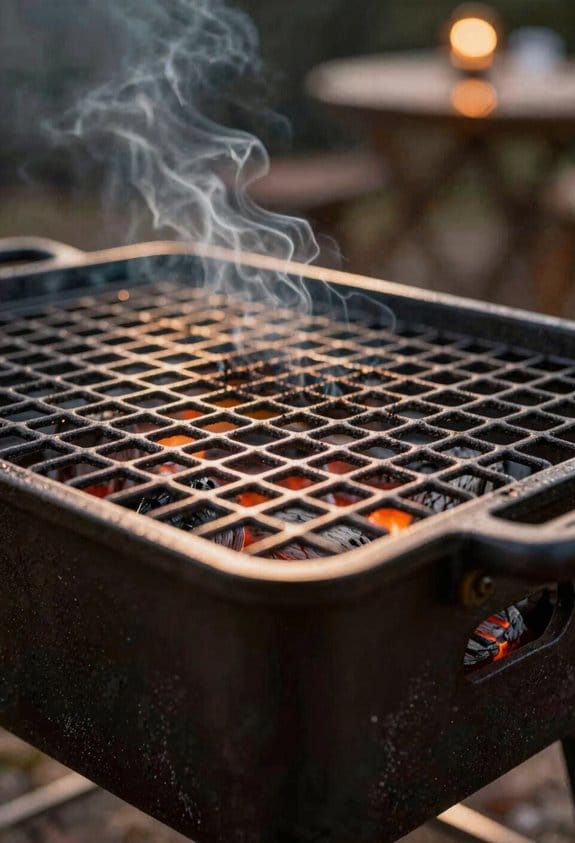
With your propane tank safely disconnected and stored, I can now focus on preparing the grill itself for winter by giving it a thorough cleaning. First, I’ll preheat the cooking grids, then turn off the grill and scrub with a grill brush to remove debris and carbon buildup. Next, I’ll empty the ash catchers and drip pans, scrubbing them with soap before rinsing thoroughly. I’ll wipe the exterior with a damp soapy cloth to eliminate sticky residues, avoiding abrasive cleaners that could damage the finish. This cleaning process removes grease, ash, and food particles that prevent corrosion, unpleasant smells, and pest problems. Rinsing completely eliminates any remaining soapy or food residues, protecting your grill seasoning and ensuring proper maintenance before winter storage.
Dry Every Surface to Prevent Rust
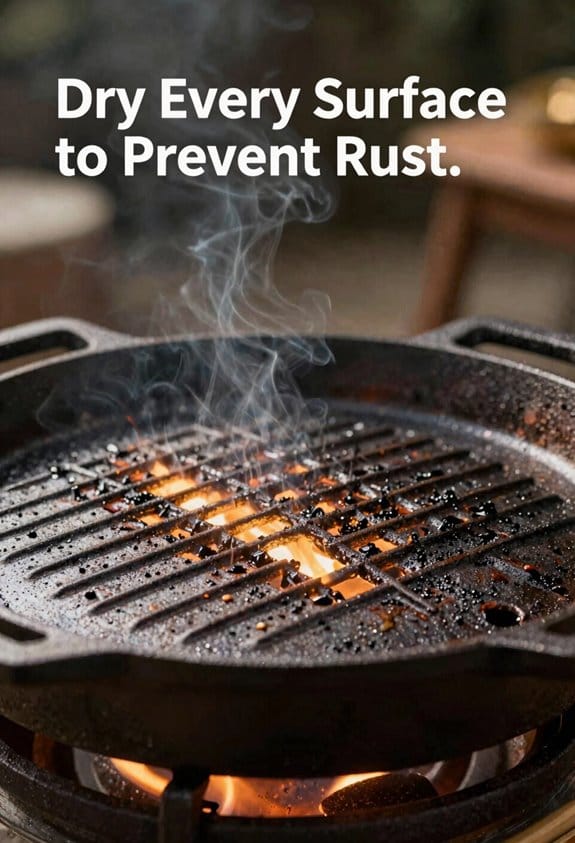
After cleaning your grill thoroughly, drying every surface becomes essential to prevent rust and corrosion during the winter months. I recommend allowing your grill to air dry completely, then using a towel drying method to remove any remaining moisture from hard-to-reach areas. Pay special attention to burners and metal components, coating them with cooking oil to repel moisture and create a protective barrier against rust.
For refrigeration units, I make certain complete drying both inside and out to prevent mold growth. Desiccant placement, such as positioning an opened baking soda box inside the unit, helps absorb residual moisture that could cause problems during storage. This combination of thorough drying and moisture absorption keeps your grill protected throughout the winter season.
Protect Burners and Components From Pests

Pests like spiders and insects can nest inside your grill’s burner tubes and gas lines during winter storage, so you’ll need to take preventive measures to keep them out. I recommend wrapping your burner unit in a plastic bag, which serves as an effective insect barrier. For disconnected gas lines, tape a plastic bag over the opening to block unwanted creatures from entering. These component wraps protect vulnerable parts that attract pests seeking shelter during cold months.
Important note: don’t reinstall wrapped burners inside your grill, as the plastic will burn when you use it later. Before wrapping, inspect all internal components like burners, grates, and valves for rust. Taking these protective steps guarantees your grill stays pest-free and ready for spring cooking.
Choose the Right Storage Cover
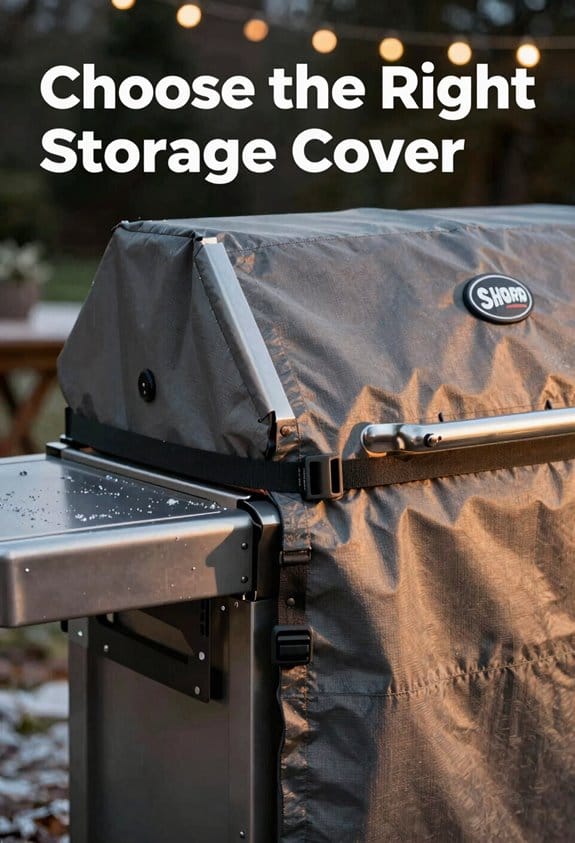
A quality grill cover is one of your best investments for winter protection, since it shields your grill from rain, snow, sleet, and debris that can cause damage and corrosion. I recommend selecting a heavy-duty cover made from weatherproof materials that resist water penetration and UV damage. Look for breathable fabrics that allow moisture to escape, preventing mold and rust underneath. Make sure your cover fits snugly without tears or gaps, which would let bugs and creatures inside. A properly fitted cover blocks moisture and pests effectively. Since the average grill costs around $180, investing in a quality cover makes financial sense. Always apply your cover after your grill is completely clean and dry for maximum protection and longevity.
Select an Ideal Storage Location
Where you store your grill matters just as much as how you prepare it, since environmental factors like moisture, wind, and temperature fluctuations can damage your equipment even when it’s covered. I recommend placing your grill in a garage, shed, or covered enclosure whenever possible. If you don’t have indoor space available, position it under a covered porch, awning, or patio cover for protection from the elements. Elevating your grill on an elevated platform prevents snow and ice from accumulating around the base, which can cause rust and corrosion. Choose a location sheltered from strong winds to prevent tipping damage. Keep your grill away from vents and heat sources to maintain ideal storage conditions throughout winter.
Avoid These Winter Storage Mistakes
Even though you’ve cleaned, dried, and covered your grill properly, common mistakes during winter storage can still damage your equipment and create safety hazards. One frequent error is using mismatched covers that don’t fit securely, leaving gaps where moisture and pests enter. Another mistake involves blocked vents, which trap moisture inside and promote mold growth on internal components. Don’t store your propane tank indoors, as temperature changes increase explosion risks from potential leaks. Avoid placing your grill in areas exposed to strong winds that could cause it to tip over. Additionally, failing to inspect your tank for damage before storage creates safety concerns. Finally, neglecting to elevate your grill off the ground allows snow and ice accumulation around the base, potentially causing rust and structural damage.
Spring Inspection Checklist
When spring arrives and temperatures warm up, I’ll want to thoroughly inspect my grill before firing it up for the season. I’ll start by checking all visible components for rust, damage, or corrosion that may have developed during winter storage. My seasonal tune up includes examining the burners, grates, and internal parts closely. I’ll inspect the gasket inspection around the lid to make certain it’s still intact and seals properly, preventing heat loss and maintaining even cooking temperatures. I’ll also test the ignition system, check gas connections for leaks, and verify that the propane tank valve opens and closes smoothly. Finally, I’ll clean any debris accumulated during storage and apply fresh cooking oil to metal surfaces for protection.
Frequently Asked Questions
How Often Should I Check on My Grill During the Winter Storage Period?
Your grill’s like a sleeping sentinel needing periodic watch. I’d recommend biweekly checks to inspect for rust, moisture, and cover damage. Monthly inspections guarantee your investment stays protected throughout winter’s harsh months.
Can I Store My Grill in a Garage if I Disconnect the Propane Tank?
Yes, you can store your grill in a garage if you disconnect the propane tank. However, I’d recommend ensuring proper garage ventilation to prevent moisture buildup and potential rust on metal components during winter months.
What’s the Best Way to Prevent Mold Inside a Grill During Winter?
I’ll prevent mold by ensuring complete drying before storage, then I’ll improve airflow management inside my grill and place an opened baking soda box for desiccant placement to absorb residual moisture effectively.
Should I Remove Grates and Other Removable Parts Before Storing the Grill?
I’d recommend you remove grates and clean burners before storing your grill. This lets you inspect components for rust, protect burners with plastic wrapping to prevent insect nesting, and guarantee thorough drying of all removable parts.
How Long Does a Quality Grill Cover Typically Last Before Needing Replacement?
I’d say a quality grill cover typically lasts 3-5 years, depending on material durability and warranty terms. You’ll want to check the manufacturer’s coverage details, as premium covers often include extended warranties protecting your investment longer.