
The Maillard reaction is a chemical process between amino acids in proteins and reducing sugars that creates hundreds of flavor compounds when exposed to high heat. When you grill meat above 300°F, this reaction produces browning and savory complexity through compounds like Strecker aldehydes and furans, which deliver meaty and nutty notes. You’ll maximize this browning by patting meat dry, ensuring your grill’s extremely hot, and avoiding constant movement, allowing the exterior to develop that appetizing crust. The specifics of how each chemical stage transforms your food’s flavor profile reveal fascinating insights.
Key Takeaways
- The Maillard reaction occurs between amino acids and reducing sugars at high temperatures, creating brown crusts and savory flavors on grilled foods.
- Browning signals formation of hundreds of flavor compounds including Strecker aldehydes and furans that deliver meaty, nutty, and umami-rich tastes.
- The reaction accelerates significantly above 400°F, with chemical bonds breaking and reforming to create complex, rich flavor profiles faster.
- Dry brining and surface dehydration allow meat exteriors to reach higher temperatures, accelerating the Maillard reaction for superior browning and taste.
- High heat, dry surfaces, and minimal meat movement maximize crust development and chemical reactions that enhance mouthfeel and perceived richness.
What Is the Maillard Reaction?
When you grill a hamburger or toast bread, you’re witnessing a chemical reaction called the Maillard reaction, named after French scientist Louis Camille Maillard who discovered it in 1913. This reaction occurs when amino acids from proteins combine with reducing sugars at high temperatures. Understanding food chemistry helps explain why grilled foods develop that appealing brown crust and savory flavor. The reaction requires specific conditions: heat, protein structure breakdown, and sugar molecules. During this process, hundreds of flavor compounds form, creating the complex tastes you experience. The Maillard reaction differs from simple browning or caramelization because it specifically involves both proteins and sugars working together, making it essential for developing the distinctive taste of grilled meats and toasted foods.
Why the Maillard Reaction Matters for Grilled Flavor
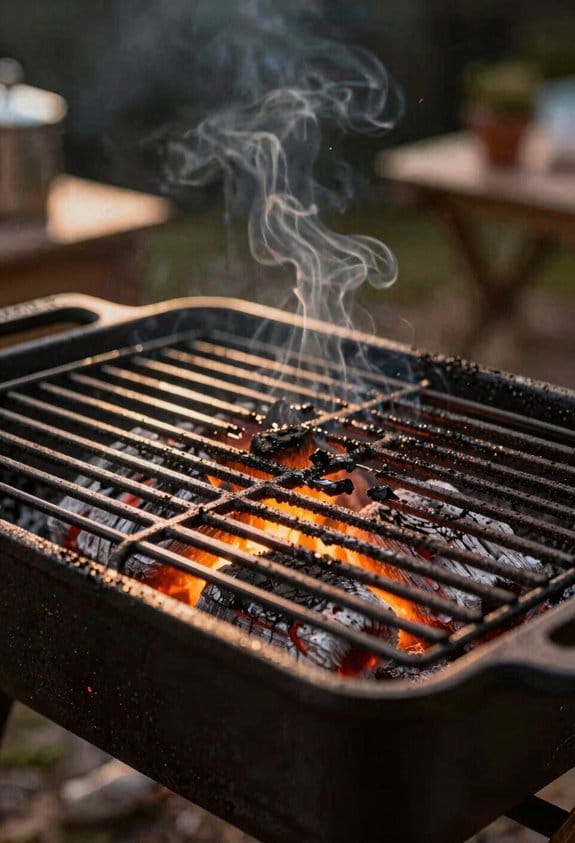
The browning you see on a grilled steak or hamburger isn’t just about appearance; it’s the visible sign that hundreds of flavor compounds are being created through the Maillard reaction. This reaction fundamentally transforms your grilled food’s taste and texture. When amino acids from proteins react with reducing sugars at high temperatures, they produce Strecker aldehydes and furans that deliver savory, complex flavors you crave. These compounds provide significant mouthfeel enhancement, making food feel richer and more satisfying on your tongue. Additionally, the Maillard reaction creates umami amplification, intensifying the savory depth that makes grilled meats so appealing. Without this chemical process, your grilled foods would taste bland and lack the distinctive, mouth-watering character that defines great grilling.
How High Heat Enables the Reaction
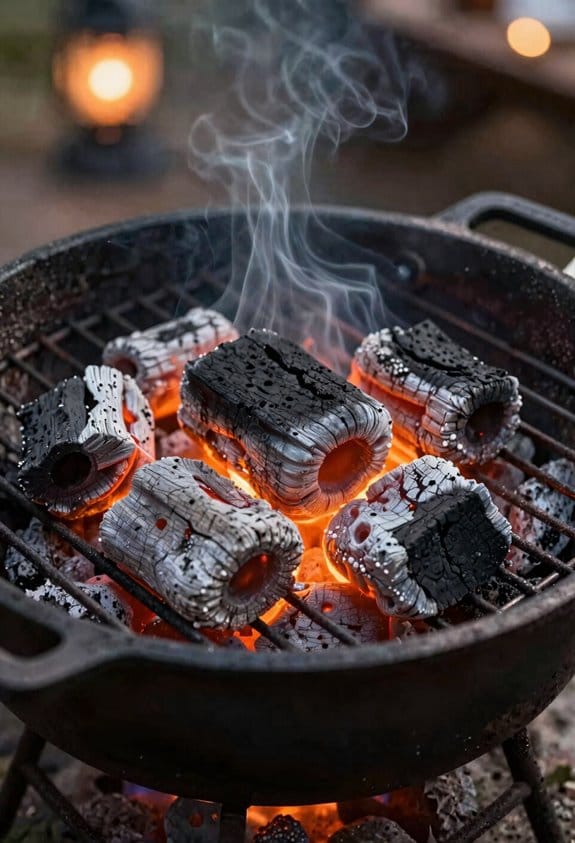
Understanding why high heat matters requires us to look at the chemistry behind the Maillard reaction, since temperature is what actually gets this process started in the first place. The reaction won’t occur at room temperature because it needs energy to break chemical bonds and form new ones. Once you apply heat, the reaction kinetics accelerate dramatically, meaning the process happens much faster. Temperature thresholds matter markedly; the Maillard reaction typically begins around 300°F (150°C), though it speeds up considerably at higher temperatures. When you grill meat at 400°F or above, you’re providing enough energy to transform amino acids and reducing sugars into those brown, flavorful compounds that make grilled food so appealing. This is why high-heat cooking methods produce superior browning and taste.
What Stages Transform Amino Acids and Sugars Into Aroma
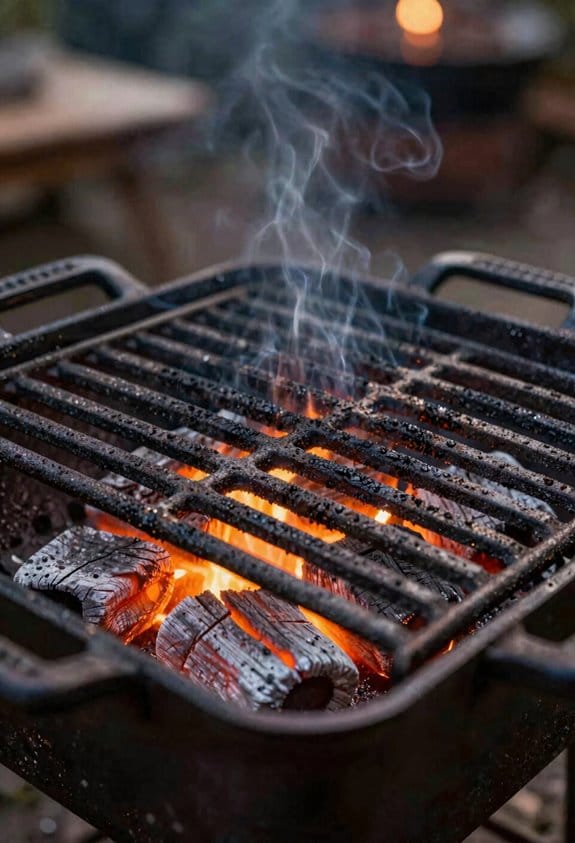
Once you heat amino acids and reducing sugars to high temperatures, they begin undergoing a fascinating four-stage chemical transformation that creates all those delicious aromas you smell from grilled food. First, the carbonyl group from sugar bonds with the amino group from protein, forming a Schiff base. Next, Amadori chemistry rearranges this compound into a ketosamine structure, which becomes more flavorful. Then, fragmentation pathways break these molecules apart, releasing Strecker aldehydes and other volatile compounds responsible for characteristic savory and nutty notes. Finally, the remaining fragments recombine through aldol condensation to create melanoidins, complex brown pigments that add depth and richness to grilled flavors. This entire sequence transforms simple starting materials into the complex flavor profile you experience.
How to Maximize Browning on the Grill
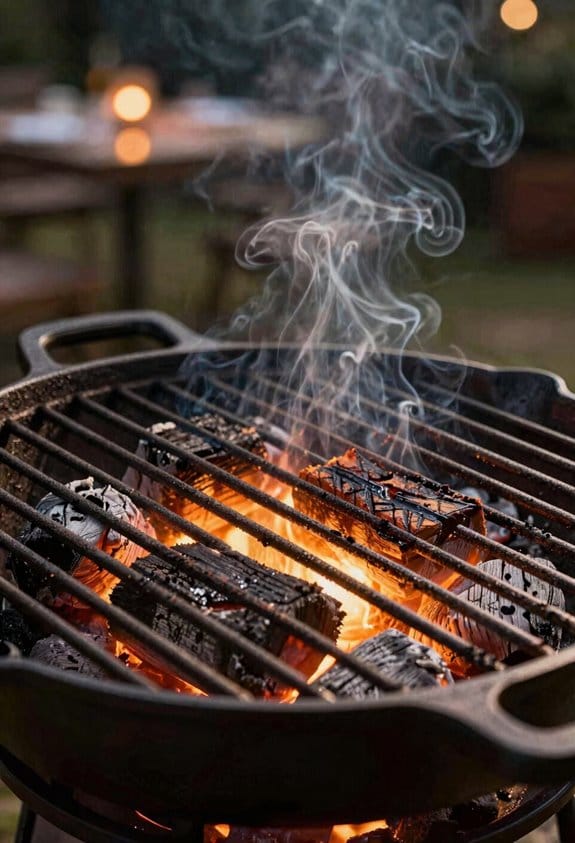
Now that you understand how the Maillard reaction transforms amino acids and sugars into the complex flavors we taste, I’d like to show you how to actually maximize this browning process on your grill.
Start by using dry brining, which seasons your meat while drawing moisture to the surface. This surface dehydration is vital because it allows the meat to brown more effectively rather than steam. The drier exterior reaches higher temperatures, accelerating the Maillard reaction.
Additionally, make sure your grill grates are extremely hot before cooking. Higher temperatures speed up the reaction markedly. Pat your meat dry before grilling, and avoid moving it constantly—let it sit undisturbed so a proper crust develops. These techniques create the flavorful browning you’re seeking.
What Creates That Grilled Aroma: Strecker Aldehydes and Beyond
The distinctive smoky, savory aroma that rises from your grill comes down to specific chemical compounds produced during the Maillard reaction, and the most important of these are Strecker aldehydes. These volatile compounds form when amino acids break down during high-temperature cooking, creating characteristic aromas like meaty and roasted notes. Beyond Strecker aldehydes, furans develop through different aroma pathways, contributing nutty and caramel-like scents. Together, over one hundred flavor compounds emerge from the Maillard reaction, each adding layers to your grilled food’s complexity. The combination of these volatile compounds—from Strecker aldehydes to furans—creates that unmistakable grilled aroma you recognize, making the chemistry behind your grill’s appeal both sophisticated and delicious.
Maillard vs. Caramelization: Why One Needs Protein
While both the Maillard reaction and caramelization produce brown colors and complex flavors in cooked foods, they’re fundamentally different chemical processes that require different ingredients. Caramelization involves only sugars heating to high temperatures, where the sugar molecules break down and recombine. The Maillard reaction, however, demands a protein requirement for its chemical pathway. Amino acids from proteins provide the essential amino involvement necessary for the reaction to occur. When amino groups from these proteins react with reducing sugars’ carbonyl groups, they create the Schiff base that launches the entire process. Without proteins present, you’ll get caramelization’s simpler sweetness, but you won’t achieve the savory, complex flavors characteristic of grilled meats and foods where the Maillard reaction transforms both taste and aroma.
Frequently Asked Questions
Can the Maillard Reaction Produce Harmful Compounds at Extremely High Cooking Temperatures?
Did you know extremely high temperatures can be risky? Yes, I find the Maillard reaction produces harmful compounds like acrylamide formation and heterocyclic amines when you grill foods too intensely, potentially creating carcinogenic substances.
How Long Does the Maillard Reaction Typically Take to Produce Noticeable Browning?
I’d say you’ll notice browning within minutes when you’re grilling—typically three to five minutes depending on heat. The reaction timing varies; I’ve found visual cues like golden-brown crusts appear faster on high heat than low temperatures.
Does the Maillard Reaction Occur in Foods Without Added Sugars or Proteins?
I’ll tell you: the Maillard reaction won’t occur without both components. Like a duet needing two voices, you need reducing sugars and amino acids. However, carbohydrate-only Maillard browning can happen—sugarless browning occurs when proteins alone react with trace sugars naturally present.
Can You Reverse Browning or Control the Maillard Reaction Once It Starts?
You can’t truly reverse browning, but I’ve found you can control the Maillard reaction by lowering heat, reducing cooking time, or removing food from the heat source. Heat control is your best tool for managing browning intensity.
Why Does pH Level Affect How Quickly the Maillard Reaction Occurs in Foods?
Like a catalyst speeding a runner toward the finish line, I’ll explain: higher pH acts as alkaline catalysis, accelerating the reaction by enhancing nucleophilic attack. pH buffering stabilizes alkaline conditions, making browning occur faster than in acidic environments.