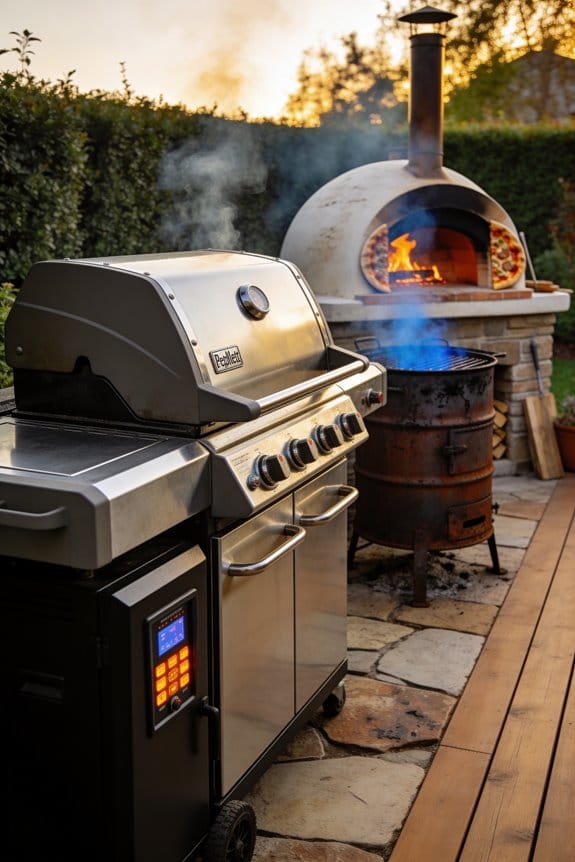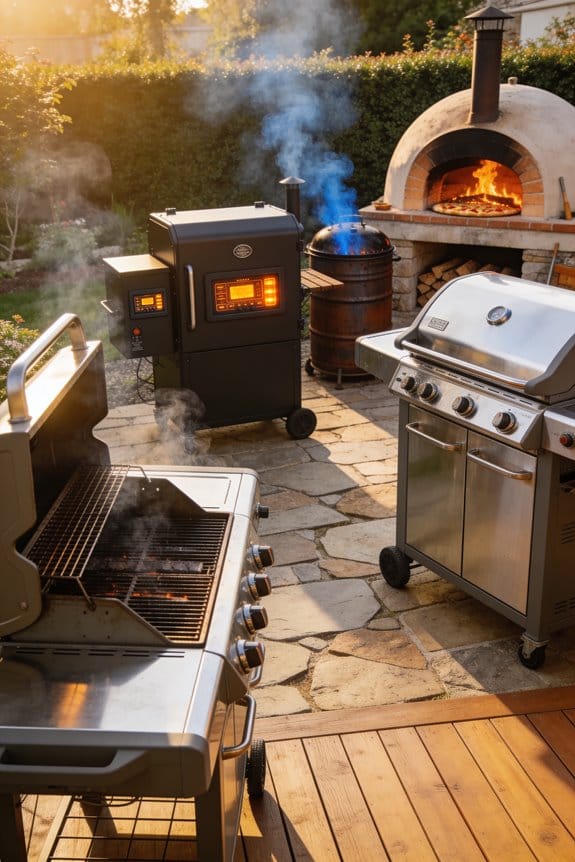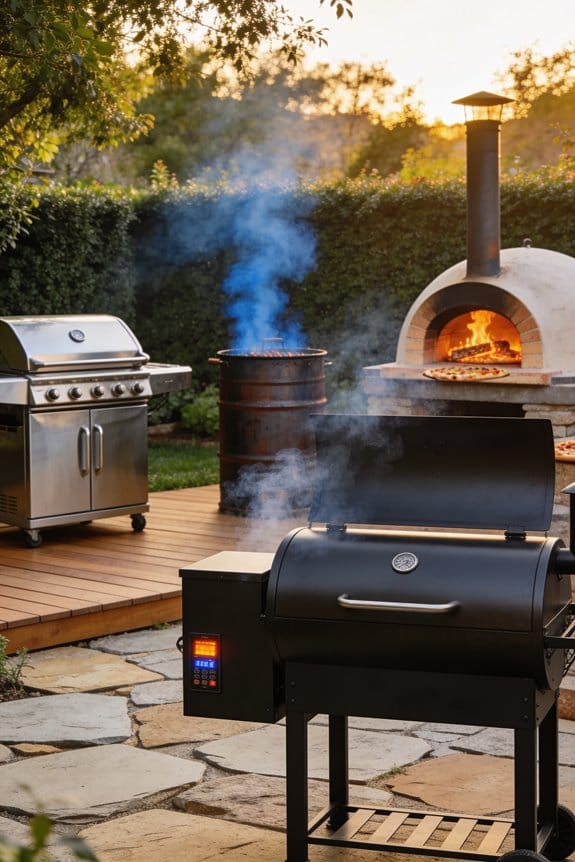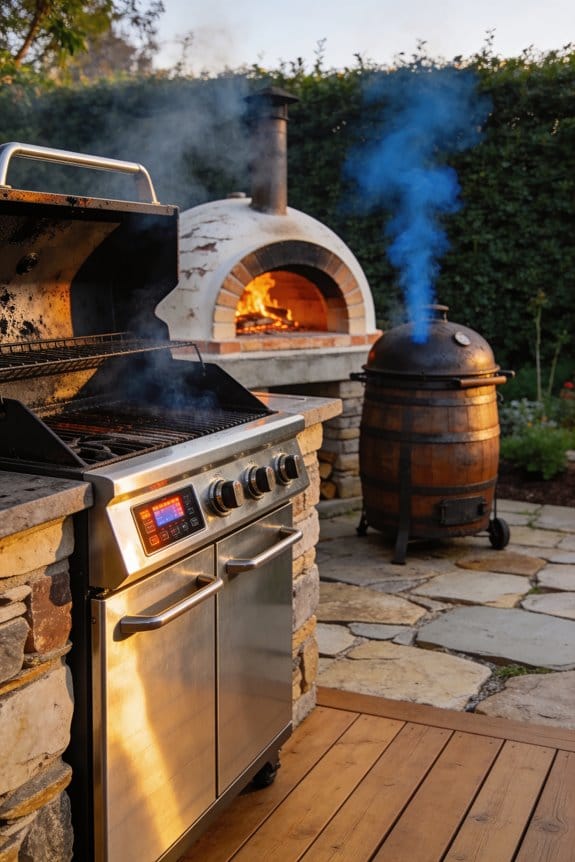


Gas pizza ovens heat in 15 minutes with precise knob controls, making them ideal for everyday cooking and consistent results. Wood-fired ovens take 45+ minutes to preheat but reach extreme temperatures that create authentic smoky flavor and intense radiant heat. Gas offers convenience and predictability, while wood-fired demands active fire management but delivers signature taste and backyard ambiance. Your choice depends on whether you prioritize simplicity or the full experience—and there’s considerably more to discover about each option’s specific advantages.
Key Takeaways
- Gas ovens heat in 15 minutes with precise temperature control; wood-fired ovens require 45+ minutes but reach extreme temperatures exceeding 1,000°F.
- Wood-fired ovens produce signature smoky flavor from hardwood; gas ovens deliver consistent, controlled results without traditional woodsmoke character.
- Gas ovens require minimal monitoring and maintenance; wood-fired ovens demand active fire management, learning, and frequent chimney cleaning.
- Propane costs less per BTU than wood for frequent cooking; wood-fired ovens incur higher long-term fuel expenses.
- Wood-fired ovens create compelling backyard ambiance and social focal points; gas ovens prioritize convenience and everyday cooking practicality.
Gas or Wood-Fired Ovens: Which One Fits Your Life?
What matters most to you when choosing an outdoor pizza oven—convenience or authenticity? Your lifestyle fit determines which oven suits you best. If you value quick ignition and minimal upkeep, gas ovens offer installation flexibility and consistent temperature control through simple knob operation. They require less monitoring and maintain cleaner backyard aesthetics without ash or debris.
Conversely, wood-fired ovens demand active fire management and learning time, yet they provide authentic smoky flavor that gas can’t replicate. Consider seasonal usability: gas ovens operate year-round with immediate heating, while wood-fired models need 45+ minutes to preheat. Gas ovens work better for families wanting reliable performance and diverse cooking options at various temperatures. Wood-fired ovens suit purists prioritizing traditional taste and the primal satisfaction of hands-on fire tending.
How Fast Do They Really Heat Up?

Now that you’ve considered which oven aligns with your lifestyle, the heating speed becomes a practical factor that directly impacts your pizza-making experience. Gas ovens heat to 500°C in approximately 15 minutes through simple button activation, making them ideal for spontaneous cooking sessions. Wood-fired ovens, by contrast, require 45 minutes or more to reach optimal temperatures, demanding patience and planning.
Understanding preheat rituals differs considerably between these models. Gas ovens offer straightforward temperature monitoring, while wood-fired ovens require active firestarter safety protocols and zone mapping to guarantee even heat distribution across the cooking surface. Once preheated, both oven types cook pizza in roughly 60 seconds. Your choice depends on whether you prioritize speed and convenience or embrace the traditional wood-firing experience’s extended preparation timeline.
The Smoky Flavor Only Wood-Fired Ovens Deliver

Perhaps the most distinctive advantage wood-fired ovens offer is their ability to produce pizza with a signature smoky taste that gas ovens simply cannot match. When you cook in a wood-fired oven, the smoke infusion from burning hardwood creates a unique flavor profile that gas-fired alternatives can’t replicate. The wood aroma subtly caramelizes your pizza’s dry components, like flour and cornmeal, adding an oaky richness throughout. This smoky essence penetrates the crust and toppings during the cooking process, resulting in an authentically flavored pizza. Gas ovens, while producing delicious pizza with precise temperature control, lack this traditional woodsmoke character. If you’re seeking that classic, smoky taste associated with authentic pizza, a wood-fired oven delivers what gas simply cannot.
Temperature Control and Cooking Precision Compared

While wood-fired ovens deliver exceptional flavor, gas ovens excel in temperature management and cooking consistency. I’ll explain why this matters for your cooking experience.
Gas ovens let you adjust heat with precision through simple knob controls, maintaining steady temperatures ideal for various dishes—from pizzas to casseroles and desserts. This consistency means you’ll achieve predictable results every time you cook.
Wood-fired ovens, by contrast, demand active fire management. Understanding airflow dynamics and monitoring coal bed heat requires skill and experience. However, once you’ve mastered the learning curve, these ovens reach temperatures exceeding 1,000ºF, creating authentic blistered crusts.
Both oven types cook pizza in roughly 60 seconds at peak temperatures. The key difference: gas offers convenience and reliability, while wood-fired demands involvement but rewards you with traditional results and entrancing thermal imaging of flames dancing inside your oven.
Fuel Costs: Propane vs. Wood for Your Budget

When you’re deciding between a gas and wood-fired pizza oven, fuel expenses represent a significant factor in your long-term investment. A cost analysis reveals that propane typically costs less per BTU than wood, making gas ovens more economical for frequent use. Propane requires less fuel than natural gas to generate equal heat output, stretching your budget further. Wood-fired ovens demand constant fuel sourcing of hardwood that needs replenishment during each cooking session, accumulating costs over time. However, if you already have access to affordable firewood sources, wood might prove competitive financially. Gas ovens’ efficiency and lower consumption rates generally offer better value for regular cooking, while wood-fired options work best for occasional use or when inexpensive fuel sourcing is available.
Cleaning and Maintenance: Gas vs. Wood-Fired Ovens
After you’ve finished cooking your pizza, the real work begins, and your choice between gas and wood-fired ovens markedly impacts how much cleanup you’ll face. Gas ovens require minimal effort, leaving only pizza crumbs that you can easily wipe away. Wood-fired ovens, however, demand significant attention as ash and debris accumulate after each cooking session.
Beyond immediate cleanup, seasonal maintenance differs considerably between models. Gas ovens need occasional inspection of burners and ventilation requirements to guarantee proper airflow and safety. Wood-fired ovens require more extensive upkeep, including chimney cleaning and structural checks. Understanding these maintenance demands helps you decide which oven suits your lifestyle and commitment level to ongoing care.
Pizza Cook Time: 60 Seconds or More?
Once your oven reaches its ideal temperature, both gas and wood-fired models can cook a pizza in approximately 60 seconds, though this impressive speed depends on several factors working together. In wood-fired ovens, the charcoal influence plays a pivotal role, as accumulated coal beds radiate intense, consistent heat that cooks pizzas rapidly from below. Gas ovens achieve similar results through direct flame heat. Crust timing determines final texture; the bottom develops that signature blistered appearance in mere moments at extreme temperatures. Both oven types require proper preheating to maximize cooking efficiency. However, maintaining prime conditions differs between them. Wood-fired ovens demand active fire management to sustain the necessary heat level, while gas ovens simply need knob adjustment for consistent performance throughout your cooking session.
Fire Management vs. Simple Button Control
Because operating an outdoor pizza oven involves fundamentally different approaches, the choice between wood-fired and gas models markedly impacts your cooking experience and the effort you’ll invest. Gas ovens offer straightforward operation—you simply turn a knob to ignite the flame and adjust the temperature with precision. This simplicity means you’re free to focus entirely on cooking. Wood-fired ovens, conversely, demand active fire choreography. You’ll manage flames, position coals, and develop ember intuition to maintain consistent heat. This hands-on approach requires practice and attention, yet many enthusiasts find the engagement rewarding. If you value convenience and predictability, gas suits you better. However, if you’re willing to master fire management for authenticity, wood-fired ovens deliver that traditional experience.
How Hot Do These Ovens Get?
How hot do these ovens actually get, and does the temperature difference matter for your cooking needs? Gas ovens typically reach 500°C or higher, while wood-fired ovens can exceed 1,000ºF, representing significant heat extremes between the two types. Despite this difference, both cook pizza in approximately 60 seconds once they’re properly preheated. The wood-fired oven’s extreme temperatures stem from accumulated coal bed heat, which creates intense radiant cooking. Gas ovens maintain more consistent, controlled heat through precise temperature regulation. These heat extremes affect oven longevity differently; wood-fired ovens endure greater thermal stress from fluctuating fires, while gas ovens experience more uniform heating patterns. For most home cooks, the practical cooking performance matters more than reaching maximum possible temperatures.
Perfect for Entertaining or Everyday Cooking?
Beyond temperature extremes and cooking speed, your choice between wood-fired and gas ovens really depends on how you’ll actually use them. If you’re hosting frequent gatherings, a wood-fired oven creates undeniable backyard ambiance and serves as a focal point for entertaining crowds. The hands-on fire tending provides primal satisfaction that guests find enthralling. However, gas ovens offer superior party versatility because they’re easier to operate and require minimal monitoring. You can focus on socializing rather than managing flames. For everyday cooking, gas ovens excel due to their precise temperature control and quick ignition through simple knob operation. Wood-fired ovens demand a learning curve to master fire management. Consider your entertaining style and cooking frequency when deciding which oven suits your lifestyle best.
Frequently Asked Questions
Can Gas Pizza Ovens Be Relocated to Different Areas of My Backyard or Patio?
Yes, I can relocate my gas pizza oven around my backyard. They’re designed with portable mounts for easy movement between patio areas. However, I’ll need to check the weight limits of my setup to guarantee safe relocation.
What Is the Learning Curve for Operating a Wood-Fired Oven Effectively?
Operating a wood-fired oven effectively requires dedication through practice sessions and developing temperature sensing skills. You’ll need to master fire management, learn to prevent burning, and understand heat distribution—it’s a rewarding but demanding journey.
Are Gas Ovens Suitable for Cooking Dishes Other Than Pizza?
Don’t you want an oven that does more than just pizza? I’ve found gas ovens excel beyond pizza—you can roast vegetables, braise meats, slow stews, and use sheet pan cooking with precise temperature control for various dishes.
How Often Do Wood-Fired Ovens Require Ash and Debris Removal?
I’d recommend clearing ash and debris after each cooking session to prevent ash buildup. For monthly maintenance, I inspect the firebox thoroughly. Regular removal keeps your wood-fired oven operating efficiently and safely.
What Environmental Benefits Does Eco Gas Offer Compared to Traditional Wood Burning?
Have you considered what cleaner cooking truly means? I’d argue eco gas delivers lower emissions and consistent heat, making it the environmentally responsible choice when you’re unwilling to compromise on your backyard pizza experience.