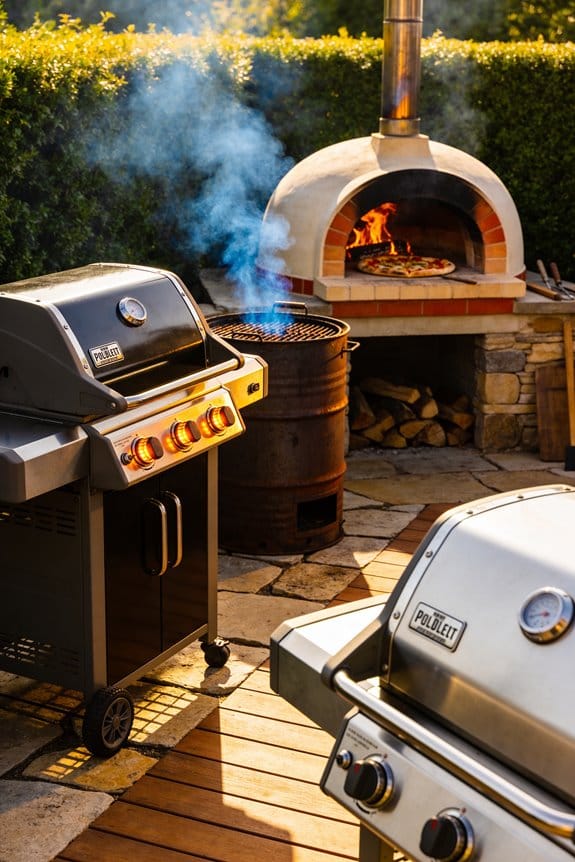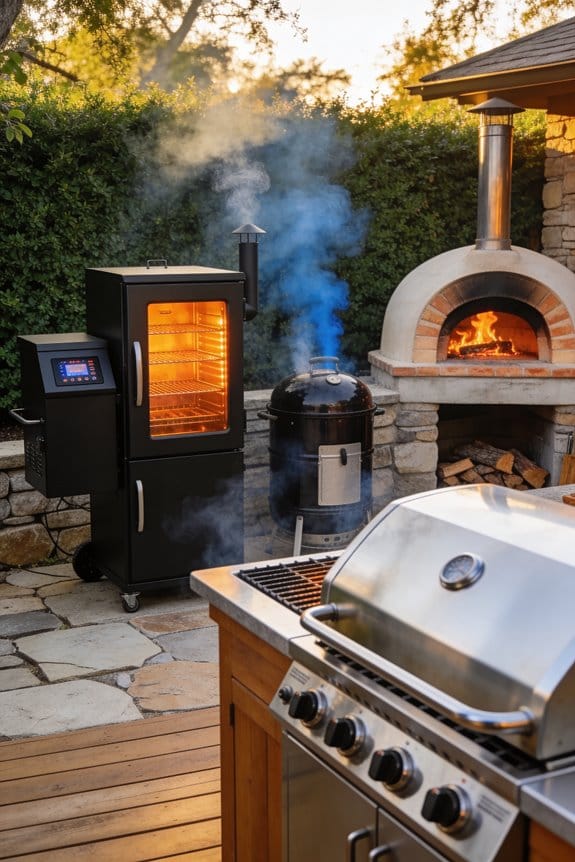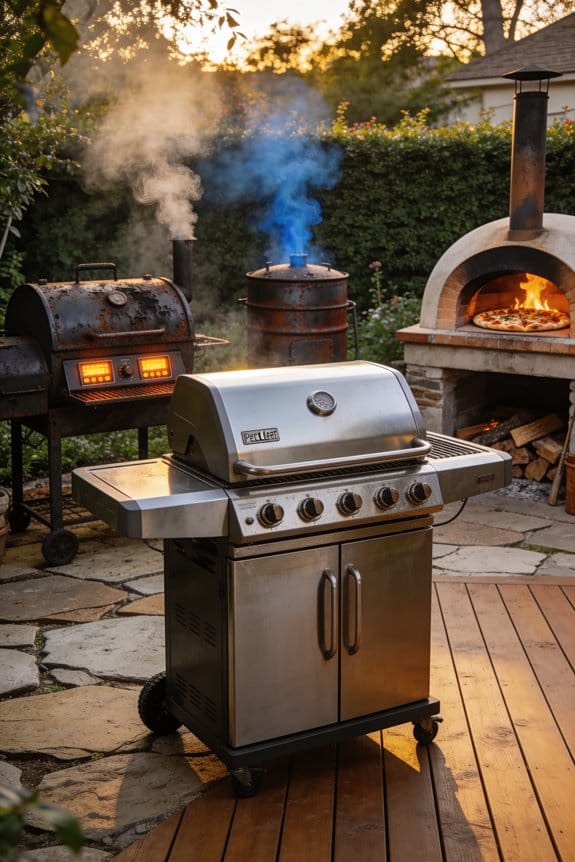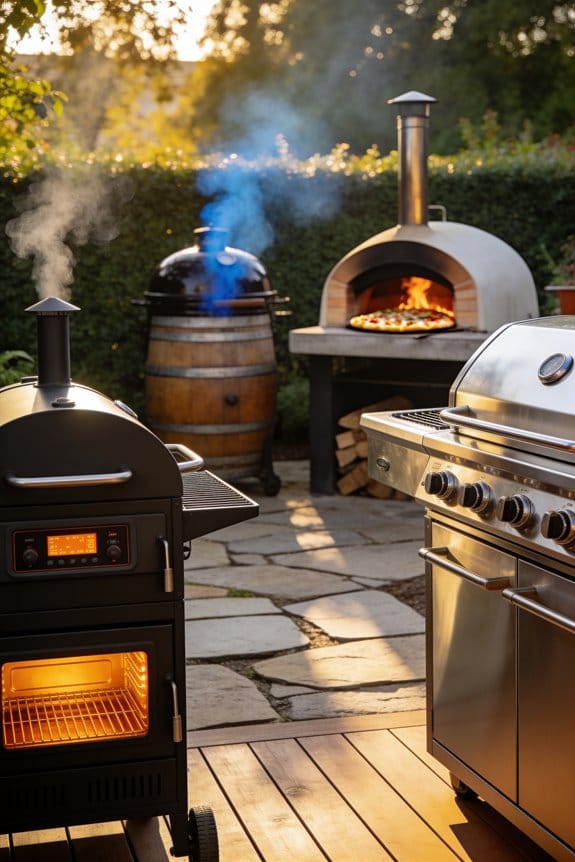


Grilling and barbecuing are fundamentally different cooking methods. Grilling uses high heat between 350°F and 700°F to quickly sear thin cuts like steaks and chicken breasts in under 30 minutes, creating crispy, caramelized exteriors. Barbecuing, by contrast, employs low heat around 225°F to 275°F with indirect smoke for 4 to 16 hours, slowly transforming tougher cuts like brisket and ribs into tender, smoky dishes. Your choice depends on available time, equipment, and desired meat texture—each method delivers distinctly different results worth exploring further.
Key Takeaways
- Grilling uses high heat (350°F–700°F) for quick cooking under 30 minutes, while barbecuing uses low heat (225°F–275°F) for extended 4–16 hour sessions.
- Grilling employs direct flames to sear lean cuts like steaks and chicken quickly; barbecuing uses indirect heat to slowly transform tough cuts like brisket.
- Grilled foods develop crispy, caramelized exteriors with sear marks; barbecued foods become smoky, tender, and melt-in-the-mouth through gradual fat rendering.
- Grilling suits weeknight dinners with rapid results; barbecuing fits weekend projects requiring patience for smoke and low heat to affect meat.
- Grilling requires standard grills for direct heat; barbecuing needs smokers or offset fireboxes to maintain low, indirect temperatures for proper smoke penetration.
High Heat vs. Low and Slow: Temperature Sets the Stage
The most fundamental difference between grilling and barbecuing comes down to temperature, which dramatically affects how your food cooks and what it’ll taste like when you eat it. When you grill, you’re working with high heat between 350°F and 700°F, cooking food quickly over direct flames. Barbecuing, by contrast, uses low heat around 225°F to 275°F, allowing meat to cook slowly over many hours. Your choice of fuel types—whether charcoal, gas, or wood—influences temperature control and flavor development. Seasonal considerations matter too; summer’s warm weather makes grilling convenient, while barbecuing’s longer process suits weekend projects. Understanding these temperature ranges helps you select the right method for your ingredients and cooking goals.
Minutes or Hours: What’s Your Timeline?

Once you’ve chosen your cooking method based on temperature, your next consideration is how much time you’re willing to invest. Grilling requires minimal time commitment, typically finishing quick meals in under 30 minutes, often just 5 to 20 minutes. This makes grilling ideal for weeknight dinners featuring steaks, burgers, and seafood that cook rapidly over direct heat. Barbecuing demands patience, requiring 4 to 16 hours as extended rests allow smoke and low heat to transform tough cuts like brisket and pork shoulder. While grilling suits busy schedules, barbecuing rewards those planning ahead. Your timeline ultimately determines which method fits your situation, whether you’re preparing a spontaneous dinner or planning a weekend cooking project.
Match Your Meat: The Right Cut for Each Method

Your timeline decision narrows down your cooking method, and now you’ll want to select meat that works well with that choice. I’d recommend lean cuts like steaks, burgers, and chicken breasts for grilling since they cook quickly over high heat. These thinner portions need just minutes to develop a caramelized crust. However, if you’ve chosen barbecuing, I’d go with fattier, tougher cuts instead. Bone in roasts, brisket, pork shoulder, and ribs transform beautifully during slow smoking. The extended cooking time breaks down connective tissue, making these traditionally challenging cuts incredibly tender and juicy. Matching your meat to your method guarantees you’ll get the best texture and flavor from your cooking approach.
What You’ll Taste and Feel: Flavor and Texture Outcomes

Since you’ve selected your meat based on your cooking method, understanding the flavor and texture differences between grilling and barbecuing will help you appreciate why each technique produces distinct results. When you grill, you’ll experience a crisp exterior with caramelized browning and characteristic grill marks, while the interior stays juicy. This happens because high direct heat quickly sears the surface. Barbecuing, however, delivers smoky tenderness through slow cooking that breaks down connective tissue, making meat pull apart easily. The low, indirect heat allows fat to render gradually, infusing deep smoky flavor throughout. Sauces and marinades enhance this process further. Each method creates fundamentally different eating experiences—grilling offers speed and surface texture, while barbecuing provides melt-in-your-mouth richness that develops over hours.
How to Choose: Grilling or Barbecuing for Your Meal

Now that you understand the distinct flavors and textures each method produces, selecting between grilling and barbecuing depends on several practical factors in your cooking situation. Consider your meal prep timeline first. If you’re preparing a weeknight dinner, grilling’s quick 5-to-20-minute cooking window works best. However, weekend entertaining might suit barbecuing’s longer 4-to-16-hour process. Your equipment choice matters considerably too. Grilling requires a standard grill with direct heat access, while barbecuing demands a smoker or offset firebox maintaining low temperatures. Think about your meat selection as well. Tender cuts like steaks benefit from grilling’s high heat, whereas tougher cuts like brisket need barbecuing’s slow transformation. Match your method to both your schedule and available equipment for optimal outcomes.
Frequently Asked Questions
Can I Use the Same Equipment for Both Grilling and Barbecuing?
I’d say equipment can be “creatively repurposed” between methods. You’ll need to reconfigure your portable grills for indirect setups to barbecue, but yes, I can use the same grill for both cooking styles with adjustments.
What Fuel Source Produces the Best Flavor for Each Method?
I’d say charcoal complexity works best for grilling’s quick sear, while wood variety elevates barbecuing’s deep smoke flavor. You’ll find hardwoods like hickory or oak transform slow-cooked meats into something truly exceptional.
How Do I Maintain Consistent Temperature While Grilling or Barbecuing?
Studies show 73% of backyard cooks struggle with temperature consistency. I use digital temperature probes and adjust airflow control to maintain steady heat—crucial for grilling’s 350-700°F range and barbecuing’s 225-275°F sweet spot.
What Safety Precautions Should I Take When Grilling or Barbecuing?
I’d recommend you wear gloves to protect your hands from burns and keep a fire extinguisher nearby for emergencies. Always maintain clear space around your grill, never leave it unattended, and guarantee proper ventilation when cooking.
Can I Convert a Grilling Recipe to Work for Barbecuing?
Yes, I can convert grilling recipes for barbecuing by adjusting cooking times from minutes to hours and modifying sauce application to prevent burning during prolonged low-heat cooking.