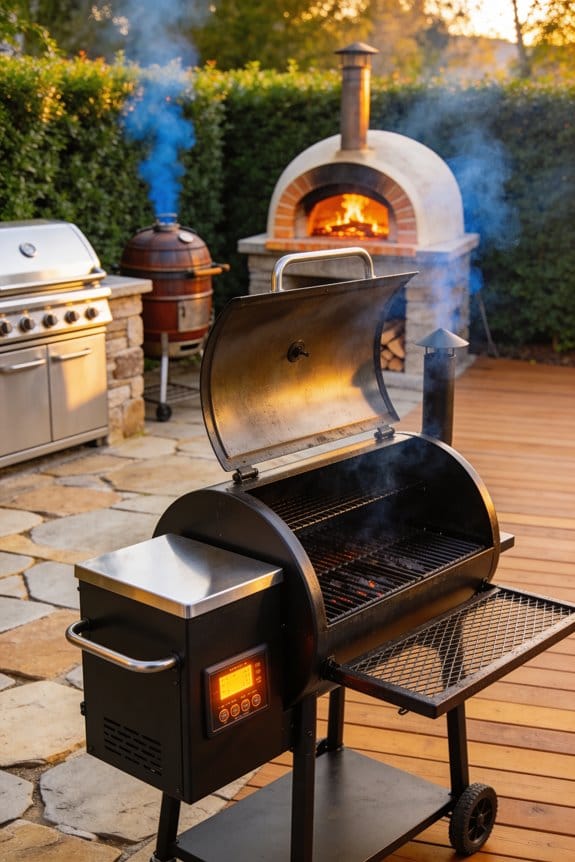
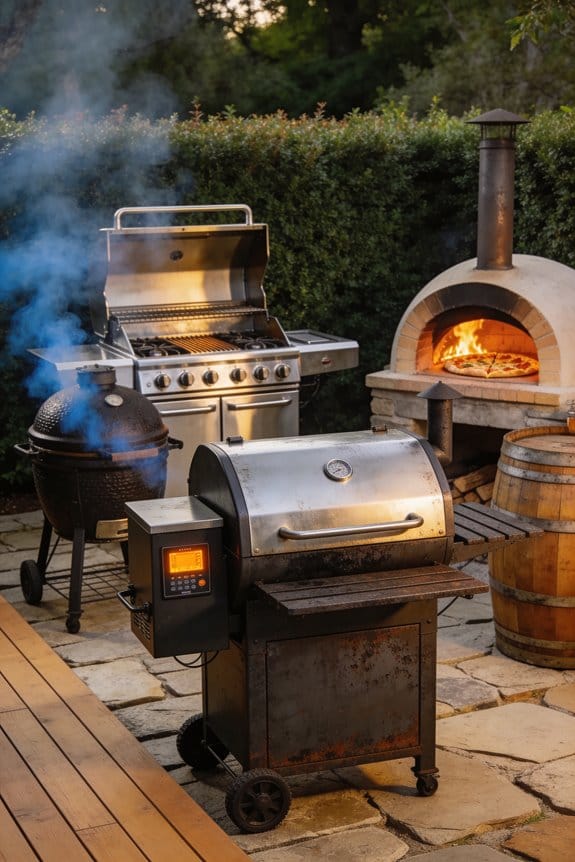

Start every grill session by checking your fuel supply, whether propane or charcoal, to prevent mid-cook depletion. Preheat your grill for 10–15 minutes so grates reach proper searing temperature, which reduces sticking and guarantees even cooking. Clean grates before each session to remove buildup and prevent flavor contamination. Oil your food, not the grates, to avoid dangerous flare-ups and excess smoke. Regulate temperature through air vents, apply sauce only in the final minutes to prevent charring, and clean between sessions to preserve distinct flavors. Master these fundamentals, and you’ll open up more advanced techniques ahead.
Key Takeaways
- Check fuel levels beforehand and keep backup canisters available to prevent mid-cook depletion and compromised meal quality.
- Preheat your grill for 10–15 minutes to reach proper temperature and enable proper searing without food sticking.
- Clean grates before each session using a hot grill brush to remove buildup and prevent flavor contamination.
- Oil food before grilling, not hot grates, to avoid dangerous flare-ups, excess smoke, and burning oil.
- Apply BBQ sauce during the final 3–5 minutes of cooking to preserve flavor and prevent charring.
Start Every Grill Session With Fuel: No Exceptions
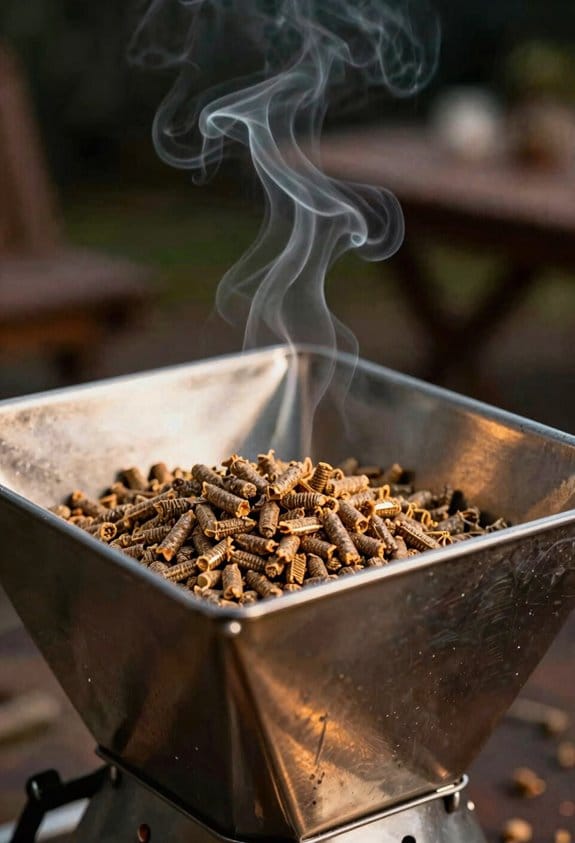
Nothing derails a grilling session faster than running out of fuel midway through cooking, and I’d argue it’s one of the most preventable mistakes you can make. Before you start grilling, I always check cylinders for propane levels or verify you’ve got enough charcoal and pellets on hand. This simple step prevents the embarrassing walk back inside to finish cooking your food. I recommend keeping backup canisters readily available in your garage or storage area. Whether you’re using propane, charcoal, or pellets, maintaining extra fuel guarantees uninterrupted cooking. By preparing beforehand, you’ll avoid compromising your meal’s quality and maintain control over your grilling experience from start to finish.
Preheat Your Grill Long Enough to Sear
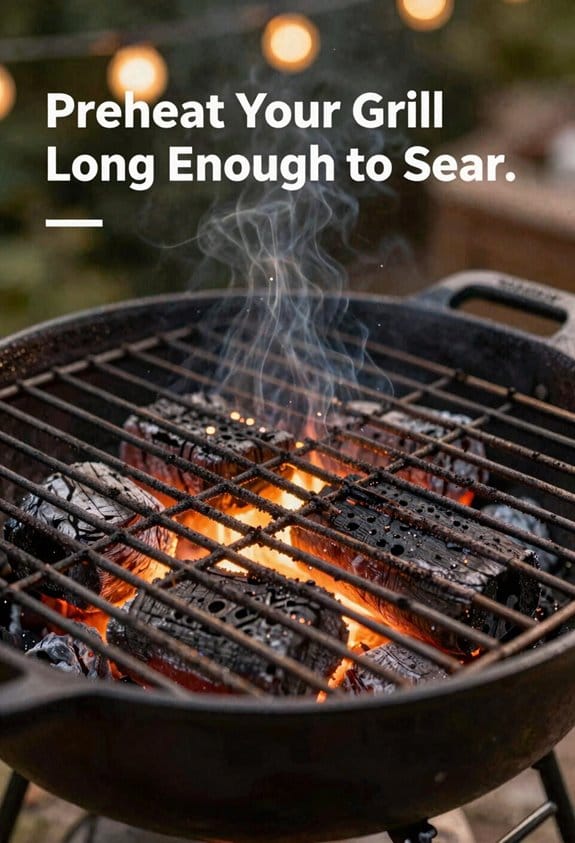
Once you’ve confirmed your fuel supply, the next step involves giving your grill adequate time to reach the proper temperature, which is where many beginners stumble. Rushing to cook before your grill’s fully heated prevents proper searing because insufficient grate temperature doesn’t allow meat to develop that desirable crust. When grates aren’t hot enough, food sticks and tears when you flip it, ruining your meal’s presentation and texture.
I’d recommend preheating for at least ten to fifteen minutes, depending on your grill type. This contact time between heat and grates guarantees even temperature distribution across the cooking surface. Patient preheating eliminates frustrating sticking issues and gives you consistent, professional results every time you grill.
Clean Your Grates Before Each Cook
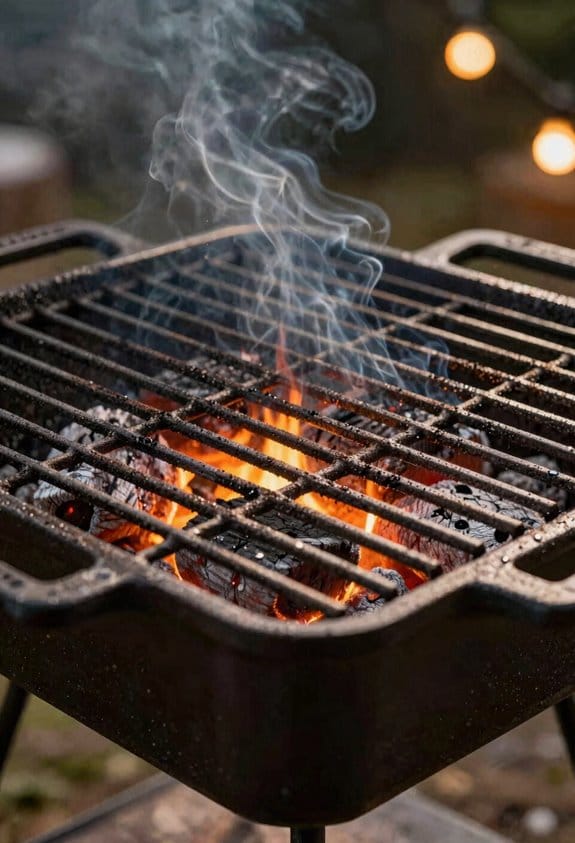
Regularly cleaning your grates before each grilling session is essential for achieving better-tasting food and preventing flavor contamination. I’ve learned that dirty grates hold remnants from previous cooks, transferring unwanted flavors like salmon to chicken. During grate inspection, I check for buildup and debris that compromise cooking results.
To maintain proper grill hygiene, I clean my grates with a grill brush while they’re hot, which removes stuck-on food more effectively. For seasonal maintenance, I perform deeper cleaning by soaking grates or using specialized grill cleaning products.
After cleaning, I lightly oil the grates to prevent sticking and promote even heat distribution. This routine practice makes certain consistent flavor and prevents old food residues from affecting my meals, ultimately improving my grilling outcomes markedly.
Oil Your Food, Not Your Grates
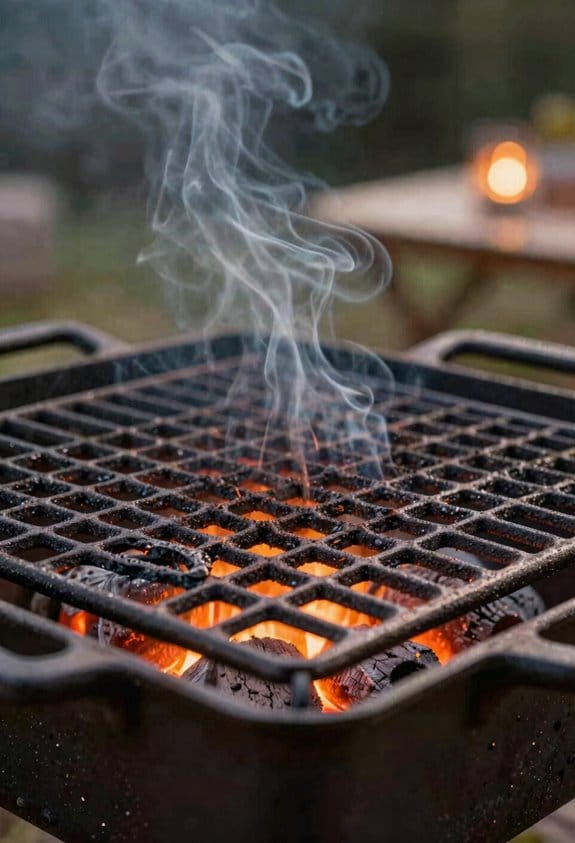
Applying oil directly to your food instead of your grill grates is an essential technique that prevents unnecessary problems during cooking. When you oil hot grates, the oil burns and creates excess smoke, which you’ll want to avoid smoking at all costs. This carbonization also leads to dangerous flare-ups that can drip into your fire and damage your meat’s flavor.
Instead, use a proper seasoning technique by brushing oil onto your food before it hits the grill. This method keeps your grates clean and prevents sticking without the risks of oiling them directly. Your meat will cook more evenly, taste better, and you’ll maintain better control over your grilling session. This simple adjustment makes a significant difference in your final results.
Master Fire Control Before You Cook
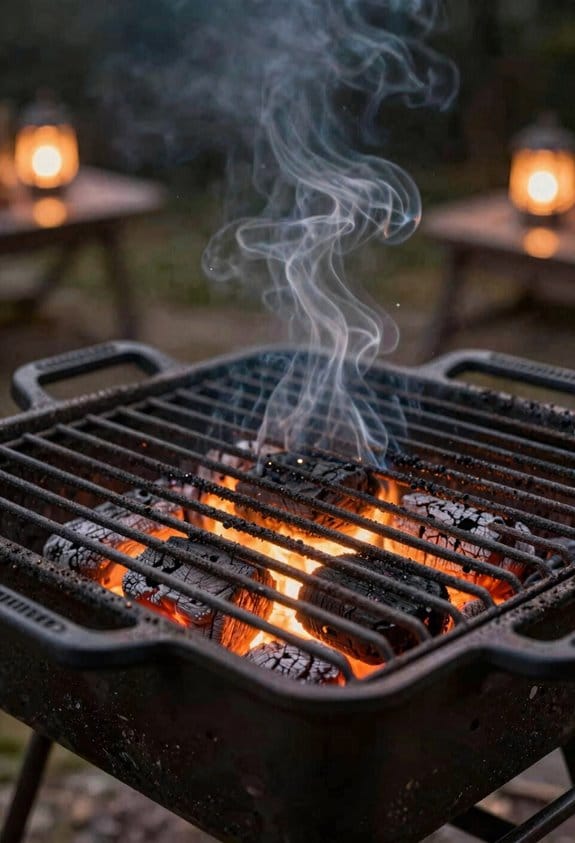
Before you place your first piece of meat on the grill, you need to understand that fire control is the foundation of successful grilling. I’ve learned that every fire behaves differently depending on weather conditions, wind patterns, and the specific meat you’re cooking. To master fire control, you must adjust air vents carefully—these openings regulate oxygen flow and temperature. Read wind direction before you start, since it affects heat distribution across your grill. Preheating properly creates consistent heat zones, while maintaining cleanliness guarantees even cooking throughout your session. By controlling your fire rather than letting it control you, you’ll develop the skills needed to handle various grilling challenges and produce consistently better results.
Wait Until the End to Sauce
One common mistake I see beginners make is adding BBQ sauce too early in the cooking process, which causes the sauce to char and burn before the meat finishes cooking. Instead, I recommend late glazing, where you apply sauce during the final minutes of grilling. This technique preserves both the sauce’s flavor and the meat’s texture.
Think of sauce application as flavor layering. You’re building depth by adding it strategically. When you brush sauce on too soon, high heat carbonizes the sugars, creating a bitter crust that masks the meat’s natural taste. By waiting until your meat’s nearly done, you allow the sauce to caramelize slightly without burning.
I’ve found that adding sauce in the last three to five minutes gives you the best results every time.
Clean Between Sessions to Preserve Flavor
Through regular cleaning between grilling sessions, you’ll prevent old food residue from affecting your next meal. Dirty grates retain flavors from previous cookouts, transferring unwanted tastes like salmon to your chicken. This cross-contamination ruins your carefully planned meal.
I recommend performing deep sanitization after each grilling session. While the grates are still warm, scrub them thoroughly with a grill brush to remove buildup. Once cooled, wipe them down with a damp cloth for complete cleanliness.
Flavor preservation depends on maintaining a clean cooking surface. Uncleaned grates don’t season properly; instead, they accumulate burnt particles that negatively impact taste. By establishing a regular cleaning routine, you’ll make certain each meal tastes fresh and distinct, free from previous cooking sessions’ lingering flavors.
Frequently Asked Questions
How Do I Know When My Grill Grates Are Hot Enough for Searing Meat?
I use an infrared thermometer to check grates are around 450°F for searing. You can also try the hand test—hold your palm above the grates; if you can’t keep it there for two seconds, they’re hot enough.
What’s the Best Way to Oil Food Before Grilling to Prevent Sticking?
I brush oil sparingly directly onto your food before it hits the grates, never on the grill itself. This prevents sticking without causing dangerous flare-ups or smoking that’ll ruin your meat’s flavor and texture.
Can I Reuse BBQ Sauce That Touched Raw Meat on the Grill?
I’d strongly advise against it for food safety reasons. Once raw meat touches your sauce, bacteria contamination becomes a serious risk. Instead, I reserve a separate portion of sauce alternatives specifically for basting cooked food.
How Often Should I Replace My Grill Grates if I Grill Frequently?
I’d replace your grill grates every 3-5 years with frequent use, depending on rust prevention efforts. Regular cleaning and oiling extends their lifespan markedly, so don’t neglect maintenance between replace frequency intervals.
Does Grill Type Affect How Quickly I Should Preheat Before Cooking?
Yes, grill type markedly affects preheat timing. I’ve found that charcoal grills need longer preheating—charcoal depth and heat retention matter. Propane grills preheat faster because fuel type burns more efficiently than charcoal’s slower ignition process.