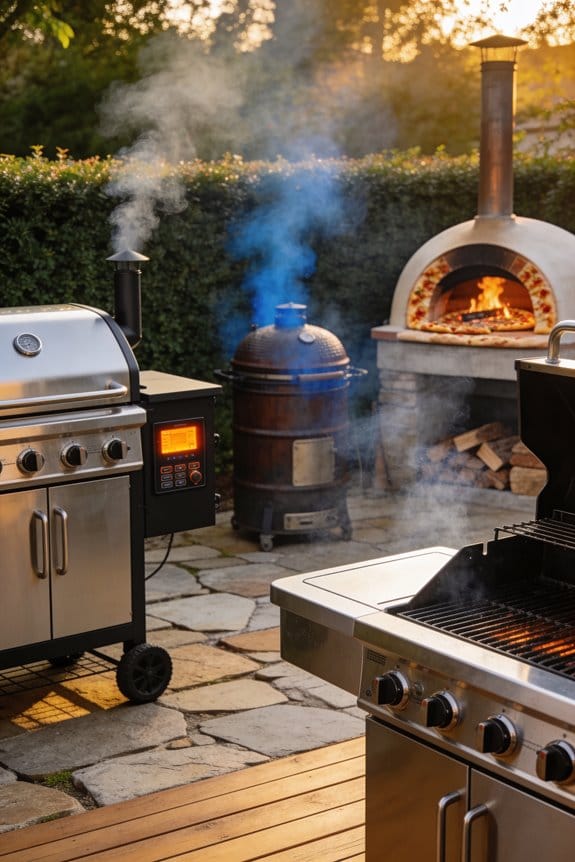

I’ll clean my smoker’s firebox and grates systematically between long cooks. First, I remove ash from the cold firebox using a shop vac, then knock debris off grates with a scraper. For stubborn buildup, I apply oven cleaner or soak grates overnight in specialized cleaning bags. Next, I scrape interior creosote with a plastic putty knife and vacuum thoroughly. Finally, I dry everything completely, inspect door seals, and lightly season metal surfaces with cooking spray to prevent rust. Explore these techniques further to master equipment maintenance.
Key Takeaways
- Remove cold ash from the firebox with a shop vac to prevent fire risk and improve airflow.
- Knock off debris from grates using a scraper or aluminum foil ball before applying cleaning solutions.
- Apply Easy-Off oven cleaner or soak grates overnight in specialized bags for stubborn buildup removal.
- Scrape creosote deposits from interior walls and lid with a plastic putty knife when cold.
- Dry all surfaces thoroughly and lightly season the firebox with cooking spray to prevent rust.
Clean Out Ash From the Firebox First
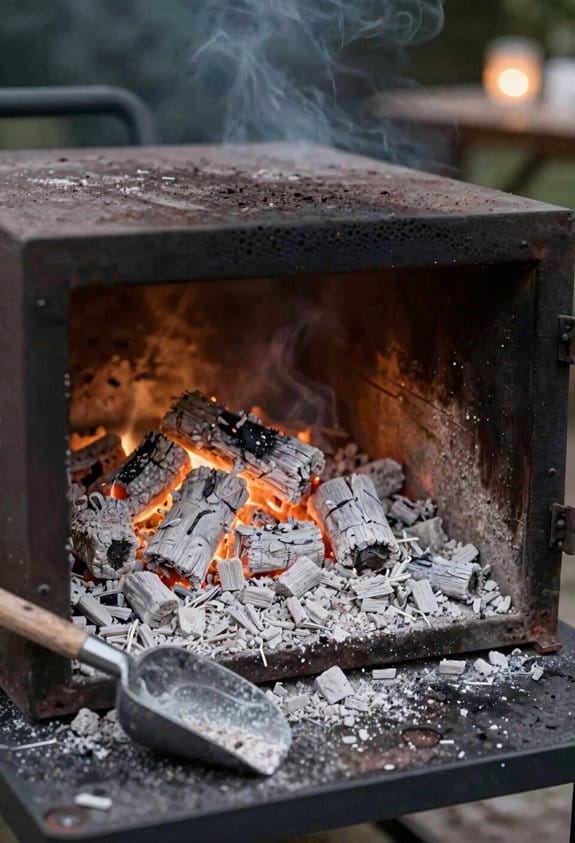
Removing ash from your firebox is the essential first step in cleaning your smoker, and I’d recommend tackling this task before addressing any other components. When your grill’s cold, I vacuum the firepot thoroughly to avoid fire risk during ash disposal. Using a shop vac, I dislodge burned bits with a plastic putty knife, being careful not to damage interior surfaces. I also check underneath the firepot, hopper bottom, and auger tube for accumulated sawdust. These safety checks prevent potential hazards when you fire up your smoker next time. Properly removing all ash guarantees better airflow and heat distribution, which directly improves your smoking results and extends your equipment’s lifespan.
Quick Grate Prep: Knock Off Debris
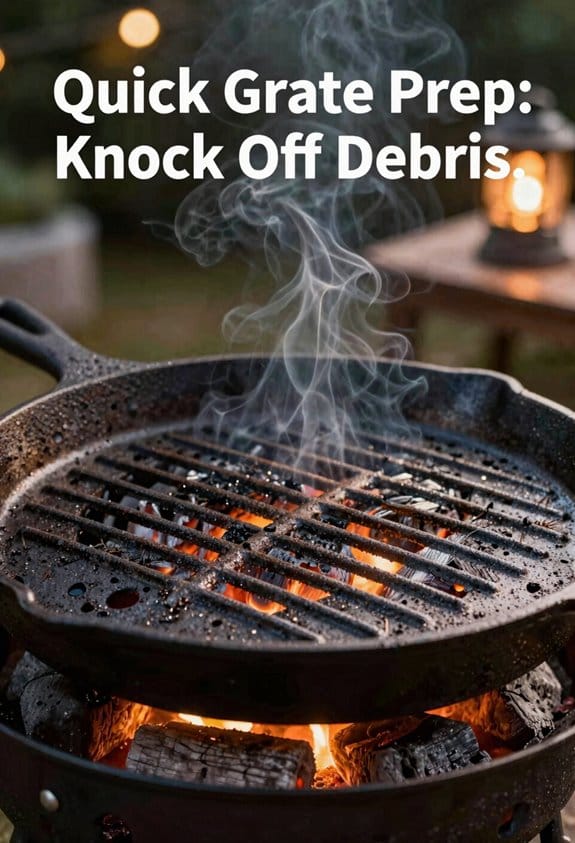
Once you’ve cleared the ash from your firebox, it’s time to tackle the grates themselves, starting with the simplest step: knocking off large food debris. I grab a grill scraper or form a ball from aluminum foil, then scrape away stuck-on food particles and buildup. This initial knockoff removes the heaviest residue before deeper cleaning begins.
After clearing larger debris, I give the grates a quick spray with Dawn Power Wash dish soap, which helps loosen grease and smaller particles. The soap soaks into stubborn spots while I prepare my cleaning tools. This two-part approach—mechanical removal followed by chemical treatment—makes subsequent scrubbing markedly easier and more effective, saving time during the overall cleaning process.
Deep Clean Grates: Remove Stubborn Buildup
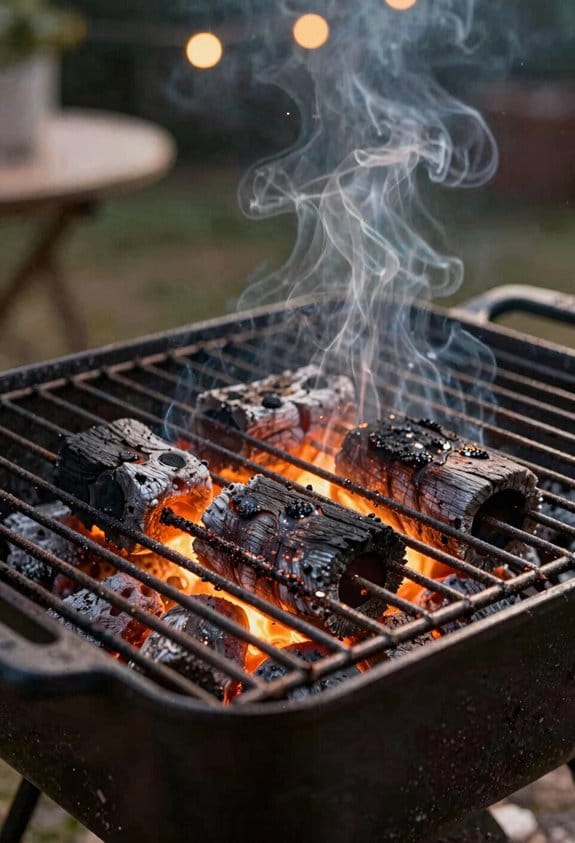
After the initial debris removal and soap soaking, your grates are ready for deeper cleaning to tackle stubborn buildup that won’t come off with basic scraping. I recommend trying several proven methods depending on the severity of buildup. Easy-Off non-fuming oven cleaner works well when applied and left for a few hours before rinsing. For tougher deposits, I soak grates overnight in Carbona 2-In-1 Oven Rack & Grill Cleaner bags. A baking soda paste offers a natural alternative—apply it, wait 15-20 minutes, then scrub with a stainless scrubber. You can also spray a degreaser like Zep and wait 40 minutes before wiping. White vinegar mixed with water provides another effective natural option that requires scrubbing after several minutes.
Clear Creosote and Ash From Inside
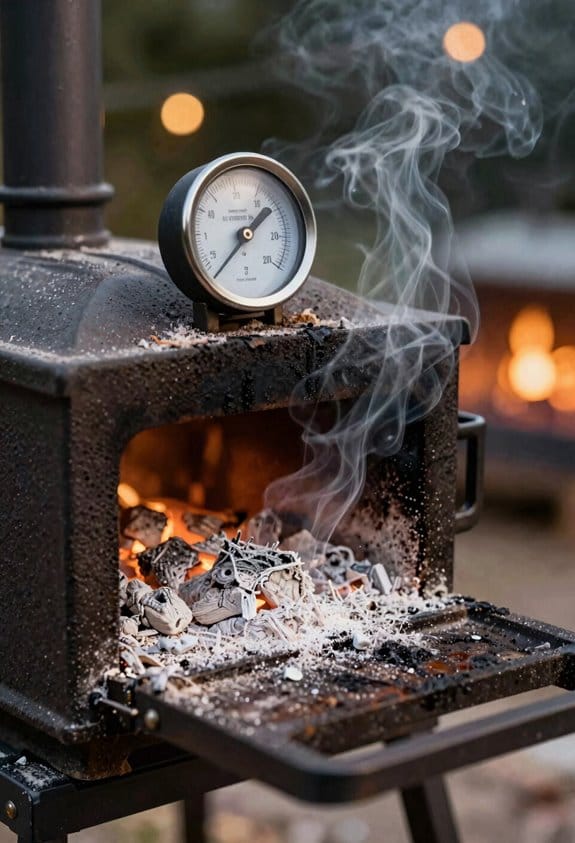
With your grates now clean and ready to dry, you’ll want to focus on the interior of your smoker, where creosote buildup and ash accumulation can affect both performance and flavor. Start by removing all ash from the firebox and smoker body using interior vacuuming with a shop vac when the grill is completely cold. Use a plastic putty knife to scrape walls and the underside of the lid, removing creosote deposits without scratching surfaces. Check underneath the firepot, hopper bottom, and auger tube for sawdust accumulation. For creosote removal, spray cleaning solution on interior surfaces, let it soak briefly, then wipe and rinse thoroughly. Vacuum the inside of the grill barrel and firepot again to capture remaining debris and residual ash.
Dry, Inspect, and Season Before Cooking
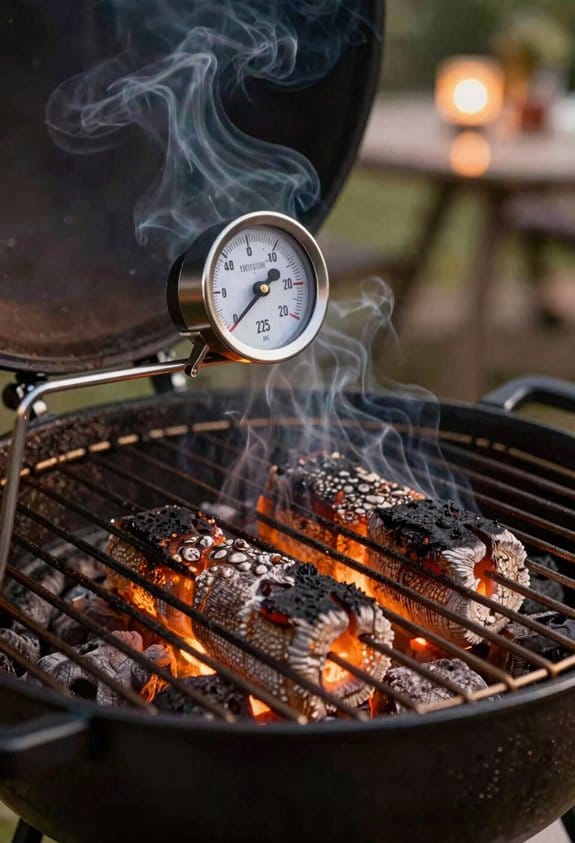
Now that you’ve cleared away creosote and ash from your smoker’s interior, the final preparation steps will guarantee your grill performs at its best and your food tastes its best. You’ll want to dry thoroughly all internal surfaces using a soft microfiber towel or leaf blower to remove moisture and cleaning residue. Next, inspect seals around the door and gaskets carefully, looking for damage that could affect smoke retention. Once everything’s dry, season lightly by spraying the cleaned firebox with Pam cooking spray, which protects metal surfaces and prevents rust formation. Finally, prep surfaces by making certain grates are completely dry and ready for your next cook. These finishing touches assure peak performance and longevity of your smoking equipment.
Frequently Asked Questions
Can I Use My Grates Immediately After Cleaning With Chemical Cleaners?
I’d strongly advise against it. Imagine firing up your smoker right after using Easy-Off cleaner—chemical residues could contaminate your food. You’ll want to rinse thoroughly and avoid immediate reheating until everything’s completely clean.
How Often Should I Clean My Smoker Between Cooking Sessions?
I’d recommend cleaning your smoker after every cooking session for peak performance. Following a consistent maintenance schedule prevents buildup, while frequency guidelines suggest deep cleaning monthly. Regular upkeep guarantees longevity and better flavor.
What’s the Safest Way to Clean a Hot Grill or Firebox?
I’d recommend always letting your grill cool completely before cleaning. Wear heat-resistant gloves for safe handling if you must work on a warm unit, and never vacuum ash while the firebox is hot—wait until it’s completely cold to avoid fire risks.
Should I Season My Grates After Cleaning, and if So, How?
I’d absolutely season your grates—it’s basically mandatory if you’re not trying to rust them into oblivion! I recommend high-heat oil options like avocado or grapeseed, applying every few cleanings for ideal seasoning frequency.
Can I Pressure Wash the Entire Smoker or Only Certain Parts?
I’d recommend pressure washing only your firebox, not the entire smoker. You’ll want to disassemble components like grates and the hopper first, then carefully target interior surfaces to avoid damaging external parts or electronics.