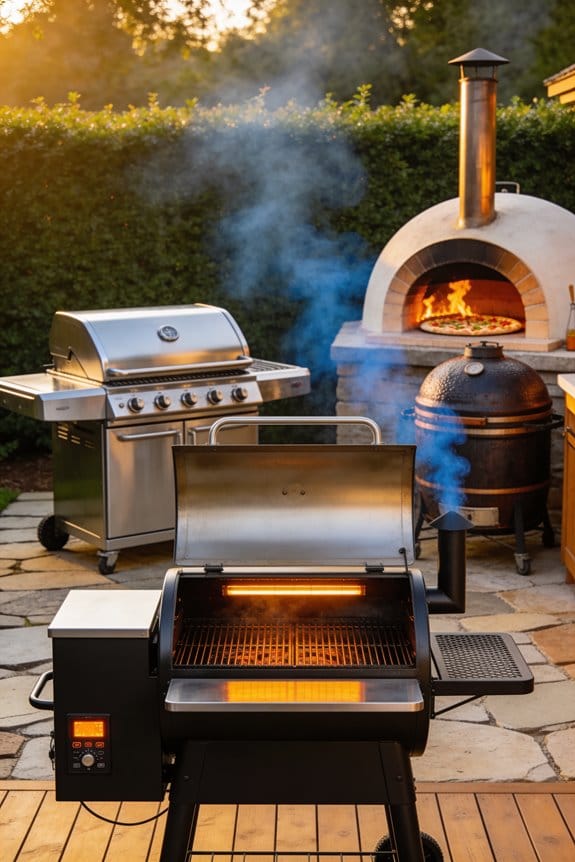

Pizza ovens work through four heat transfer methods—conduction from the hot floor, convection from circulating air, radiation from the dome and walls, and thermal mass from dense refractory materials. The dome shape concentrates heat directly above your pizza while the floor supplies bottom heat, cooking it evenly in 60-90 seconds. You’ll need around 700°F floor temperature for a perfectly crispy crust; anything cooler produces soggy results. Understanding how fuel, ventilation, and seasonal adjustments maintain this temperature reveals why your oven’s design matters so much.
Key Takeaways
- Dome-shaped ovens concentrate intense heat at the apex, creating dual heating from both floor conduction and dome radiation for even cooking.
- Refractory materials absorb and store thermal energy, continuously radiating heat to cook pizzas efficiently even after flames are removed.
- Temperature around 700°F ensures proper crust development, cheese melting, and topping cooking through conduction, convection, and radiation simultaneously.
- Hot air circulation through the curved dome design maintains consistent temperatures throughout the chamber for uniformly cooked pizzas.
- Proper fuel selection, preheating strategy, and flue positioning maximize heat retention while managing combustion efficiency for optimal cooking conditions.
How Pizza Ovens Cook: The Four Heat Transfer Mechanisms
When you’re standing in front of a pizza oven, you might notice the fire blazing inside, but here’s what’s really happening: the pizza isn’t cooking primarily from the flames themselves, but rather from four distinct heat transfer methods working together. Conduction transfers heat through direct contact between your pizza and the hot oven floor, which absorbs thermal energy from the fire. Convection circulates hot air throughout the chamber, ensuring even cooking of toppings and cheese. Radiation emits electromagnetic waves from the dome and walls, cooking your pizza from all angles simultaneously. Finally, thermal mass in the dense refractory materials stores heat and radiates it back continuously. The floor’s surface emissivity and topping insulation properties enhance this process, allowing your pizza to cook perfectly through retained thermal energy rather than direct flames alone.
Why Dome Shape Concentrates Heat Where It Matters Most
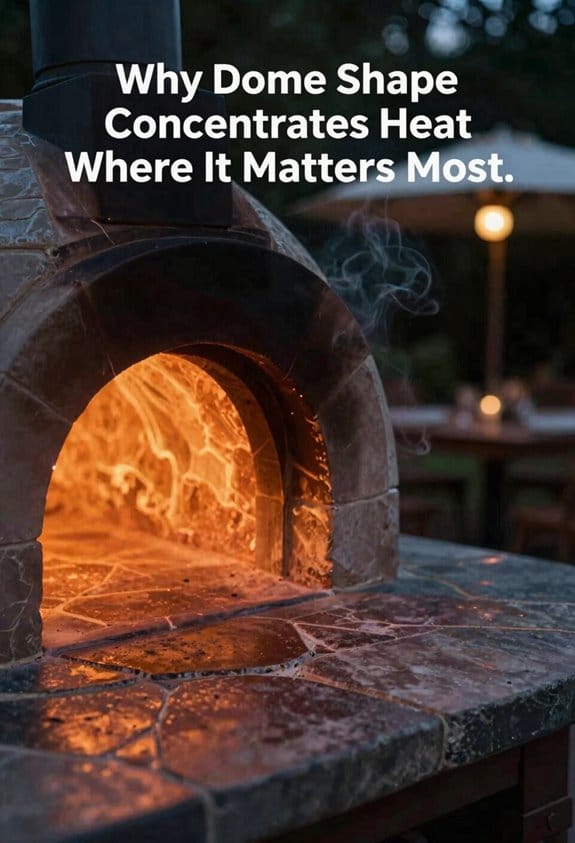
The dome’s rounded shape is far more than just an aesthetic choice for your pizza oven, because it directly determines how effectively heat concentrates where you need it most. Heat rises naturally from your fire and collects at the dome’s apex, creating what’s called heat pooling. This concentration at the top means the hottest zone sits directly above your pizza, cooking it from above while the floor provides heat from below. The curved interior also encourages apex convection, where hot air constantly circulates throughout the chamber. This dual heating approach—from the dome and floor simultaneously—ensures your pizza cooks evenly and quickly. The dome’s design prevents heat from escaping sideways, redirecting it back into your cooking surface, which is why dome-shaped ovens outperform flat-roofed alternatives.
How Refractory Floors Store and Radiate Cooking Energy
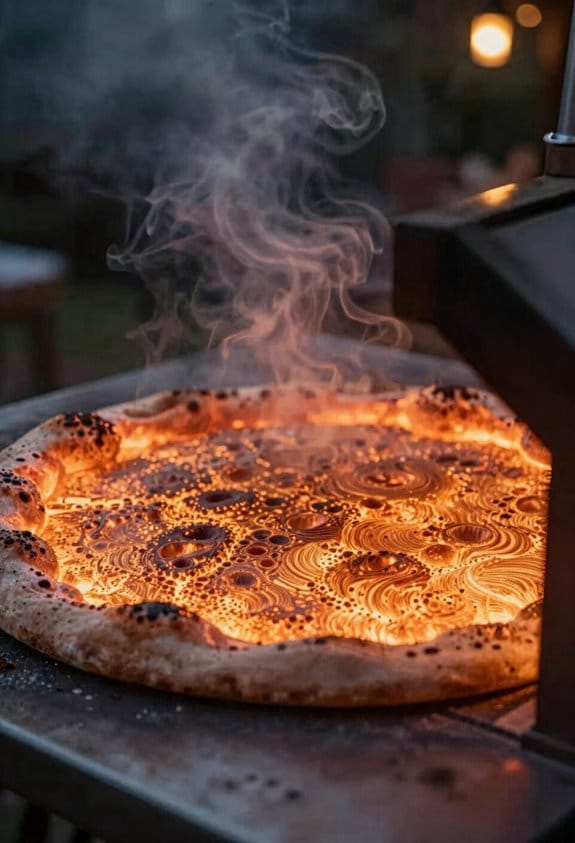
While your pizza oven’s dome captures and concentrates heat from above, it’s actually the floor beneath your pizza that does the heavy lifting when it comes to cooking energy. The refractory floor stores thermal inertia—the ability to absorb and maintain heat—by soaking up energy from the fire. This dense material, typically made from specialized clay and firebricks, can withstand extreme temperatures while holding onto heat effectively. When your pizza sits on this hot surface, conduction transfers energy directly into the crust. The floor’s high surface emissivity, or capacity to radiate heat outward, guarantees consistent cooking from below. This stored energy does most of the actual cooking, which is why pizzas cook successfully even after you remove the active flame.
Reaching and Maintaining 700°F: Your Temperature Target
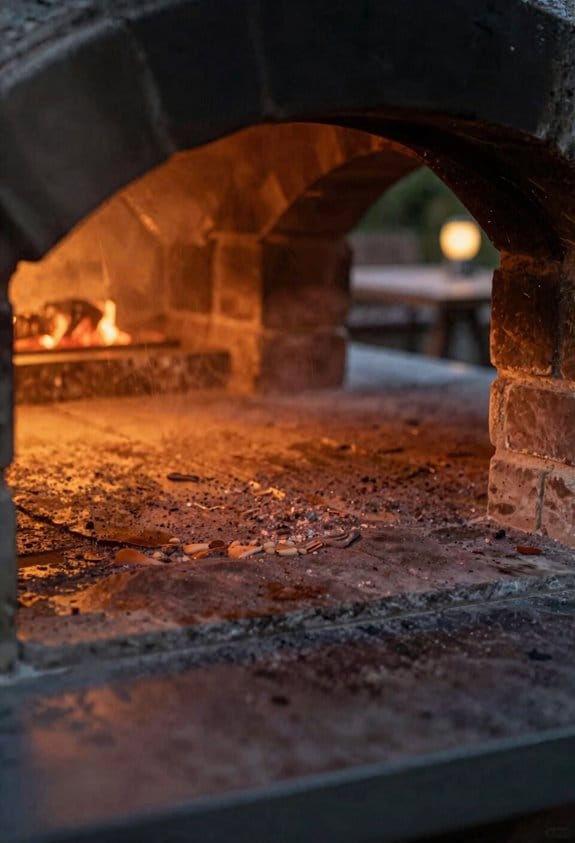
Because your pizza oven’s refractory floor and dome work together to store and radiate heat, you’ll want to aim for a cooking temperature around 700°F (370°C) or higher to achieve peak results. Your preheat strategy should begin with lighting the fire well in advance, allowing the dense materials to absorb sufficient thermal energy. Fuel selection matters markedly; hardwoods like oak or maple burn hotter and longer than softer woods, enabling faster temperature buildup. Once you reach your target temperature, use a pyrometer or laser thermometer to monitor the floor consistently. Maintaining these high temperatures guarantees pizzas cook rapidly and evenly, producing crispy crusts while preventing performance degradation. Regular flame management helps sustain ideal cooking conditions throughout your baking sessions.
Controlling Smoke and Using the Stack Effect
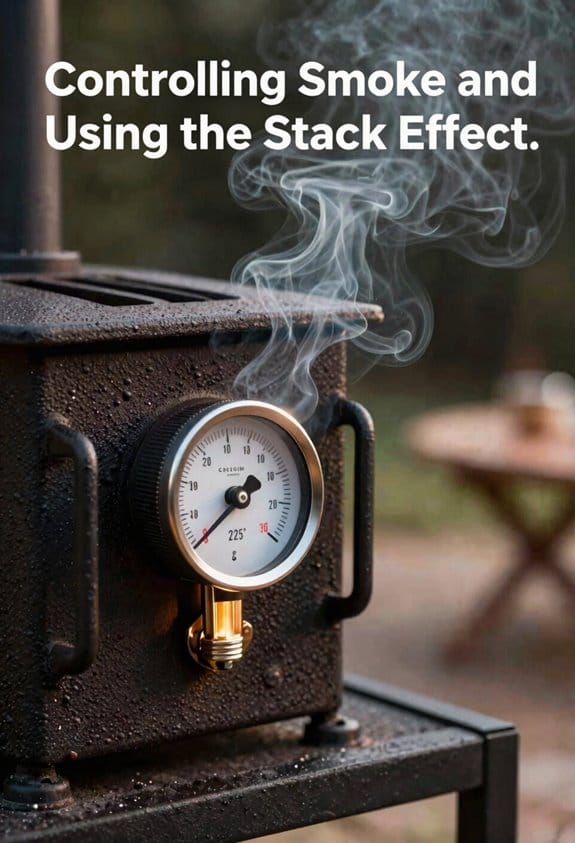
Once you’ve established your 700°F cooking temperature through proper flame management, you’ll notice that smoke management becomes your next operational priority. Strategic flue positioning above your dome channels smoke away from diners while allowing efficient escape. This smoke choreography—the deliberate direction and control of smoke flow—prevents ash disturbance in nearby areas. Your oven’s door placement controls combustion intensity and minimizes heat loss during operation. The “stack effect” creates natural air movement: air flows across your flame, circulates through the oven chamber, and rises through the chimney. This convective circulation regulates internal temperature while maintaining white ash appearance. Proper ventilation management guarantees optimal cooking conditions and protects your dining experience. Understanding these interconnected systems demonstrates how professional oven design prioritizes both performance and comfort.
Adjusting Your Pizza Oven for Weather and Seasons
As external conditions shift throughout the year, your pizza oven’s performance demands careful adjustment to maintain consistent cooking results. During winter months, I recommend positioning your oven with a windproof orientation, ensuring the opening faces away from prevailing winds that steal heat and scatter ash. Cold air lengthens preheating times, so you’ll need to light fires earlier and check temperatures more frequently. Seasonal fuel adjustment becomes essential too; burning denser, well-seasoned wood provides steadier heat during cooler periods. In summer, you may reduce fuel quantity since ambient temperatures assist your oven’s heating efficiency. The built-in door functions as a valuable shield during preheat cycles regardless of season, helping maintain internal temperatures. These adjustments guarantee your oven performs optimally year-round.
Frequently Asked Questions
Can I Cook Pizza Successfully Without an Active Fire in the Oven?
Yes, you can. I’ve successfully cooked pizza without active fire by relying on residual heat stored in the oven’s thermal mass. The refractory materials retain enough energy to cook your pizza perfectly, eliminating cold baking concerns entirely.
What Materials Should I Use to Build a Durable Pizza Oven Dome?
What’s more important than durability when building your pizza oven dome? I’d use refractory bricks that withstand extreme heat, then wrap an insulating blanket around them to retain warmth efficiently and extend your oven’s lifespan.
How Do I Measure the Exact Temperature Inside My Pizza Oven Accurately?
I’d recommend using a pyrometer on your oven’s side wall or an infrared thermometer to detect floor temperature. For precision, you can install embedded thermocouples that’ll give you consistent, accurate readings throughout cooking.
What’s the Fastest Cooking Time Possible for a Pizza at Peak Temperature?
Your pizza’ll cook like lightning at peak temperature—sometimes under 3 minutes. I’ve watched Neapolitan pies achieve blast charring in mere seconds when you’ve got that intense heat locked in at 700°F or higher.
How Does Wind Direction Affect My Pizza Oven’s Cooking Performance and Efficiency?
Wind steals your oven’s heat and blows ash around. I’d face your opening away from gusts to protect performance. Strong winds also disrupt your chimney draft, affecting internal temperature regulation and cooking consistency.