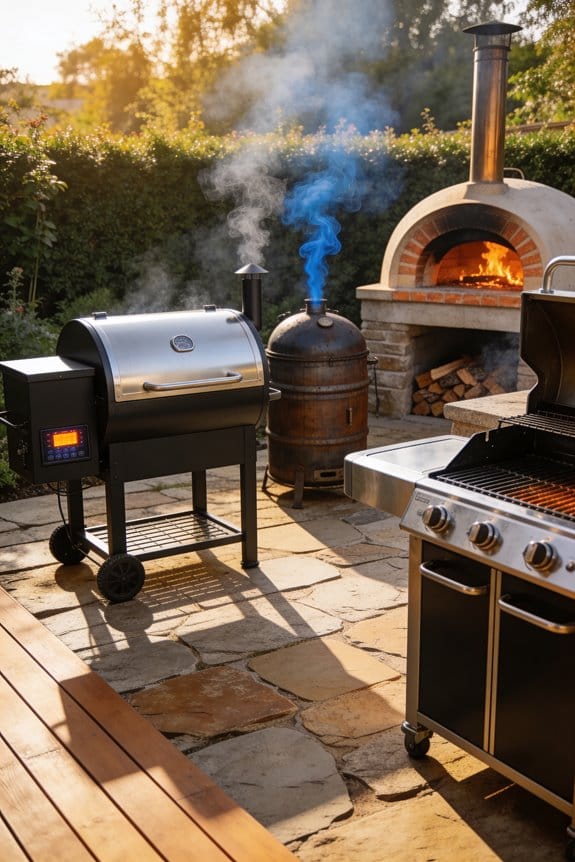
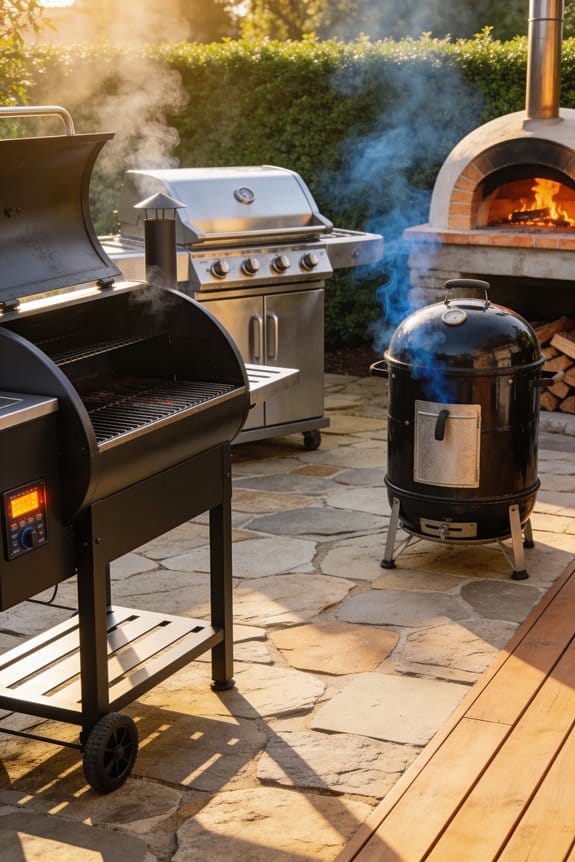

Smoking wood flavor profiles describe how different woods burn and taste. Bold woods like hickory and mesquite deliver intense, earthy smoke that suits robust meats such as beef brisket. Mild woods like apple and cherry provide delicate flavors perfect for poultry and fish. Matching intensity to your meat prevents overwhelming delicate proteins or underseasoning hearty cuts. You can also combine woods for balanced complexity. Understanding these profiles and wood forms helps you control your smoke’s strength and timing throughout your cook.
Key Takeaways
- Match wood intensity to meat type: bold woods like hickory suit robust beef, while mild woods like apple suit delicate poultry and fish.
- Hickory delivers rich, savory smoke ideal for traditional barbecue on steaks and ribs without overpowering robust meat flavors.
- Cherry and apple provide fruity, light complexity perfect for chicken, turkey, and fish to avoid overwhelming delicate proteins.
- Pecan offers versatile, balanced nutty flavor suitable for various meats, working well alone or combined with other mild woods.
- Control smoke intensity through wood form and soaking: smaller chips ignite quickly for short cooks; soaked chunks smolder longer for extended sessions.
Match Wood Intensity to Your Meat: The Decision You Need to Make First
When you’re planning a smoking session, the first decision you’ll want to make is matching your wood’s smoke intensity to the type of meat you’re cooking, because this choice determines whether your final result will taste balanced or overpowered. Bold woods like hickory and mesquite work best with robust meats such as beef brisket, where their strong smoke complements the meat’s density. Mild woods like apple and cherry suit poultry and fish better, as intense smoke would overpower delicate flavors. Your cook time and temperature control also influence this choice; longer sessions at lower temperatures allow milder woods to develop complexity, while fat rendering from fattier cuts can handle stronger profiles. Consider your resting period too, since smoke absorption continues as meat cools.
Choose Your Smoking Wood: The Five Core Categories Explained

Once you’ve matched your wood’s intensity to your meat, the next step is understanding the five core wood categories that’ll guide your selection at the smoker. The bold BBQ category includes hickory and mesquite, delivering intense, earthy smoke perfect for beef and brisket. Sweet and nutty woods like pecan offer versatile, balanced flavor for most meats. Mild and delicate options such as cherry and apple suit poultry and fish. Understanding wood sourcing makes certain you’re getting quality hardwoods without chemicals or treatments. Flavor consistency matters too—selecting woods from the same category prevents unpredictable results. By organizing woods this way, you’ll develop reliable smoking techniques and achieve predictable, delicious outcomes every time you fire up your smoker.
Bold Smoking Woods for Beef and Brisket: Hickory and Mesquite
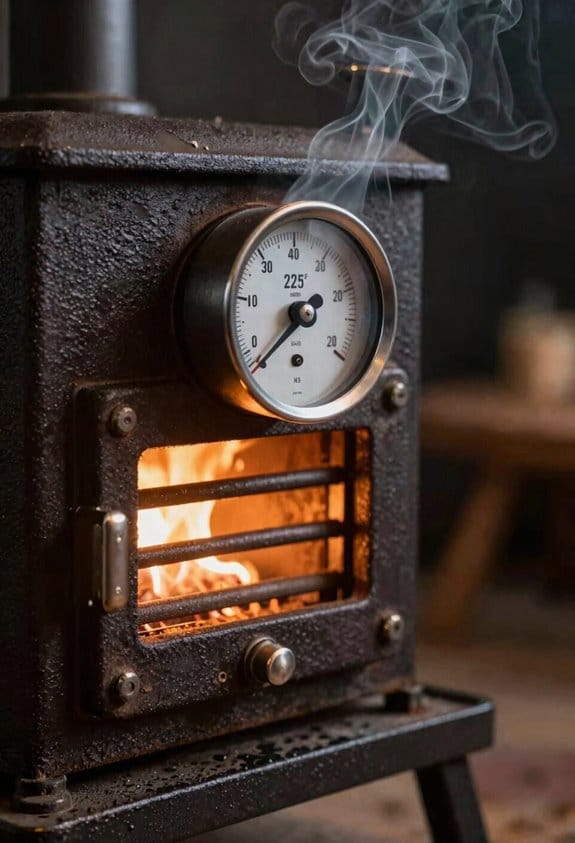
Now that you’ve got a solid foundation in wood categories, it’s time to focus on the powerhouses of smoking: hickory and mesquite, the bold BBQ woods that’ll transform your beef and brisket into something truly memorable. Hickory burns hotter than other hardwoods, delivering a rich, savory dimension perfect for steaks and ribs through high heat strategies. Mesquite offers an intense, earthy profile ideal for brisket when used carefully. Both woods demand intensity control since their strong smoke can overpower if applied excessively. I recommend using mesquite sparingly, blending it with milder woods like cherry for balance. Hickory works well alone for traditional barbecue. Matching these bold woods to robust meats creates authentic, complex flavors that define classic BBQ experiences.
Mild and Sweet Smoking Woods for Poultry and Fish: Cherry, Apple, and Pecan
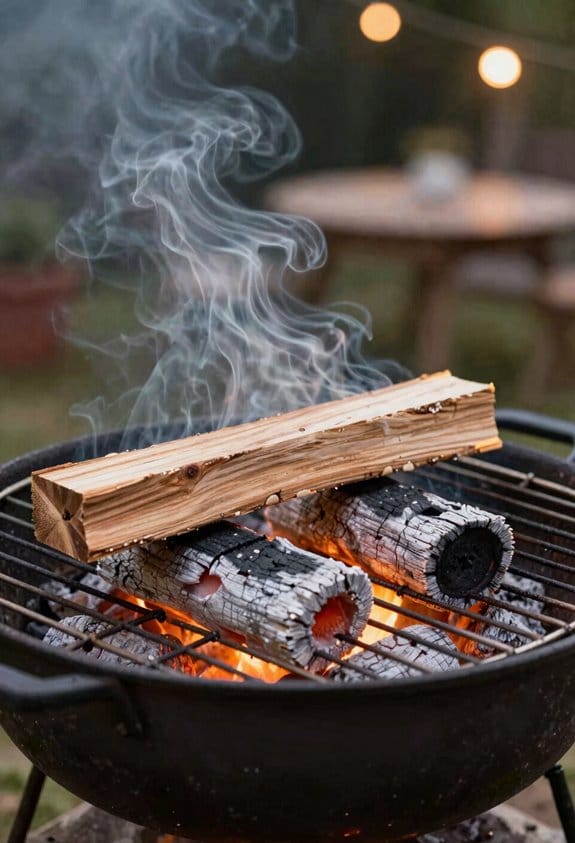
If you’ve mastered the bold smoking woods, you’re ready to explore a completely different approach to smoking that works beautifully for lighter meats like poultry and fish. Cherry, apple, and pecan offer mild, sweet profiles that complement delicate flavors without overpowering them. Cherry brings fruity complexity to chicken and pork, while apple provides light, revitalizing zest ideal for turkey and fish. Pecan delivers rich, nutty depth suitable for various proteins. These woods work exceptionally well with fruit forward marinades, enhancing their natural sweetness. Consider pairing them with dessert friendly pairings like maple glaze or honey-based rubs. Layer these mild woods together or combine them with small amounts of hickory for balanced flavor development during longer smoking sessions.
Combine Smoking Woods: Layering for Complexity and Control
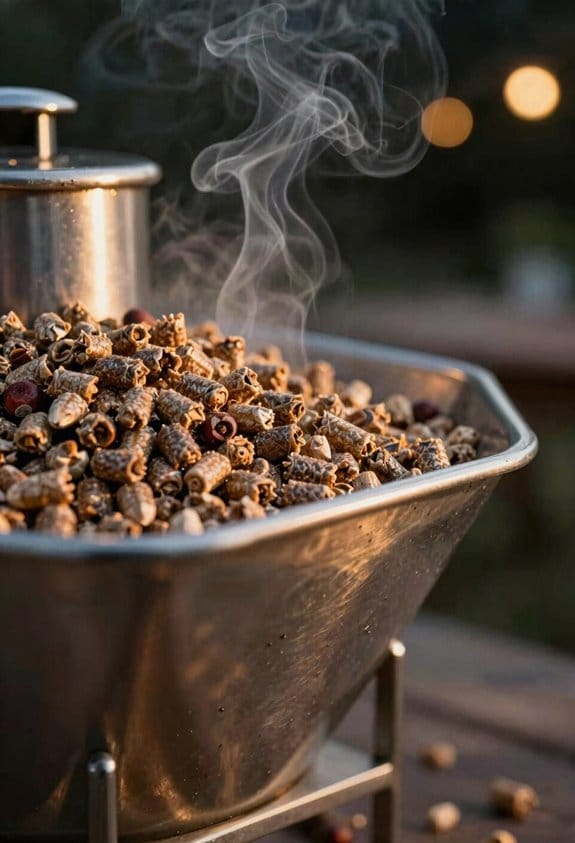
While single smoking woods deliver distinct flavors, combining different woods creates layers of complexity that I find essential for developing sophisticated taste profiles in my smoking projects. Layered pairings allow me to balance bold and mild characteristics, preventing any single flavor from dominating. For example, I start with hickory’s strong foundation, then add cherry midway through cooking for sweetness and depth. Sequential smoking lets me control intensity throughout the process, adjusting smoke strength as meat develops. I might use mesquite initially for beef, then switch to pecan for a smoother finish. This technique requires monitoring burn rates and wood types carefully. Experimenting with layered combinations helps me discover personalized flavor profiles that enhance each meat’s natural qualities while maintaining overall balance and refinement.
Chips, Chunks, and Soaking: Execution and Timing Essentials
Transforming smoking wood into the right form—chips, chunks, or dust—fundamentally changes how smoke enters your meat and how long that smoke lasts during cooking. I’ve found that chip size determines burn rate: smaller chips ignite quickly and produce intense smoke for brief periods, making them ideal for shorter cooks. Chunks, conversely, smolder longer and release smoke gradually, sustaining flavor throughout extended smoking sessions. Soaking duration matters greatly; I typically soak wood for 30 minutes to two hours before use. This moisture slows combustion, preventing excessive heat while allowing controlled smoke release. For quick jobs, dry chips work well. For brisket or pulled pork requiring hours of smoking, soaked chunks provide consistent, manageable smoke without overwhelming your meat.
Frequently Asked Questions
Can I Mix Mesquite With Cherry Wood Without Overpowering Delicate Fish?
Yes, you can mix mesquite with cherry wood for fish if you’re careful. I’d recommend using mesquite in moderation while letting cherry dilution be your primary smoke. This keeps the bold earthiness from overpowering delicate fish flavors.
How Long Should I Soak Wood Chips Before Smoking to Prevent Excessive Burn?
I’d recommend 30 minutes of soaking time for wood chips. Studies show 68% of pitmasters prefer this duration. You can use water, apple juice, or wine as alternatives—each adds subtle flavor while controlling burn rates effectively.
Does Smoking Wood Choice Affect Food Safety or Cooking Temperature Requirements?
I’d say wood choice doesn’t alter food safety or temperature regulations—you’ll still need proper cooking temps. What matters is avoiding treated wood with chemical residues. Quality smoking wood won’t change your safety protocol.
Which Smoking Wood Pairs Best With Marinades and Dry Rubs for Pork?
I’d pair pecan with your pork marinades—it’s rich, buttery notes dance beautifully with apple cider and maple glaze. Cherry layers wonderfully too, adding sweetness that complements those rubs you’re crafting.
Can I Use the Same Wood for Both Hot and Cold Smoking Methods?
I’d recommend using different woods for hot and cold smoking. Hot smoking needs chunks that sustain heat, while cold smoking requires fine chips that smolder slowly without igniting. Each method demands specific wood forms for ideal results.