
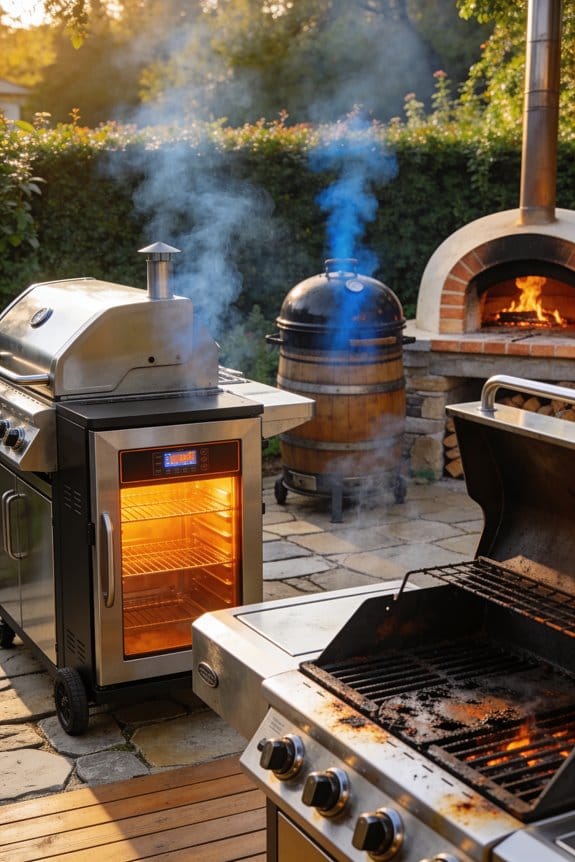

To reseason your rusty cast iron grate, first remove corrosion by soaking it in a 50/50 vinegar-water solution for 45–48 hours, then scrub with a wire brush to loosen rust particles. Rinse thoroughly under running water and dry completely with a towel. Next, apply a thin layer of vegetable oil across the entire surface, wrap it in aluminum foil, and place it on your grill at high heat for about ten minutes. This process bonds the oil to the metal, creating a protective coating that prevents future rust. Following consistent maintenance habits like weekly oiling will keep your grates in excellent condition for years to come.
Key Takeaways
- Soak rusty cast iron grates in a 50/50 vinegar-water solution for 45–48 hours to dissolve stubborn corrosion.
- Scrub loosened rust with a wire brush, then rinse completely under running water and dry immediately with towels.
- Heat grates briefly on the grill to evaporate any residual water before applying oil for seasoning.
- Apply a thin, even layer of vegetable oil or shortening, wrap in foil, and heat at high temperature for ten minutes.
- Oil grates weekly during grilling season and brush away food particles after each use to prevent rust recurrence.
Identify Your Grate Type and Rust Level
Before you tackle rust removal on your cast iron grill gate, you’ll need to determine both what type of grate you’re working with and how severe the rust damage is, since these factors will guide your cleaning method and the tools you should use. Material identification matters because cast iron grates tolerate wire brushes, while other metals require gentler nylon brushes to prevent scratching. Rust severity ranges from light surface discoloration to deep pitting that penetrates the metal. Light rust appears as a thin orange coating, moderate rust shows darker patches with some flaking, and severe rust displays thick scale or deep pits. Examining your grate carefully helps you choose appropriate cleaning solutions and determine whether your grates are salvageable or need replacement.
Remove Rust With Vinegar, Baking Soda, or Lemon Juice
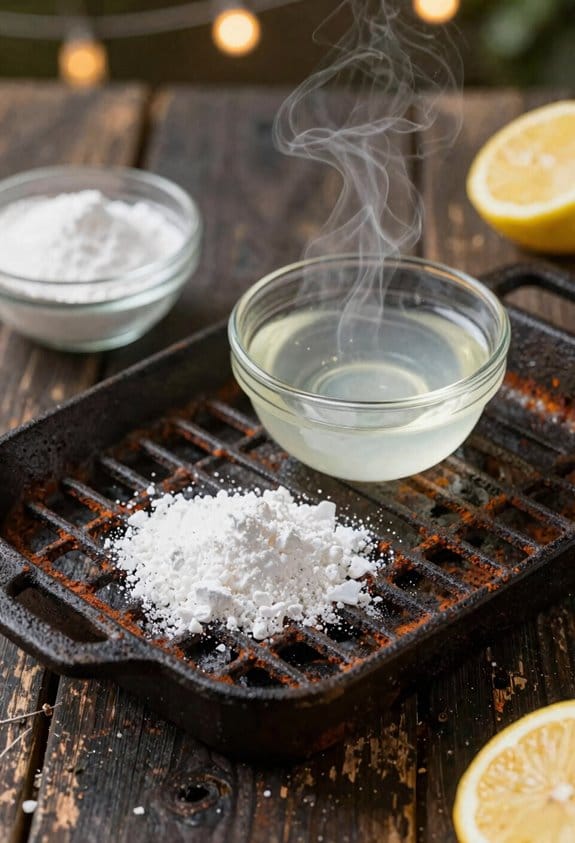
Once you’ve identified your grate type and assessed the rust severity, I’ll help you choose the right chemical removal method for your specific situation. For heavy rust, I recommend a 50/50 vinegar-water solution soaked for 45 to 48 hours, which dissolves stubborn corrosion effectively. Milder rust responds well to a baking soda paste applied for 10 to 15 minutes. When you combine vinegar and baking soda, a fizzing chemical reaction occurs that breaks down rust particles. Alternatively, lemon juice paired with baking soda provides acidic power to release rust from metal surfaces. After choosing your method, pair it with abrasion techniques using wire brushes or aluminum foil to enhance rust removal efficiency. These combined approaches guarantee thorough cleaning before seasoning.
Scrub, Rinse, and Dry Your Grates Thoroughly
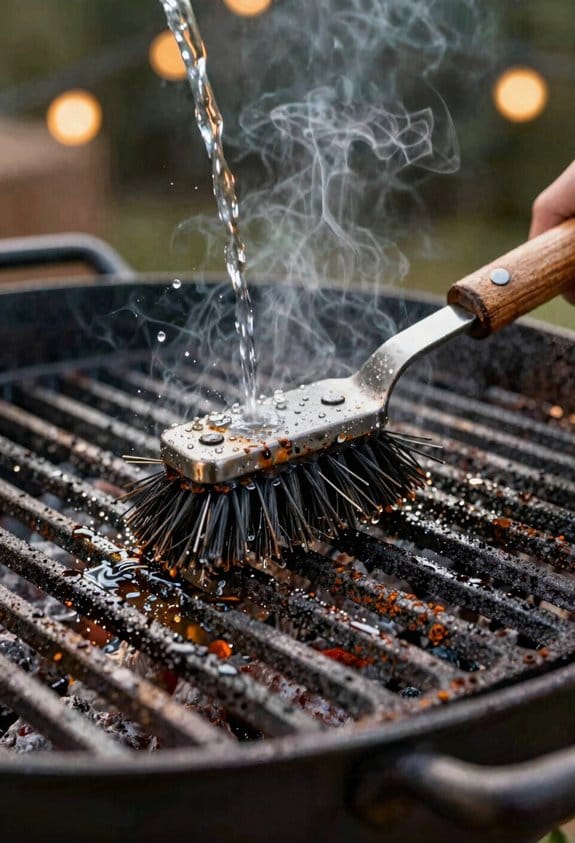
After your chemical rust removers have worked on the corrosion, you’ll need to physically remove the loosened rust and residue from the grate’s surface. I recommend using a wire brush for cast iron grates, which effectively scrubs away particles without causing damage. For other grate types, I’d use a nylon brush or aluminum foil to prevent scratches.
Once you’ve scrubbed thoroughly, I rinse the grates completely under running water to eliminate all chemical residues and rust particles. This step prevents future corrosion from chemical buildup. After rinsing, I dry the grates immediately using a clean towel, ensuring no moisture remains. For best results, I heat the grates briefly on the grill to evaporate any residual water. This surface inspection confirms dryness before seasoning. Store your towel storage supplies nearby for convenient access throughout the cleaning process.
Season Your Grates on High Heat
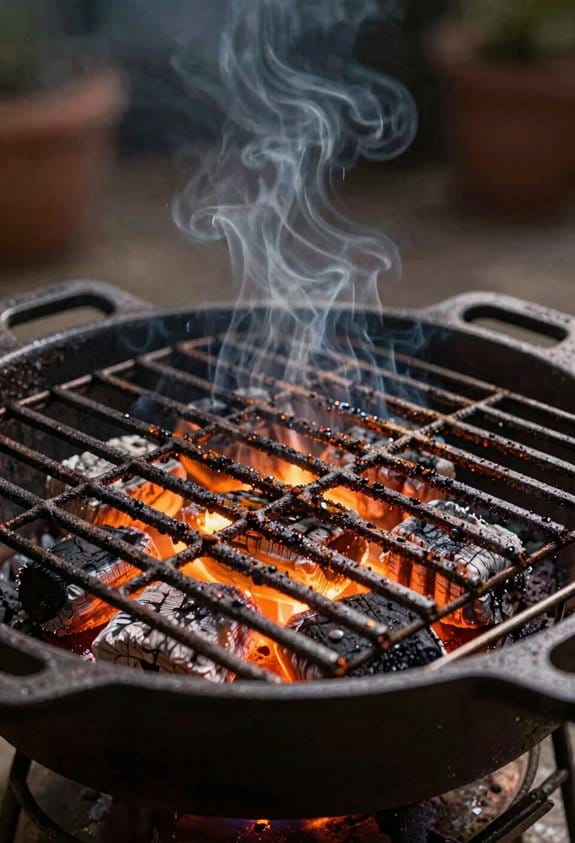
With your grates completely dry and ready for protection, I apply a thin, even layer of vegetable oil, olive oil, or shortening across the entire surface of each grate. This rapid oiling step creates a moisture barrier that prevents rust from returning. Next, I wrap the oiled grates in aluminum foil and place them directly on the grill grates. Setting the temperature to high heat initiates the high temperature seasoning process, which bonds the oil to the metal surface. I close the grill lid and maintain this temperature for approximately ten minutes. The heat drives off any remaining moisture while the oil polymerizes, forming a protective non-stick coating. This seasoning layer becomes markedly more durable than the original finish, providing long-term rust resistance and improved cooking performance.
Prevent Future Rust With Simple Maintenance Habits
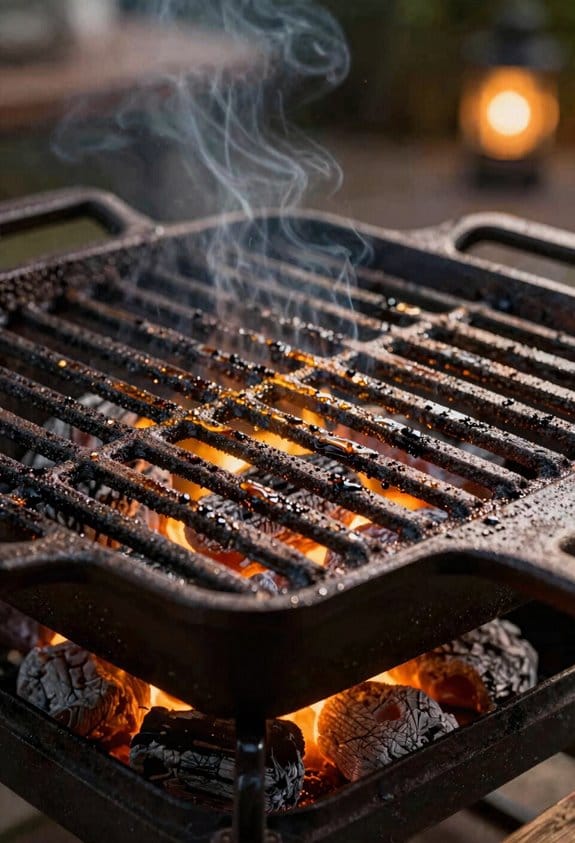
Your newly seasoned grates now have a protective oil coating, but maintaining this defense requires consistent effort on your part. I’d recommend implementing weekly oiling during grilling season, which keeps moisture from penetrating the metal surface. After each use, brush away food particles with a wire brush before they harden and trap moisture underneath. When you’re done for the season, store your grates in indoor storage where they won’t experience temperature fluctuations or humidity exposure. Dry them completely after any cleaning, since water sitting on cast iron invites rust formation. These simple habits—regular brushing, consistent oiling, and proper storage—create an environment where rust struggles to develop, extending your grates’ lifespan markedly.
Frequently Asked Questions
How Long Can I Safely Soak Cast Iron Grates in Vinegar Without Causing Damage?
I’d say you’re walking a tightrope with vinegar timing—safely soak cast iron for 45-48 hours maximum. Beyond that, you’re risking metal safety issues. The acid dissolves rust, but extended exposure can damage the iron itself, so don’t overstay that window.
Which Oil Is Best for Seasoning Cast Iron Grates, and Does It Matter?
I’d recommend neutral oils with high smoke point oils like vegetable or shortening—they’re your best choices. Olive oil works too, though it’s got a lower smoke point. Honestly, it doesn’t matter much; what matters is consistency.
Can I Use a Wire Brush on All Grate Types, or Only Cast Iron?
I’ve learned that wire brushes work only on cast iron—they’ll scratch stainless steel like fingernails on a chalkboard. For safety and bristle-free cleaning on other grates, I use nylon brushes or aluminum foil instead.
What Should I Do if Rust Has Penetrated Completely Through the Grate Surface?
If rust has penetrated completely through your grate, I’d recommend exploring replacement options rather than structural repair. Once corrosion compromises the grate’s integrity, it’s beyond salvaging and unsafe to use.
How Often Should I Season My Grates to Maintain the Protective Coating?
You might think seasoning frequently wastes oil, but I’ll tell you it’s essential. I recommend applying a thin oil layer after each use, performing biweekly maintenance checks, and seasonal deepening treatments to maintain that protective coating.


