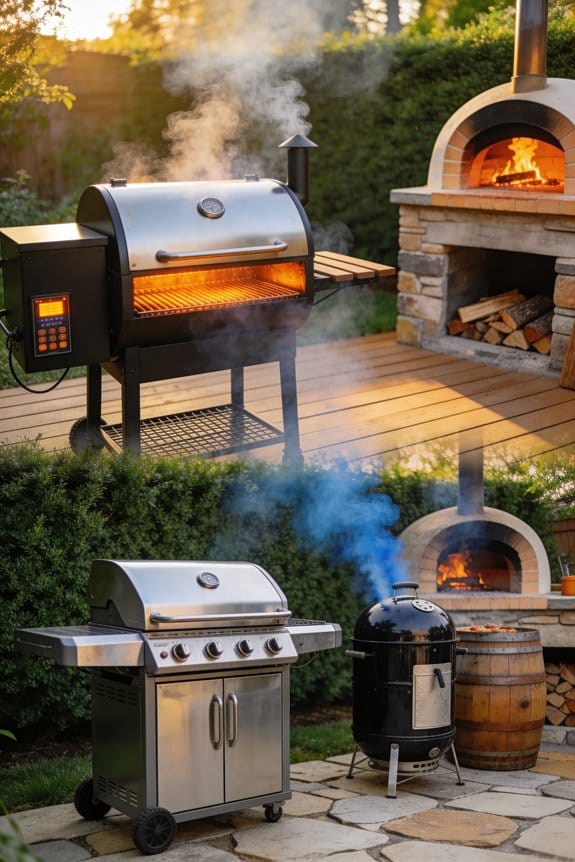


Infrared burners replace open flames with ceramic or metal plates that emit focused radiant heat directly onto your food. Instead of relying on circulating hot air like traditional gas grills, they concentrate combustion energy into intense waves that reach 900–1,000°F, cooking faster and creating better sears. You’ll notice less moisture loss because radiant heat doesn’t dry out surfaces, and flare-ups nearly disappear since drippings don’t contact flames. The technique differs from conventional grilling, but the restaurant-quality results make the learning curve worthwhile.
Key Takeaways
- Infrared burners convert gas flame into radiant heat via ceramic or metal plates, directing concentrated energy directly at food instead of relying on hot air circulation.
- They reach 900–1,000°F surface temperatures—150°F hotter than traditional gas burners—enabling faster, more intense searing and superior crust formation.
- Radiant heat penetrates meat efficiently while reducing moisture loss, resulting in juicier, more tender food compared to conventional grilling methods.
- Infrared plates block drippings from reaching open flames, nearly eliminating flare-ups and improving grilling safety and consistency.
- They preheat in approximately 3 minutes and consume less fuel overall, delivering cost savings and faster meal preparation for frequent users.
How Infrared Heat Differs From Gas Grills
When you’re deciding between an infrared grill and a traditional gas grill, understanding how they heat your food differently is essential to making the right choice. Traditional gas grills rely on heated air circulation, which can dry out food surfaces. Infrared burners work differently—they heat a ceramic or metal plate that emits radiant energy directly to your food. This wavelength penetration reaches deeper into meat compared to convection heating. The concentrated infrared radiation causes more efficient surface absorption, meaning your food cooks faster and more evenly. You’ll notice less moisture loss because radiant heat doesn’t depend on circulating hot air. Additionally, infrared burners reach 900-1,000°F versus 750°F for traditional burners, enabling faster searing with superior results.
Why Infrared Hits 900–1,000°F (vs. 750°F)?

Infrared burners achieve dramatically higher temperatures than traditional gas grills because of how they concentrate and transfer energy to food. The ceramic or metal plates beneath your cooking grate have high material emissivity, meaning they’re exceptionally efficient at absorbing and radiating heat. Unlike traditional burners that rely on combustion dynamics spread across open flames, infrared systems focus all that energy into radiant waves directed straight at your food. This concentrated approach eliminates energy loss from air circulation, allowing temperatures to climb to 900–1,000°F instead of the typical 750°F maximum. The result is more intense, focused heat that reaches your food faster and more efficiently than conventional gas grilling methods.
Why Infrared Grilling Locks in Moisture

The intense heat we just explored doesn’t just cook your food faster—it also keeps your meat juicier than traditional grilling methods. Infrared radiation works differently than convection cooking because it doesn’t rely on constant air circulation that dries out surface moisture. When radiant energy penetrates your meat, it cooks more efficiently, which means less time for moisture to escape. The concentrated heat reduces surface moisture loss while maintaining proper protein denaturation kinetics—the process where heat transforms protein structure. Since infrared burners deliver direct energy waves rather than heated air, your steaks and chicken retain their natural juices better. You’ll notice you need to flip less frequently, and your finished food stays tender and succulent compared to conventional gas grilling methods.
Temperature Control Strategies for Infrared

While infrared burners deliver intense, concentrated heat, managing that heat requires a different approach than traditional gas grills. I’ve found that dialing zones helps tremendously—using your infrared burner for high-temperature searing while reserving conventional burners for gentler cooking. Since infrared reaches 900-1,000°F quickly, you’ll need to monitor food carefully to avoid overcooking. Probe placement matters considerably; inserting a meat thermometer away from direct infrared radiation gives accurate internal temperature readings without skewing results. I recommend starting meats over infrared for initial searing, then moving them to cooler zones for finishing. This strategy prevents charring while preserving those desirable sear marks. Practice helps you develop timing instincts specific to infrared’s faster cooking speeds.
First-Time Infrared Mistakes to Avoid

Most beginners make preventable mistakes when they first use infrared burners, and understanding these common errors will help you cook more successfully. One major placement mistake involves positioning food too close to the infrared surface, which causes excessive charring before the interior cooks through. You’ll want to maintain proper distance, typically 4-6 inches, to achieve even cooking. Another common error occurs when you skip starter recipes and attempt complex dishes immediately. Begin with simple proteins like chicken breasts or steaks to develop your heat management skills. Additionally, many newcomers fail to account for the intense, concentrated heat by using standard cooking times from conventional grills. Adjust your expectations downward markedly, and monitor your food closely during your initial attempts with infrared technology.
Do Infrared Burners Actually Save Money on Gas?
If you’re considering upgrading to a grill with infrared burners, you’ve probably wondered whether the technology actually saves you money on gas over time. The answer is yes, though the savings depend on how often you grill. Infrared burners consume less fuel because they reach high temperatures faster and cook more efficiently than traditional burners. You’ll spend less time preheating—about 3 minutes instead of 15-20 minutes—which reduces overall gas consumption. Additionally, concentrated radiant energy means faster cooking times, so your grill runs for shorter periods. While infrared burners add upfront costs, the fuel savings accumulate gradually through reduced gas usage and quicker cooking efficiency, making them a worthwhile investment for frequent grillers.
Infrared Burners as Searing Stations: Real-World Setup
Imagine you’re grilling a thick steak and you want that perfect golden crust on the outside while keeping the inside juicy and medium-rare—that’s exactly where infrared burners excel as searing stations in hybrid grill designs. Most grills feature one or two infrared burners positioned alongside traditional gas burners, creating dedicated searing zones. You’ll sear your meat quickly at 900-1,000°F, then transfer it to conventional burners for gentle finishing cooking. This setup offers outdoor portability since you’re not committing your entire grill to intense heat. For maintenance tips, clean infrared grates after each use and inspect ceramic plates for cracks. Regular upkeep guarantees consistent performance and extends your grill’s lifespan markedly.
Why Flare-Ups Nearly Disappear With Infrared Heat
Through radiant heat technology rather than open flames, infrared burners eliminate the primary cause of dangerous flare-ups on traditional gas grills. When you use an infrared burner, a ceramic or metal plate sits between the flames and your food, so dripping juices can’t ignite directly on exposed burner ports. This burner insulation creates a barrier that prevents the sudden temperature spikes triggering traditional flare-ups.
I’ve noticed that reduced smoke accompanies this setup since flames never contact falling fat or marinade. The radiant glass panel systems from some manufacturers virtually eliminate flare-ups entirely, while ceramic infrared options produce minimal flame contact. This controlled heat delivery means you’ll experience safer, more predictable cooking compared to open-flame grills where unpredictable combustion events commonly occur.
Should Your Next Grill Have an Infrared Burner?
Would an infrared burner actually improve your grilling experience, or is it simply a premium feature that doesn’t deliver meaningful results? If you regularly sear steaks or burgers, an infrared burner provides genuine advantages through faster cooking and superior moisture retention. However, consider your specific needs before investing. For casual grilling, traditional burners work fine. Regarding grill portability, infrared systems add weight and complexity, making transport slightly more challenging. Maintenance tips include cleaning the ceramic or metal plate regularly to prevent buildup that reduces efficiency. Inspect perforations for debris blockage. If searing quality matters to you and you don’t prioritize portability, an infrared burner justifies the cost through noticeably improved results.
Frequently Asked Questions
Can Infrared Burners Be Added to an Existing Traditional Gas Grill?
Yes, you can add infrared burners to your existing grill using retrofit kits, though I’d recommend professional installation to guarantee proper integration with your current gas system and safe operation.
How Long Do Ceramic or Stainless Steel Infrared Plates Typically Last Before Replacement?
I’ll tell you that ceramic and stainless steel infrared plates typically last 3-5 years with regular use. Their replacement frequency depends on maintenance—proper cleaning extends lifespan, while neglect accelerates degradation markedly.
Are Infrared Burners Safe for Cooking Delicate Foods Like Fish or Vegetables?
I’d say infrared burners work well for delicate foods when you use lower heat settings. You’ll get gentle searing without excessive drying, and steam infusion helps preserve moisture in fish and vegetables beautifully.
What Maintenance Is Required to Keep Infrared Burner Plates Clean and Functioning Properly?
I’ll admit—you’ve got to actually touch your grill. Regular wiping after cooking keeps those ceramic plates pristine, while I’d recommend annual deep cleaning to prevent buildup that’ll tank your infrared’s performance.
Do Infrared Burners Work Effectively in Cold Weather or at High Altitudes?
I’ll tell you that infrared burners maintain strong cold performance since radiant heat doesn’t depend on air circulation. However, altitude effects can reduce their efficiency because thinner air decreases fuel combustion intensity.