
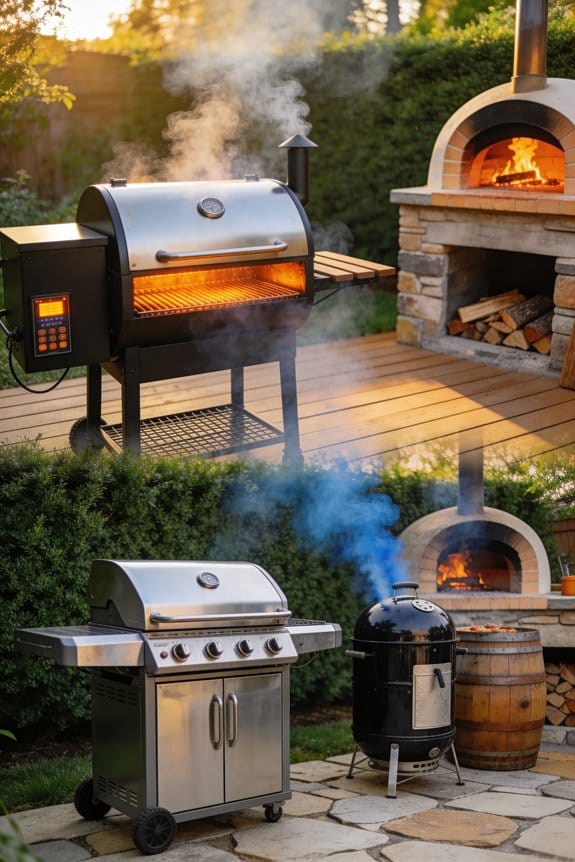

I find that a standard 20-pound propane tank typically lasts 18–20 hours on a medium-sized grill, which means you can usually cook several meals before needing a refill. However, larger grills with multiple burners drain tanks much faster—sometimes in just 10 hours—because they consume more fuel. Your actual duration depends on how many burners you’re using, your heat settings, and whether you’re grilling in cold weather, which reduces propane pressure and extends cooking times. Understanding these factors helps you plan better for your cookouts.
Key Takeaways
- A standard 20 lb propane tank lasts 18–20 hours on a medium grill, enabling multiple cookouts before refilling.
- Medium-heat grilling consumes approximately 2 pounds of propane per meal, allowing several meals per tank.
- Larger grills with multiple burners deplete a 20 lb tank in roughly 10 hours due to higher BTU output.
- Running all burners simultaneously at maximum heat significantly accelerates tank depletion compared to single-burner cooking.
- Keep backup tanks on hand and refill when the gauge drops below one-quarter full to avoid mid-cookout shortages.
How Long Does a 20 Lb Propane Tank Last on a Medium Grill?
When you’re planning a backyard cookout on a medium-sized grill, you’ll want to know that a standard 20 lb propane tank typically lasts between 18 to 20 hours of grilling at high heat. Your medium grill consumes approximately 2 pounds of propane per meal, meaning you can prepare multiple cookouts before needing a refill. This duration equals roughly 430,000 BTU of total energy output.
For effective mealtime planning, consider that your actual burn time depends on burner settings and grill maintenance. Keeping your grill clean and burners properly adjusted secures efficient fuel consumption. You’ll support several gatherings without frequent refills, though experienced grillers recommend keeping a backup tank available for extended sessions or unexpected entertaining needs.
Why Your Larger Grill Drains a Propane Tank Faster
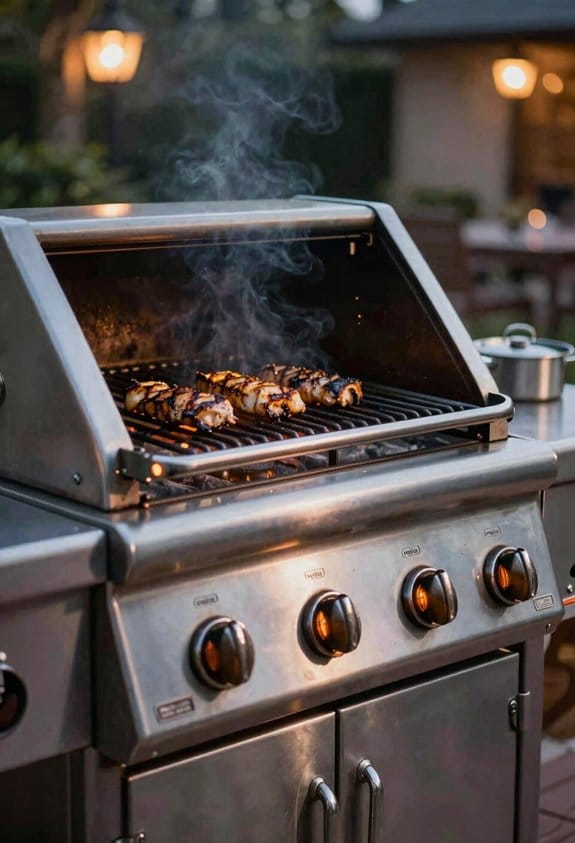
Larger grills consume propane at considerably faster rates than medium-sized models, which means your 20 lb tank will last only about 10 hours instead of 18 to 20 hours. This happens because bigger grills typically feature more burners and higher BTU output, requiring greater fuel consumption to operate effectively.
When you have multiple burners running simultaneously, your propane tank empties faster than with a medium grill’s single or dual burners. Additionally, larger grills often experience venturi imbalance issues, where fuel distribution becomes uneven across burners, sometimes causing inefficient burning and wasted propane.
Consider upgrading to a 30 lb tank if you frequently use a large grill. This larger tank provides steadier performance and extends your cooking time markedly, reducing how often you’ll need refills during extended cookouts or gatherings.
How Burners and Heat Settings Impact Tank Consumption
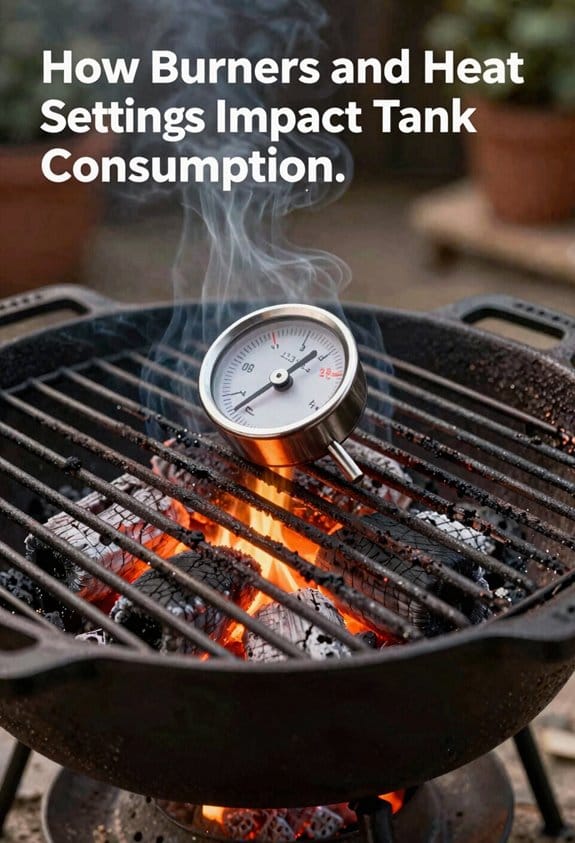
The number of burners you use and the heat level you select directly control how quickly your propane tank empties, making these two factors the most influential variables in determining your tank’s duration. When you activate all burners simultaneously at maximum output, your consumption rate increases dramatically compared to using just one or two burners. Most modern grills feature variable valves that let you adjust flame intensity precisely. Using simmer settings rather than high heat extends your tank’s lifespan considerably. For example, cooking at medium heat consumes roughly two pounds of propane per meal, while high-heat cooking depletes your supply much faster. Understanding these controls helps you plan cookouts strategically and avoid unexpected refills.
How Cold Weather Affects Your Propane Tank Duration
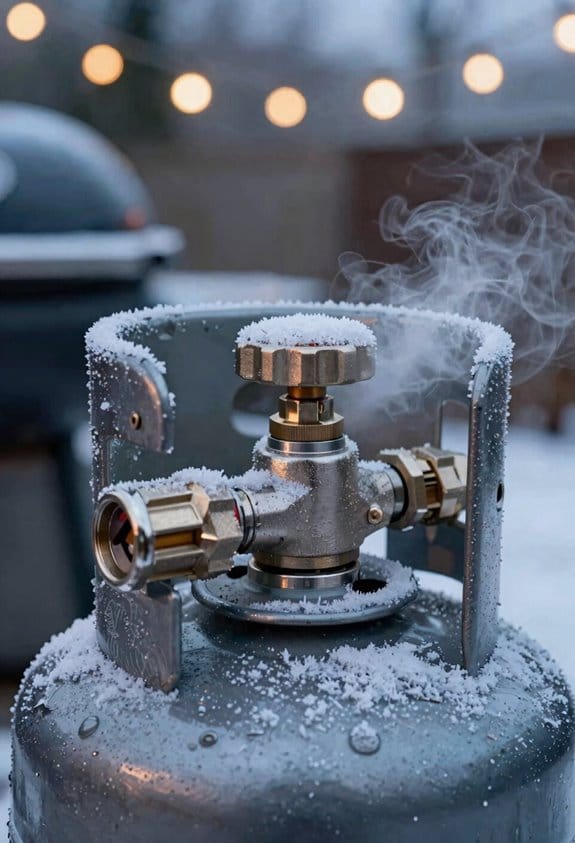
As temperatures drop below freezing, propane behaves differently than it does during warm summer cookouts, and this change directly affects how long your tank lasts. When it’s cold outside, propane experiences a pressure drop inside your tank because the gas becomes denser. This pressure drop means your grill’s burners receive less fuel, requiring you to keep them on longer to reach the same heat output. Additionally, cold weather can cause a cold shutdown, where your regulator freezes and stops fuel flow entirely. For reliable winter grilling, consider upgrading to a larger tank like a 30 lb model, which maintains steadier performance in freezing temperatures. Keeping your tank in a slightly warmer location also helps maintain consistent propane pressure during cold-weather cookouts.
Should You Upgrade to a Larger Tank?
After learning how cold weather reduces your propane tank’s efficiency, you might wonder if upgrading to a larger tank makes sense for your situation. A bigger investment upfront—like a 30 lb or 40 lb tank—provides extended cooking time, especially for larger grills. However, consider storage considerations since these tanks require more space and weigh considerably more. If you frequently host gatherings or own a high-output griddle, a larger tank offers future flexibility without constant refills. Evaluate your refill logistics too: can you transport heavier tanks, or would you prefer mounting a permanent setup? For occasional backyard cookouts, a standard 20 lb tank remains practical. Assess your actual usage patterns before deciding whether the upgrade justifies the expense and space requirements.
When to Refill Before You Run Empty
Running out of propane mid-cookout is frustrating, so planning ahead guarantees this inconvenience from disrupting your gathering. I recommend checking your tank’s visual gauge regularly, especially before hosting guests. Most 20 lb tanks include a dial indicator that shows remaining propane levels, allowing you to monitor consumption patterns. When the gauge drops below one-quarter full, I suggest refilling soon rather than waiting. Some modern tanks feature a low pressure alarm that alerts you when fuel runs dangerously low. By refilling at this point, you’ll avoid sudden shutdowns during cooking. I’ve found that exchanging tanks at gas stations takes only minutes, making it convenient to maintain backup supplies. Planning refills around your typical usage guarantees uninterrupted grilling throughout the season.
Choosing Tank Size Based on Your Grill Type and Frequency
Selecting the right propane tank depends on understanding your specific grilling needs, which involve considering both your grill’s size and how often you cook. If you grill occasionally on a medium-sized grill, a standard 20 lb tank works well, lasting 18-20 hours at high heat. However, if you own a larger grill with multiple burners, you’ll want a 30 lb or 40 lb tank for extended cooking sessions. Consider tank placement near your grill for convenient refilling and proper usage etiquette by keeping tanks upright and away from direct sunlight. Frequent entertainers should invest in backup tanks, ensuring you’re never caught without fuel during gatherings. Matching your tank size to your cooking frequency prevents unnecessary refills and maintains consistent performance throughout your cookout season.
Frequently Asked Questions
Where Can I Exchange or Refill My 20 Lb Propane Tank Conveniently?
I’d recommend visiting gas stations or stores for quick exchanges of your 20 lb propane tank. Many locations offer convenient refill services, and some companies now provide mobile refills, bringing propane directly to your home for added convenience.
Are Propane Tanks Compatible With Patio Heaters, Fire Pits, and Other Appliances?
I’ll tell you straight: propane tanks aren’t one-size-fits-all solutions, yet they’re remarkably versatile. Your 20 lb tank connects to patio heaters, fire pits, and fryers through standard fittings. However, you’ll need propane compatibility adapters for appliances requiring different connection types, ensuring safe operation across devices.
What Are the Dimensions and Weight Specifications of Standard Propane Tanks?
I’ll give you the tank dimensions and weight specs you’re looking for. Standard 20 lb propane tanks measure 1’6″ in height with a 1′ diameter, weighing 37 pounds when full. They’re perfectly sized for most grill storage compartments.
How Much Does Precision Filling Cost for Different Propane Tank Sizes?
Ever wondered why precision filling costs vary? I’ll tell you: 20 lb tanks run $34, while 30 lb tanks cost $50. I’ve found flat rate pricing keeps things simple, and seasonal discounts can reduce your expenses further.
Can I Use Alternative Tank Sizes Like 30 Lb or 40 Lb Tanks?
Yes, you can definitely use alternative tank options like 30 lb or 40 lb tanks. I’d recommend them for larger grills since they offer greater fuel capacity—30 lb holds 7 gallons, while 40 lb holds 9.4 gallons, both compatible with standard grill fittings.


