
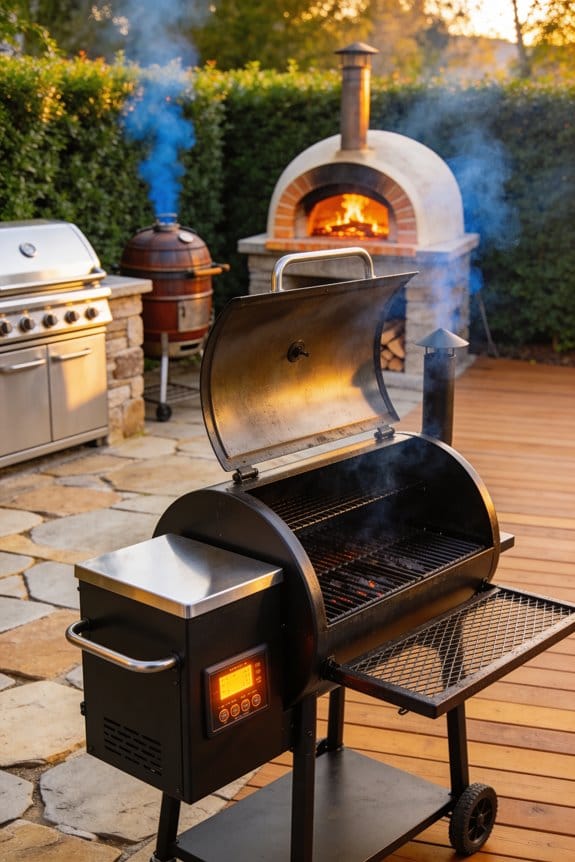

I’d recommend the Weber Spirit II E-325 if you’re prioritizing affordability and simplicity, or the Traeger Tailgater 20 if you want automated temperature control. Gas grills like Weber offer quick ignition and even heating at lower fuel costs, while pellet grills deliver wood-fired flavor with less monitoring required. Both models fit comfortably in the $400–$600 sweet spot where quality meets value. Your choice depends on whether you prefer hands-on grilling or set-it-and-forget-it convenience, and exploring each option’s specific features will clarify which aligns best with your cooking style.
Key Takeaways
- Gas grills like Weber Spirit II E-325 ($549) offer reliable heat, quick ignition, and lower fuel costs for beginners.
- The $400–$600 budget range balances affordability with quality features including electronic ignition and mobility wheels.
- Pellet grills automate temperature control, reducing monitoring needs but requiring higher fuel investment than gas models.
- Essential beginner features include 30,000–39,000 BTU, three-burner configuration, electronic ignition, and wheels for portability.
- Weber’s corrosion-resistant construction and comprehensive warranties ensure durability and manufacturer confidence in long-term performance.
Gas or Pellet Grills for Beginners: Which Type Is Right for You?
When you’re starting out with grilling, you’ll quickly discover that two main types dominate the market: gas grills and pellet grills, each offering distinct advantages for newcomers. Gas grills provide even heating and quick ignition, making them ideal if you want immediate results. They typically cost less in fuel costs compared to pellet models, though initial purchase prices vary widely. Pellet grills automate temperature control, reducing your monitoring needs considerably. They deliver wood-fired flavor profiles without constant adjustments, appealing to first-timers seeking convenience. Consider the Traeger Tailgater 20 at $499.95 for low-maintenance pellet grilling, or the Weber Spirit II E-325 at $549 for reliable gas performance. Your choice depends on whether you prioritize affordability and simplicity or automated consistency and distinctive flavor.
Why Budget Matters: Finding Your $400–$600 Sweet Spot

Because you’re investing your own money, I want you to understand that the $400–$600 price range offers the best value for first-time grill buyers, as it strikes a balance between affordability and quality performance. At this price point, you’ll find reliable models like the Weber Spirit II E-325, which delivers 30,000 BTU output without excessive maintenance costs that drain your budget over time.
This sweet spot allows you to choose between fuel choices—propane or natural gas compatibility—giving you flexibility based on your situation. Entry-level models here achieve even heating and quick ignition comparable to premium grills costing twice as much. You’re getting essential features like wheels for mobility and electronic ignition systems, which simplify startup for inexperienced users without paying for unnecessary extras.
Reliability and Durability: Why Weber Dominates for New Grill Owners
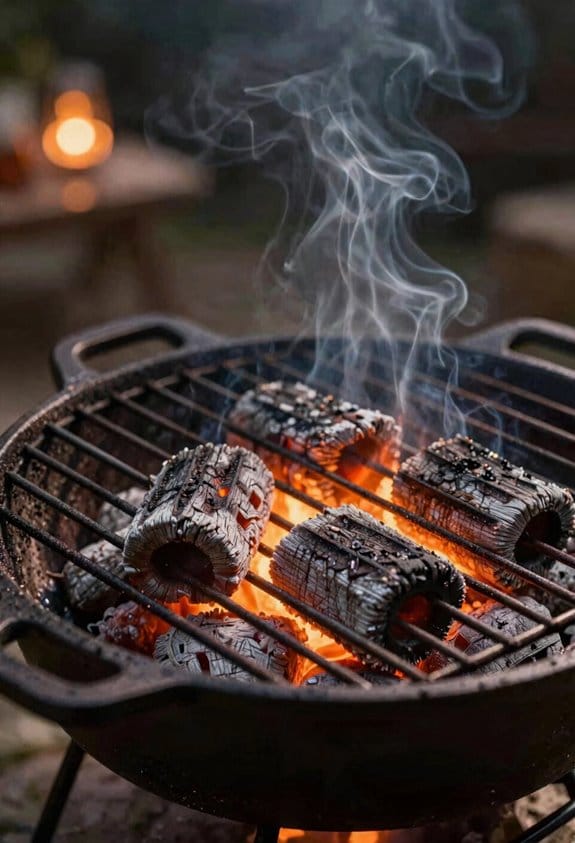
Once you’ve settled on a budget-friendly model in the $400–$600 range, your next consideration should be whether that grill will last beyond your first grilling season. Weber’s brand heritage spans decades of grill manufacturing, which translates into reliable performance for beginners. The Spirit II E-325, priced at $549, exemplifies this durability through quality construction and consistent heat distribution. Weber models incorporate corrosion resistance features that protect against rust and weather damage, extending your grill’s lifespan markedly. Expert tests confirm that Weber maintains performance consistency across multiple seasons, meaning your investment remains dependable. Their all-encompassing warranties further demonstrate confidence in longevity. When you choose a Weber grill, you’re selecting proven engineering rather than gambling on an unknown brand, making it an intelligent choice for first-time buyers prioritizing reliability.
Genesis E-435 vs. Spirit II E-325: Which Weber Fits Your Needs?
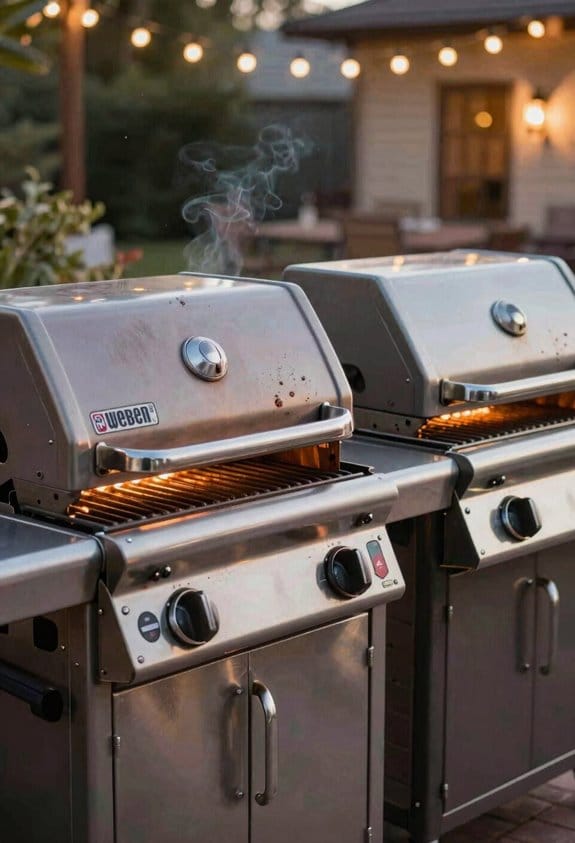
Now that you understand why Weber grills earn their reputation for reliability, you’ll want to decide between the two most popular Weber models for beginners: the Genesis E-435 and the Spirit II E-325.
The Genesis E-435 costs $1,599 and delivers 39,000 BTU with ample cooking space and storage options for accessories. It’s ideal if you’re serious about grilling and have room on your patio.
The Spirit II E-325, priced at $549, offers 30,000 BTU in a compact three-burner design. This model works perfectly for smaller spaces and includes wheels for easy movement.
Both models feature electronic ignition for simple startup. Assembly tips from Weber include laying out all parts beforehand and following their numbered steps carefully. Choose the Genesis for serious cooking; select the Spirit II if budget and space matter most.
Pellet Grills for Hands-Off Cooking: The Traeger Tailgater 20 Explained
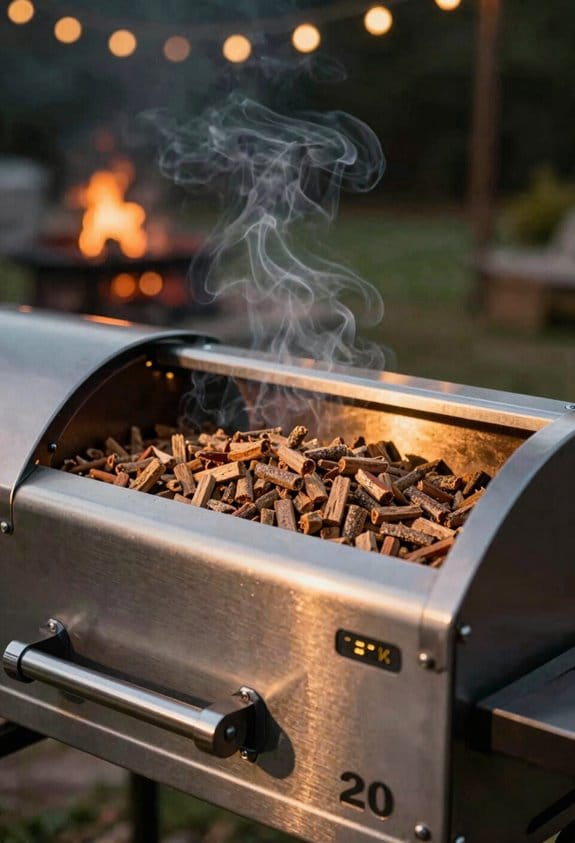
If you’ve decided that gas grills require too much attention during cooking, pellet grills might be your answer. The Traeger Tailgater 20, priced at $499.95, automates temperature control so you’re not constantly adjusting heat levels. This pellet grill delivers wood-fired flavor while minimizing monitoring needs, making it ideal for beginners who want consistent results without fuss.
Its compact design fits small patios, and portable smoking capabilities let you move it easily between spaces. The main consideration involves pellet maintenance—you’ll need to refill the hopper periodically and clean the grates. However, this minimal upkeep remains far simpler than managing multiple burners. Consumer Reports confirms pellet grills’ versatility across varied cooking styles, from low-and-slow smoking to higher-heat grilling, offering first-timers reliable performance with reduced complexity.
Skip the Hype: The 4 Features That Actually Matter to Beginners
While pellet grills handle temperature automatically, you’ll still want to understand what separates a grill that works well for beginners from one that leaves you frustrated. Four features truly matter when you’re starting out. First, reliable heat maintenance guarantees your food cooks evenly without constant monitoring. Second, electronic ignition systems eliminate the hassle of manual lighting. Third, wheels provide mobility so you can reposition your grill easily. Fourth, a 3-burner configuration with 30,000-39,000 BTU delivers quick, consistent heating. These elements matter more than fancy extras like side burners or top racks. When you prioritize heat maintenance and flavor control through solid construction, you’ll find cooking becomes simpler and more enjoyable, regardless of your grill’s price point.
Grill Warranties Decoded: What Protection Do You Really Need?
Because you’ve narrowed down your grill choices based on the four essential features that matter, you’re now ready to examine one final piece of the buying puzzle: warranty protection. Most gas grills come with basic warranties covering defects, typically lasting one to three years. However, you’ll want to understand what’s actually covered—burners and grates usually qualify, while normal wear doesn’t. Consider extended coverage options that manufacturers offer, which can protect your investment beyond the standard period. Check transferability limits carefully; some warranties apply only to the original owner, which matters if you ever sell your grill. Reading BBQGuys’ warranty comparisons helps you identify which brands provide genuine protection versus marketing claims, ensuring your beginner grill investment stays protected.
Ready to Buy? Your Beginner Grill Decision Path
You’ve gathered the information you need, compared warranties, and identified which features matter most for your cooking style, so it’s time to move forward with confidence in your purchase decision. Before finalizing your choice, consider your long-term commitment to maintenance routines, which directly impact grill longevity and performance. Gas grills typically require regular cleaning of grates and burners, while pellet models need periodic auger maintenance. Additionally, plan for seasonal storage by selecting a grill with protective covers or considering a covered outdoor space. Budget-friendly options like the Weber Spirit II E-325 deliver reliable performance without excessive upkeep demands. The Traeger Tailgater 20 suits those preferring automated temperature control with minimal intervention. Evaluate which maintenance level aligns with your lifestyle before purchasing.
Frequently Asked Questions
How Do I Properly Clean and Maintain My New Grill After Purchase?
Think of your grill like a car engine—it needs regular tune-ups. I’d recommend monthly grill detailing and burner inspection to guarantee peak performance. Clean grates weekly, check burners for clogs, and you’ll enjoy years of reliable cooking.
What Safety Precautions Should I Take Before Using a Grill for the First Time?
I’d inspect all regulators and connections for leaks before firing up. You’ll want to maintain proper clearance distances—at least ten feet from structures—and make certain I’m using it on level ground away from flammables.
Can I Convert My Grill From Propane to Natural Gas or Vice Versa?
I’ll level with you—converting between propane and natural gas isn’t as simple as flipping a switch. You’ll need regulator compatibility checks and potentially professional gas conversion kits. I’d recommend contacting your grill’s manufacturer first.
How Long Does a Typical Grill Last With Proper Maintenance and Care?
I’d say you’re looking at 15-20 years with proper maintenance, though lifespan estimates vary. Key component replacement like burners and grates extends durability markedly, keeping your grill performing reliably for decades.
What’s the Best Way to Season a New Grill Before Cooking Food?
I’d heat your grill on high for 15 minutes, then apply a thin oil layer to the grates. Let it smoke cure for another 10 minutes. This protects the surface and prevents rust before your first cook.

