


I’ve found that stainless steel, granite, quartzite, and powder-coated aluminum perform best in year-round outdoor kitchens. Stainless steel resists corrosion through a protective oxide layer, while granite and quartzite withstand heat and UV rays without warping. Marine-grade polymers work well in humid climates, resisting mold and fading. Each material requires specific maintenance—stainless steel needs regular cleaning, granite needs resealing every one to three years, and powder-coated aluminum requires seasonal upkeep. Understanding how thermal expansion, moisture penetration, and UV radiation damage materials helps you choose the right combination for your climate.
Key Takeaways
- Natural stone (granite/quartzite) offers exceptional durability against UV rays, heat, and weathering with minimal long-term degradation risks.
- Stainless steel 304/316 resists corrosion year-round but requires regular cleaning to prevent salt spray and debris accumulation damage.
- Powder-coated aluminum combines affordability with rust resistance; seasonal cleaning prevents dents and maintains protective finish through temperature cycles.
- Marine-grade HDPE polymer resists mold and UV fading in humid climates but offers limited heat tolerance compared to alternatives.
- Concrete countertops withstand year-round use cost-effectively but demand resealing before harsh weather and fall inspections to prevent freeze-thaw failure.
Stainless Steel for Outdoor Kitchens: Rust-Proof and Ready
When you’re planning an outdoor kitchen that’ll withstand years of rain, snow, and intense sun, stainless steel stands out as one of the most reliable material choices available. I’ve found that 304 and 316 grades resist corrosion mechanisms—the chemical processes that cause rust—remarkably well in open-air environments. These alloys create a protective oxide layer that prevents moisture from penetrating the surface. You’ll invest $60–$100 per square foot for cabinets, appliances, grills, and sinks. While stainless steel requires occasional finish restoration through polishing to maintain its shine, this maintenance is minimal compared to other materials. The durability justifies the cost, especially since it withstands extreme temperatures, rain, wind, and heat without significant degradation over decades.
Marine-Grade HDPE: The Best Choice for Humid Climates
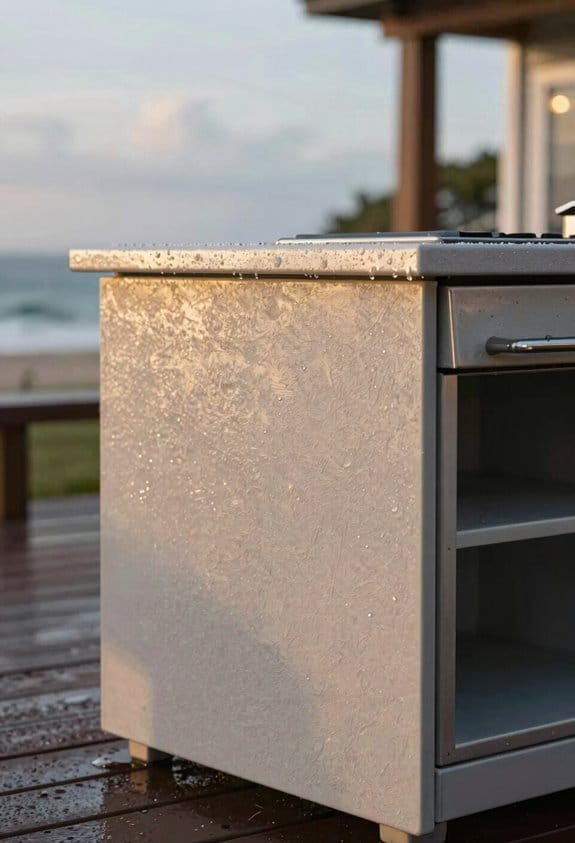
Because moisture and humidity can damage many outdoor kitchen materials over time, marine-grade polymer HDPE (high-density polyethylene) offers a practical alternative that I’ve found particularly effective in wet climates. This material resists mold, mildew, and fungus growth, which thrive in damp environments where traditional materials fail. HDPE features UV stabilization technology that prevents color fading and material degradation from sun exposure. Made from recycled sourcing, it’s both environmentally responsible and low-maintenance. You won’t need to seal or polish it regularly like stone or wood. However, HDPE has limitations: it’s less heat-tolerant than metal or stone, and color options are limited. At $200–$600 per linear foot, it’s pricier than some alternatives, but its durability in humid conditions justifies the investment for coastal or tropical kitchen installations.
Granite and Quartzite: Natural Stone That Weathers Anything

Natural stone countertops like granite and quartzite stand up remarkably well to outdoor conditions, making them excellent choices for year-round kitchen installations. Both materials offer exceptional durability, resisting heat, UV rays, and weathering that would damage lesser surfaces.
Granite sealing is essential for maintaining your investment. You’ll need to reseal granite every one to three years, depending on usage and climate, to prevent stains and water damage. Quartzite, being denser, requires less frequent sealing while still benefiting from occasional protection.
The distinctive quartzite veining creates beautiful, unique patterns that add visual interest to your outdoor kitchen. Costs range from $15 to $140 per square foot, making these materials accessible for various budgets. Though they demand regular maintenance, granite and quartzite provide long-lasting functionality and aesthetic appeal for permanent outdoor kitchens.
Powder-Coated Aluminum: Lightweight and Low-Maintenance

If you’re looking for a material that doesn’t demand constant attention, powder-coated aluminum offers a practical alternative to natural stone and stainless steel. The powder coating creates a protective layer that resists rust and maintains color durability even when exposed to harsh weather conditions. This lightweight metal expands and contracts slightly with temperature changes, a process called thermal expansion, but the coating prevents corrosion during these shifts. You’ll appreciate the customizable colors and textures available, which complement modern outdoor kitchen designs. Installation is straightforward because aluminum’s low weight reduces labor costs. While heavy impacts can cause dents, the finish itself remains stable and protected. For homeowners seeking durability without extensive maintenance requirements, powder-coated aluminum delivers reliable performance year-round.
Weather-Resistant Woods: Beauty and Built-in Durability

While powder-coated aluminum prioritizes low maintenance, weather-resistant woods like teak, cedar, and ipe bring warmth and natural beauty to your outdoor kitchen while holding up remarkably well against the elements. These premium hardwoods resist rot naturally, though they require regular sealing and oiling to maintain their appearance and protect grain preservation—the wood’s internal structure that gives it character and strength.
I’ve found that sustainable sourcing matters when selecting wood, as responsibly harvested materials support forest ecosystems. Costs range from $8–$40 per board foot, making wood an economical choice for cabinets and pergola supports. While these woods need more maintenance than aluminum or stainless steel, their durability justifies the effort. Regular oiling prevents fading and cracking, extending their lifespan substantially. Eco-friendly composite alternatives also resist moisture and insects, offering a lower-maintenance option without sacrificing the natural aesthetic.
Concrete Countertops: Affordable and Customizable
Concrete offers a practical middle ground between premium natural stone and budget-friendly materials, making it an excellent choice for outdoor kitchen countertops. I find that concrete’s versatility allows you to customize colors, textures, and finishes to match your design preferences. When properly sealed, concrete resists cracking and wear from harsh weather conditions. You’ll want to use integral reinforcement during installation, which strengthens the concrete and prevents structural failure over time. For stain prevention, apply quality sealers regularly to protect against water absorption and discoloration. While concrete scratches more easily than granite, it’s markedly more affordable per square foot. Its durability outdoors makes it suitable for both functional workspace and decorative elements in year-round kitchens.
Why Materials Fail Outdoors (and How to Stop It)
Because outdoor kitchens face constant exposure to moisture, temperature swings, and UV rays, materials degrade faster than they would indoors, and understanding the failure mechanisms helps you choose solutions that last. Thermal expansion occurs when materials expand in heat and contract in cold, creating stress that cracks surfaces over time. Galvanic corrosion happens when two different metals contact each other in moisture, causing one to rust while protecting the other. Moisture penetrates porous materials like concrete and wood, freezing and thawing to break them apart. UV radiation fades colors and weakens polymers. Choosing materials resistant to these specific threats—sealed concrete, stainless steel fasteners, and non-porous granite—prevents expensive repairs and guarantees your kitchen remains functional and attractive year after year.
Pairing Materials for Maximum Protection and Aesthetics
Since no single material can handle every outdoor challenge perfectly, the smartest approach is combining complementary materials that address each other’s weaknesses while creating a cohesive design. Pairing stainless steel appliances with powder-coated aluminum cabinets provides durability while maintaining a modern aesthetic. Adding granite or concrete countertops creates heat resistance where you need it most. I recommend considering color contrast between your primary and secondary materials to achieve visual interest without sacrificing function. Account for thermal expansion when installing different materials together, as wood, metal, and stone expand at different rates with temperature changes. This variation can cause gaps or misalignment if not properly planned. Strategic material pairing protects your investment while delivering a unified outdoor kitchen that performs well year-round.
Maintenance by Season: Keep Your Kitchen Performing
Once you’ve selected and paired your materials for peak performance, keeping them in good condition throughout the year requires a maintenance plan that adapts to seasonal changes. Spring and summer demand regular seasonal cleaning to remove pollen, debris, and salt spray that accumulate on stainless steel and powder-coated surfaces. Fall requires you to clear leaves from drain areas and inspect seals on granite or concrete. Winter is critical—you’ll need winterizing fittings on water lines and protective covers for vulnerable components. Wood requires oiling before cold months, while polymer materials need inspection for UV damage. Concrete and stone benefit from resealing before harsh weather. By adjusting your maintenance approach seasonally, you’ll extend your kitchen’s lifespan and preserve its functionality year-round.
Material Costs at a Glance: Budget Tiers and Hidden Expenses
When you’re planning an outdoor kitchen, understanding the true cost of materials goes well beyond the price tag you’ll see advertised, as installation expenses, maintenance, and replacement costs can add up substantially over time. Stainless steel ranges from $60–$100 per square foot, while marine-grade polymer runs $200–$600 per linear foot. Natural stone granite costs $15–$140 per square foot but requires resealing every 1–3 years. Powder-coated aluminum offers affordability with minimal maintenance, though it dents easily. Concrete provides budget-friendly durability but needs sealing. When evaluating warranty considerations, factor in long-term upkeep expenses alongside initial purchase prices. Budget-conscious builders should compare total five-year costs, including installation and maintenance, rather than relying solely on upfront material pricing.
Frequently Asked Questions
Can I Mix Different Outdoor Kitchen Materials Without Compatibility Issues or Aesthetic Clashing?
You can absolutely mix materials—I’ve seen stainless steel paired beautifully with teak. Just prioritize color coordination and account for thermal expansion differences to prevent gaps or warping between components.
What’s the Typical Lifespan of Each Material Before Replacement Becomes Necessary?
I’ve found weathering rates vary markedly by material. Stainless steel lasts 15-20 years with regular polishing. Granite needs resealing every 1-3 years but lasts decades. Powder-coated aluminum survives 10-15 years before touch-ups. Wood requires maintenance intervals of 2-3 years for longevity.
Do Outdoor Kitchen Materials Require Different Installation Methods Than Indoor Counterparts?
Yes, outdoor installations require specialized fasteners and sealed substrate membranes to prevent water infiltration and expansion. I’d recommend consulting installation guides specific to your chosen material, as weatherproofing differs markedly from indoor setups.
How Do Material Choices Affect Outdoor Kitchen Resale Value and Home Appraisals?
I’ve seen homes with stainless steel outdoor kitchens command 5-10% premiums. Premium materials shape market perception considerably—neighborhood trends favor durable choices, creating positive appraisal impact. Seasonal demand peaks when buyers envision year-round entertaining, directly influencing your resale value.
Which Materials Are Safest for Food Preparation Regarding Toxins or Chemical Leaching?
I’d recommend stainless steel and nonporous natural stone for your food prep surfaces. They’re food grade materials that won’t leach chemicals into your meals. They’re safer, more hygienic choices for outdoor cooking.


